Hitch-Mounted Cargo Carrier: Fit, Load Limits and Safe Use
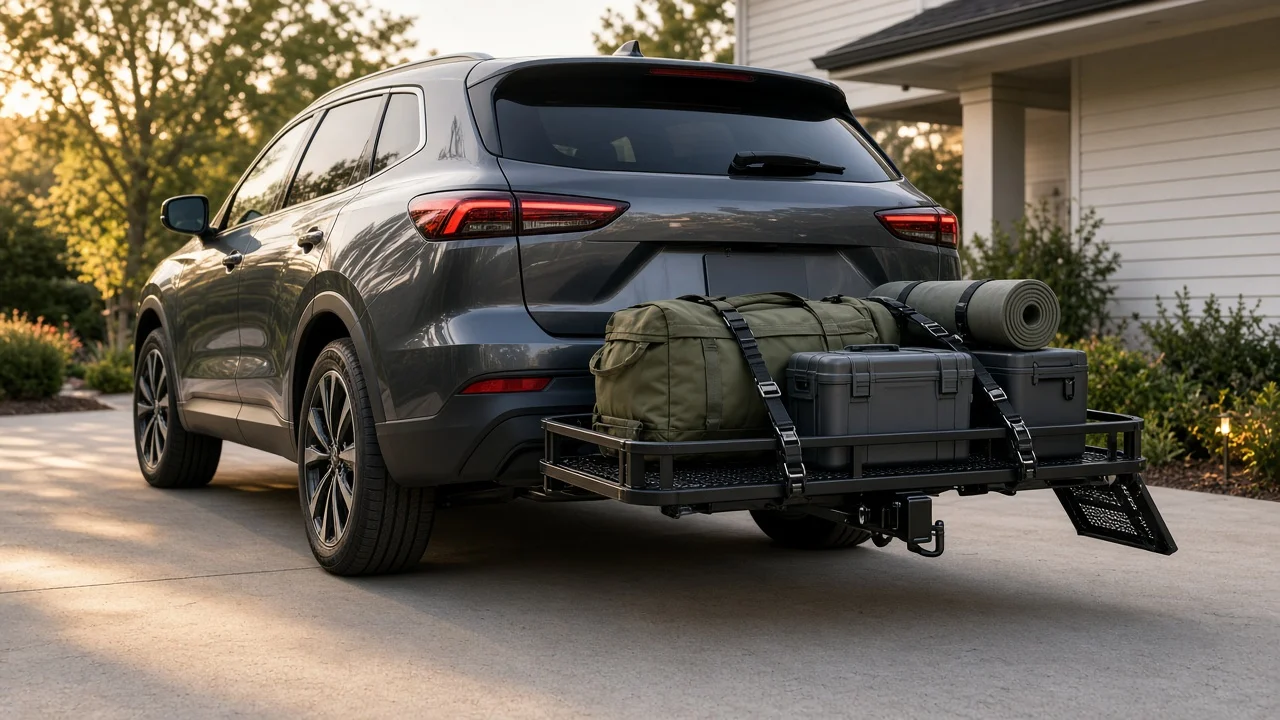
A hitch-mounted cargo carrier slides into a vehicle's receiver and holds gear behind the bumper, freeing cabin space without loading the roof. Whether one suits your car, SUV, truck or RV depends less on the carrier than on three things: the hitch class, the vehicle's tongue weight rating and how the load sits behind the vehicle. This guide explains how to confirm compatibility and stay inside approved limits.
Is a hitch-mounted cargo carrier right for your vehicle?
Yes, for most vehicles with a properly installed receiver hitch, as long as the hitch, the vehicle and the carrier are all rated for the load. Your usable capacity is the lowest of those three ratings, and it has to cover the carrier's own weight plus everything on it. A carrier advertised with a generous capacity does not increase what your vehicle or hitch can support. Receiver size matters too. Many carriers are built for a 2-inch receiver, while smaller cars often have a 1.25-inch receiver with a lower rating. If the vehicle has no hitch, or its owner's manual lists no tongue weight, stop there rather than guess.
A trailer hitch mounted cargo carrier keeps weight lower than a roof box and is easier to load. In exchange, it makes the vehicle longer, can hide the license plate and lights, and reduces rear clearance. Those trade-offs decide whether it is practical for your vehicle.
How the carrier transfers load to the vehicle
The carrier's shank slides into the receiver tube and is held by a hitch pin and clip. An anti-rattle bolt or clamp often removes the remaining play. Everything on the platform presses down on the receiver as tongue weight, and the hitch passes that force into the vehicle frame through its mounting points. Because the platform sits behind the bumper, the load works like a lever. Weight at the outer edge puts more strain on the hitch than the same weight placed near the vehicle, and road bumps briefly multiply that force.
For this reason, manufacturers state capacity for a carrier mounted directly in the receiver. A hitch extender or adapter lengthens the lever, so many carrier and hitch makers lower the allowable load or prohibit extenders altogether. A rise or drop shank changes height rather than leverage, but it still has to be allowed by that carrier's instructions.
Designs, vehicles and conditions that change the answer
Basket and platform styles work differently. A hitch mounted basket cargo carrier has side rails that contain bags and coolers and provide tie-down points. A flat platform takes bulky items but depends entirely on straps or a cargo bag. Steel carriers are usually heavier and rely on powder coat or paint for corrosion protection, so touch up chips before rust spreads, especially where roads are salted. Aluminum carriers weigh less, which leaves more of the tongue weight rating for cargo, but their hardware and fasteners still need to stay intact. Folding and swing-away designs add hinges and pins that must be locked exactly as the instructions describe.
Vehicle type also shifts the limits. A car hitch mounted cargo carrier on a compact car or crossover may be limited by a modest tongue weight rating and low ground clearance, so the platform can scrape on driveways, ramps or steep approaches. Trucks and large SUVs usually have more capacity, but a carrier still prevents towing a trailer when both need the same receiver.
A hitch mounted cargo carrier for RV use calls for extra caution. Motorhome receivers have their own ratings, and the long rear overhang on many motorhomes increases bounce and reduces departure clearance. Receivers attached to a travel trailer's rear bumper may not be designed to carry a loaded carrier, so do not use one there unless the trailer manufacturer approves it.
Practical checks before and during use
Start with the numbers. Find the hitch class and tongue weight on the hitch label or its documentation, find the vehicle's limit in the owner's manual, and read the carrier's load rating on its label or instructions. Subtract the carrier's own weight to see how much cargo you can add. Product compatibility details, such as receiver size or the required pin diameter, come from the manufacturer's fitment information. The same applies to specific branded models. If you are considering a CargoLoc hitch mounted cargo carrier, including the CargoLoc 32500, confirm its stated capacity, receiver size and assembly steps in the product's own documentation rather than relying on a listing summary.
When loading, place the heaviest items closest to the vehicle and centered side to side, keep the load low, and secure it with rated straps or a weatherproof cargo bag. Make sure cargo cannot rub the bumper. Where straps or bag edges might touch painted plastic, protect that surface material with a soft barrier. Keep items away from the exhaust outlet, because hot exhaust can damage bags and their contents. Confirm that tail lights, brake lights, turn signals and the license plate stay visible. Local rules vary, and you may need a lighting kit or a relocated plate holder. Rear cameras and parking sensors may also detect the carrier as an obstacle.
After the first few miles and at every stop, check for movement at the receiver, re-tighten the anti-rattle device and re-check the straps. When reading hitch mounted cargo carrier reviews, give more weight to reports about fit, rattle, rust and hardware quality on vehicles like yours than to overall star ratings. Remove or fold the carrier when you are not using it to reduce shank corrosion and avoid walking into it.
Limitations and when to get help
Ratings vary by vehicle, model year, trim and hitch, so no general figure can replace the labels and manuals for your exact setup. Have the hitch inspected by a hitch installer or qualified technician before loading it if a previous owner installed it, if its mounting points show rust, if fasteners are loose, or if it has no readable rating label. Get the same inspection if the receiver flexes, if the carrier touches the ground, or if you plan to combine an extender, a heavy load and rough roads. Do not drill, weld or otherwise modify the hitch or carrier to make it fit. Choose a compatible product instead.
Before the trip, gather the three ratings, weigh or honestly estimate the load, and install the carrier to confirm lighting and clearance.