Hitch mounted cargo carrier for ATV
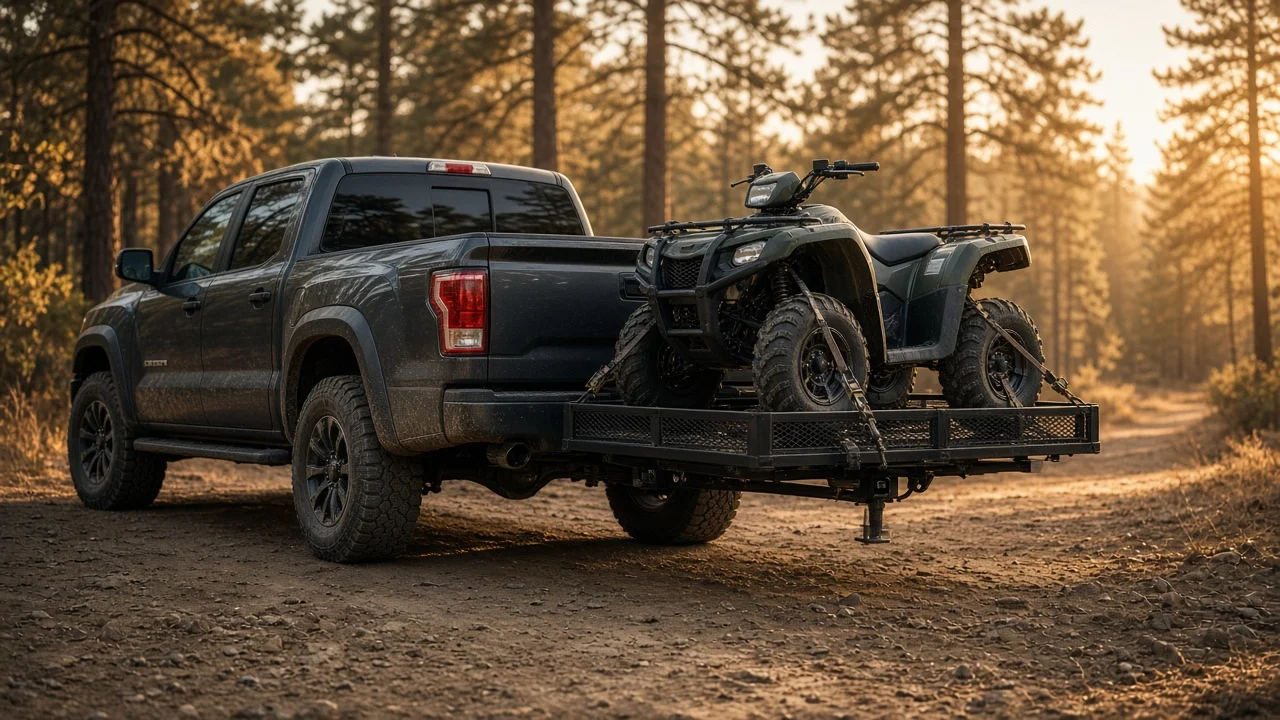
Choosing a hitch mounted cargo carrier for an ATV comes down to matching the rack to the machine, the receiver, and the terrain you drive. A carrier that seems sturdy in a catalog can still be wrong if the load rating, mounting points, or clearance do not line up with your specific quad and tow vehicle. The right setup protects the ATV during transport while keeping the hitch assembly stable under braking, cornering, and rough road impacts. Because these carriers place substantial weight behind the rear axle, every dimension and material decision matters more than it would for light tailgate cargo.
The direct answer
A hitch mounted cargo carrier for an ATV works when the rack's load rating comfortably exceeds the quad's wet weight and the receiver's tongue capacity supports that combined figure. Check the carrier's stated capacity against the vehicle hitch rating rather than assuming a Class III or IV receiver automatically handles every quad. The condition that changes the answer is weight concentration: an ATV places most of its mass across a few tire contact patches, so the platform and its tie-down points must resist point loading, not just total pounds.
Surface material and corrosion protection determine how long the carrier remains safe. Steel offers high strength but needs a quality powder coat or galvanized finish because mud, road salt, and pressure washing attack exposed metal. Aluminum reduces corrosion risk and overall rack weight, yet it may flex differently under a heavy quad. Also verify product compatibility with your receiver size, the ramp attachment style, and the distance from the hitch pin hole to the rear bumper so the platform sits close enough to control sway.