High-Temperature Brake Fluid: When Street and Track Drivers Need It
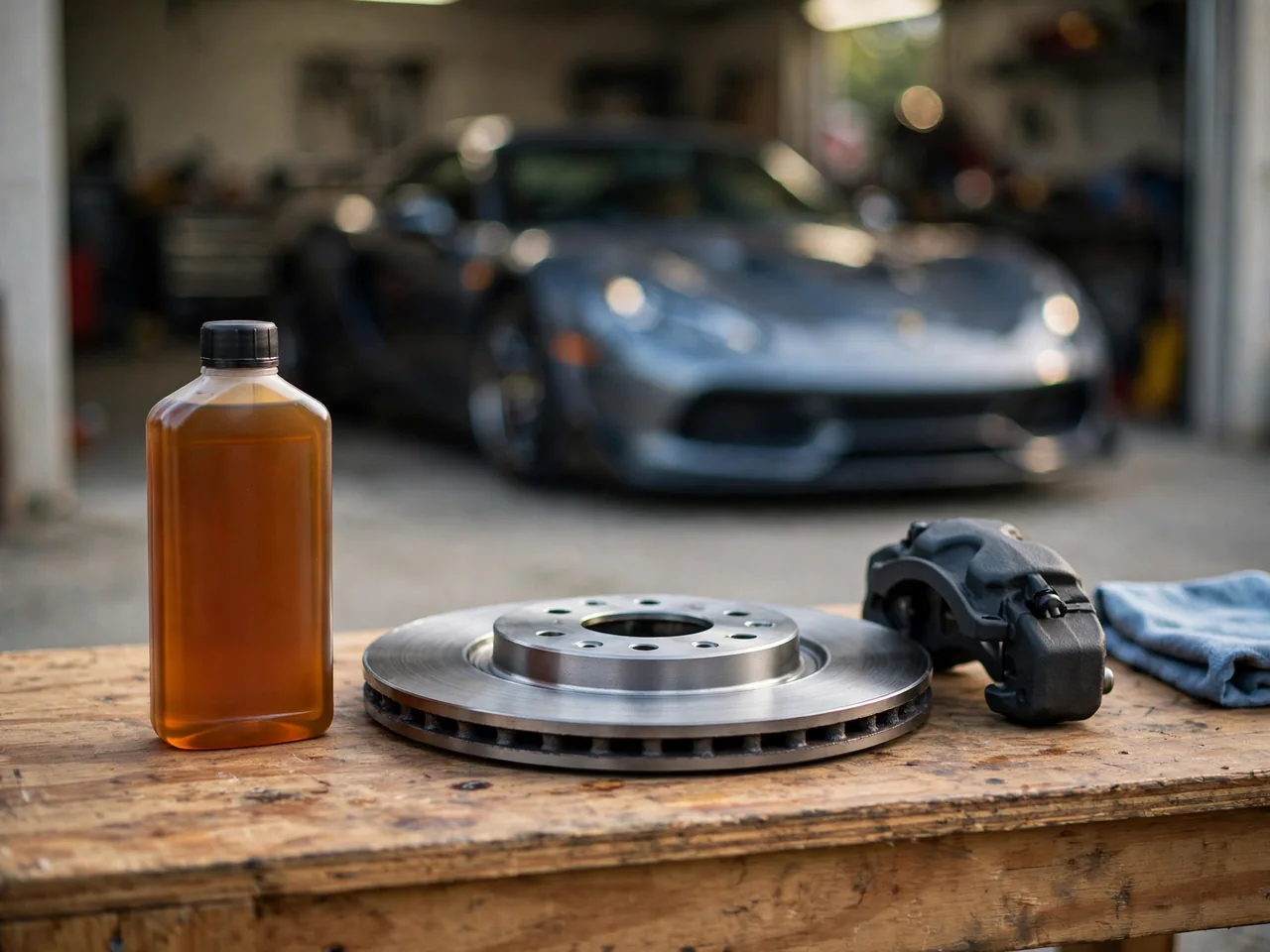
High performance brake fluid, often sold as high temperature or hi-temp brake fluid, is designed to resist boiling when braking heat builds. Whether a street car or track car needs it depends on the vehicle's specifications and how hard its brakes actually work. Knowing what dry and wet boiling points mean, how moisture affects fluid, and what fluid cannot do helps drivers choose well.
What High-Performance Brake Fluid Does Under Heat
Every stop turns motion into heat at the pads and rotors. Some of that heat soaks through the caliper pistons into the fluid behind them. Brake fluid works because a liquid resists compression, so pedal force travels to the calipers. If the fluid gets hot enough to boil, it forms vapor pockets, and vapor compresses easily. The pedal then travels farther before the pads clamp, and in severe cases braking force drops sharply. A high boiling point is meant to delay this kind of fluid vaporization.
A high temperature brake fluid keeps the hydraulics working under a heavier thermal load. It does not make the car stop harder. Tire grip, pad friction, rotor mass, and caliper design set how well the car brakes and how much heat the system can absorb, and fluid changes none of those. A bottle labeled high performance or racing tells you who the maker is selling to. It doesn't tell you whether the product meets your vehicle's requirements or suits a particular event. Specifications and documentation settle that question, not branding.
How to Read Dry and Wet Boiling Points
The dry boiling point is a standardized lab measurement of new fluid, tested without the moisture conditioning used for the wet figure. It shows the fluid at its freshest, straight from a sealed container. The wet boiling point is measured after the fluid has been conditioned with a controlled amount of water under a standardized procedure. It's a reference for comparing products, not a reading of the fluid in your car right now, which may hold more or less moisture depending on its age and conditions.
Most common brake fluids are glycol-based and absorb moisture over time through seals, hoses, and the reservoir vent. As water content rises, the boiling point falls away from the dry figure and toward the wet one. That's why a fluid with an impressive dry number can lose much of its advantage if it stays in service too long. Still, neither published number predicts an exact safe operating temperature or a replacement date for a particular vehicle. Driving style, climate, and system design all affect real-world conditions.
When High-Temperature Fluid Fits Street Use
Ordinary commuting and highway driving don't, by themselves, create a need for specialty fluid. Start with the fluid type the vehicle manufacturer specifies, then take an honest look at how much heat your brakes actually see. Long, steep mountain descents, towing through hilly terrain, and repeated heavy stops can build substantial brake heat, especially if the driver rides the pedal instead of using lower gears. These conditions make fluid condition more important, although a well-maintained system is far from certain to boil.
For most street drivers, fresh fluid that meets the manufacturer specifications matters more than chasing a big temperature claim. Old fluid that has absorbed moisture can boil well below a new product's rating. A healthy braking system matters just as much, including good pads, true rotors, freely moving calipers, and sound hoses. Changing fluid will not cure dragging brakes, leaks, worn components, or a pedal that has changed for no clear reason. Those symptoms point to a fault that needs diagnosis, and new fluid will not correct the underlying problem.
Planning Brake Fluid Requirements for Track Driving
Track driving is where brake fluid for racing earns its reputation. Each lap may include several hard stops from high speed with little time to cool in between. On the street, heat has time to dissipate between stops. On track, it builds up across the whole session. Calipers, pads, and fluid can stay hot through the cool-down lap and into the pits. Because of that sustained thermal load, track preparation usually treats brake fluid as a planned item rather than an afterthought.
Before choosing a race brake fluid, confirm three things: the vehicle's specifications, the event organizer's technical requirements, and any documented requirements from the makers of aftermarket calipers or other installed brake parts. A racing label doesn't prove the fluid is compatible with your system, suitable for daily street use, or on a universal change schedule. Some fluids are made to be replaced often, while others are meant for longer service. The sensible approach is a professional brake inspection before the event and a fluid service plan based on the vehicle, the fluid's documentation, and how often you run.
Choosing Fluid Without Relying on the Highest Temperature Claim
Start by checking which fluid specification the braking system requires. It's usually listed in the owner's manual or on the reservoir cap. Also check whether the manufacturer approves particular products. Only fluids that meet that requirement belong on your shortlist, and boiling-point claims come after that. The highest temp brake fluid on the shelf isn't automatically the right one. A single advertised number says nothing about how the fluid will work with your hydraulic system, antilock unit, or seals.
Other product documentation deserves equal attention. Viscosity requirements matter, especially in cold weather and in systems where antilock and stability control hardware moves fluid through small passages. The product's stated intended use, whether street, track, or both, also shapes the decision. So do its handling requirements, such as proper storage and protection from moisture. Don't assume two fluids can be mixed just because both carry performance branding. Leave compatibility questions and fluid changes to qualified service personnel who can confirm the correct product and bleed the system properly.
Pedal Changes That Need Inspection
Longer pedal travel, a pedal that feels soft or spongy, and braking that weakens as heat builds are all warning signs that need attention. It's tempting to blame boiled fluid, especially after hard use, but these symptoms alone can't confirm fluid vaporization. Air trapped in the lines, a leak, a failing master cylinder, or a caliper fault can produce a similar feel. Heat-related brake fade can also come from pads pushed past their temperature range. That's why a fluid upgrade can't be prescribed from symptoms alone.
If braking gets worse on track, end the session and return to the pits at reduced speed, signaling to other drivers as the event rules require. On the street, slow down and stop safely away from traffic as soon as you can. If braking is compromised, have the car towed to a professional for assessment instead of driving it. This still applies if the pedal feels normal again after the brakes cool. A pedal that comes back doesn't show what caused the problem or whether it will return at a worse moment.