Choosing a Heavy-Duty Transmission Cooler for Towing
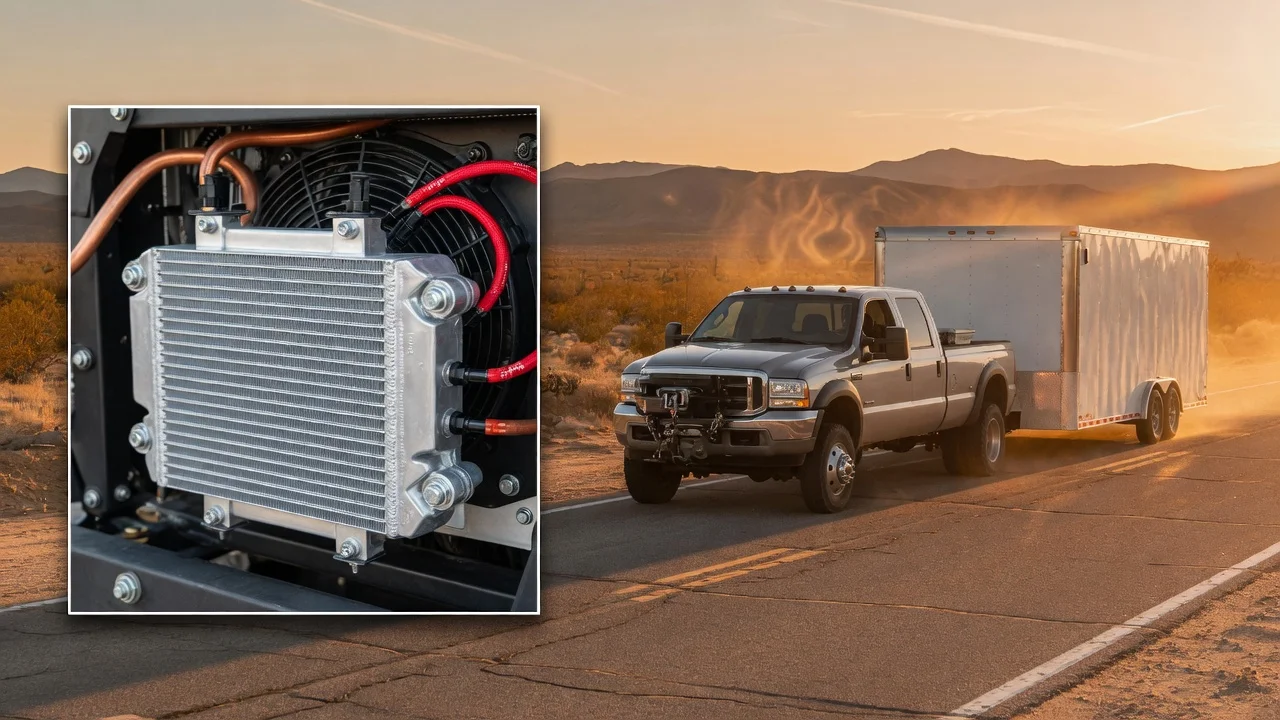
Towing puts sustained load on an automatic transmission, and that work turns into heat that ages the fluid and wears friction materials. A heavy-duty transmission cooler can help manage that heat, but only if it suits your vehicle, your transmission and the way you actually tow. This guide covers how to define the job, confirm fitment, weigh the features that matter, plan for ownership costs and narrow your options without relying on marketing labels.
Define the job the product must do
Start with how you tow, not with the cooler. Note the typical trailer weight relative to your vehicle's rated towing capacity, how often you tow, how long each trip runs, and whether you face long grades, stop-and-go traffic or hot weather. A camper pulled across mountain passes every summer is a very different job from a small utility trailer moved a few times a year. Also check what the vehicle already has: many trucks and SUVs sold with a factory tow package include an auxiliary transmission cooler, so you may be upgrading rather than adding one.
Next, identify the transmission type and exact configuration. Conventional automatics, CVTs and dual-clutch units manage heat differently, and some designs rely on manufacturer-specific cooling circuits or thermal valves. Your owner's manual or service information should tell you the transmission model and any towing guidance for it.
If you are shopping because you noticed a symptom, such as slipping, harsh or delayed shift behavior, or a temperature warning, do not assume heat is the cause or that a cooler is the cure. Have diagnostic codes read and the fluid condition and level checked first. A symptom points toward a diagnostic path; it does not confirm a failed part, and an underlying fault left unaddressed will not be solved by extra cooling.
Check compatibility
Fitment comes down to a few interfaces. Measure or confirm the size of your transmission cooler lines and the type of connections the vehicle uses, since factory systems may use hard lines with flare fittings, quick-connect couplers or rubber hose sections. A cooler kit should either match those connections or include adapters intended for them. Then look at mounting space: most auxiliary coolers sit in front of the radiator or air conditioning condenser, where they need clear airflow without blocking too much of the cores behind them or interfering with grille shutters, sensors or the hood latch.
Some newer vehicles route transmission fluid through a heat exchanger that also warms the fluid at startup, sometimes controlled by a thermostatic valve. Adding a cooler to that kind of circuit can change how the system warms up and regulates temperature, so confirm where and how an auxiliary cooler should be plumbed for your specific model. The cooler itself does not care which fluid passes through it, but any hoses and fittings you add must be rated for transmission fluid and the temperatures involved, and the system must be refilled with the fluid specification your transmission requires.
Features that affect the choice
Core design is the main trade-off. Stacked-plate coolers are generally regarded as efficient for their size and tolerant of pressure, which is why they are common in heavy-duty kits. Tube-and-fin designs are simpler and usually cheaper but tend to transfer less heat for a given footprint. Plate-and-fin designs fall in between. A physically larger core is not automatically better; what matters is whether it fits with good airflow and whether the design suits sustained towing loads.
Treat capacity ratings with care. Many coolers are marketed with a gross vehicle weight figure or a heavy-duty label, but these ratings are not produced under one common standard, so they are useful only for rough comparison between products from the same maker. More meaningful evidence includes published core dimensions, construction type, fitting sizes and clear installation instructions for your vehicle.
Other features worth weighing include a thermostatic bypass, which limits overcooling in cold climates where fluid that runs too cool can also be a problem; an electric fan for low-speed towing where ram air is limited; and sturdy bracket mounting rather than ties that pass through radiator fins and can chafe the core. A way to monitor transmission temperature, whether a scan tool reading or a gauge, lets you verify whether the cooler is doing its job instead of guessing.
Limitations and ownership costs
Installation usually means opening the transmission cooling circuit, which loses some fluid and adds capacity through the new cooler and hoses. Refilling correctly matters: many modern transmissions have no conventional dipstick and require a specific level-check procedure at a set fluid temperature. Budget for the correct fluid, quality hose and clamps, possible fan wiring, and shop labor if you are not equipped to do the job. Each added connection is a potential leak point, and a front-mounted cooler is exposed to road debris, so periodic inspection of the core, hoses and fittings becomes part of routine maintenance.
Be clear about what a cooler cannot do. It does not raise your vehicle's rated towing capacity, repair internal wear or existing damage, or replace fluid changes on the severe-service schedule that towing often calls for. Modifying the cooling circuit may also raise warranty questions, so check your coverage terms before installation. Keep your service history up to date, including fluid changes and the cooler installation itself, so future diagnosis has a clear record. If a problem is later confirmed, repair options should follow the diagnosis rather than assumptions about heat.
Build a practical shortlist
Narrow your options with a simple comparison rather than a ranking. For each candidate, confirm that it fits your transmission type and the specific vehicle configuration, that its connections match your cooler lines or include suitable adapters, and that it physically fits in front of the radiator or condenser with adequate airflow. Note the core construction and dimensions, whether a thermostatic bypass or fan is included or available, and how it mounts.
Then compare the full installed cost, not just the part price: hoses and fittings rated for transmission fluid, the required fluid, any wiring, and labor. Check that the instructions address your model's cooling circuit and fluid level procedure. Finally, decide how you will monitor transmission temperature after installation so you can confirm the result under your real towing conditions. A heavy-duty transmission cooler that meets these points is a sound candidate; one that only offers a bigger capacity label without fitment details deserves more scrutiny.