Heated Windshields, Windows, and Mirrors: How Vehicle Glass Heaters Work
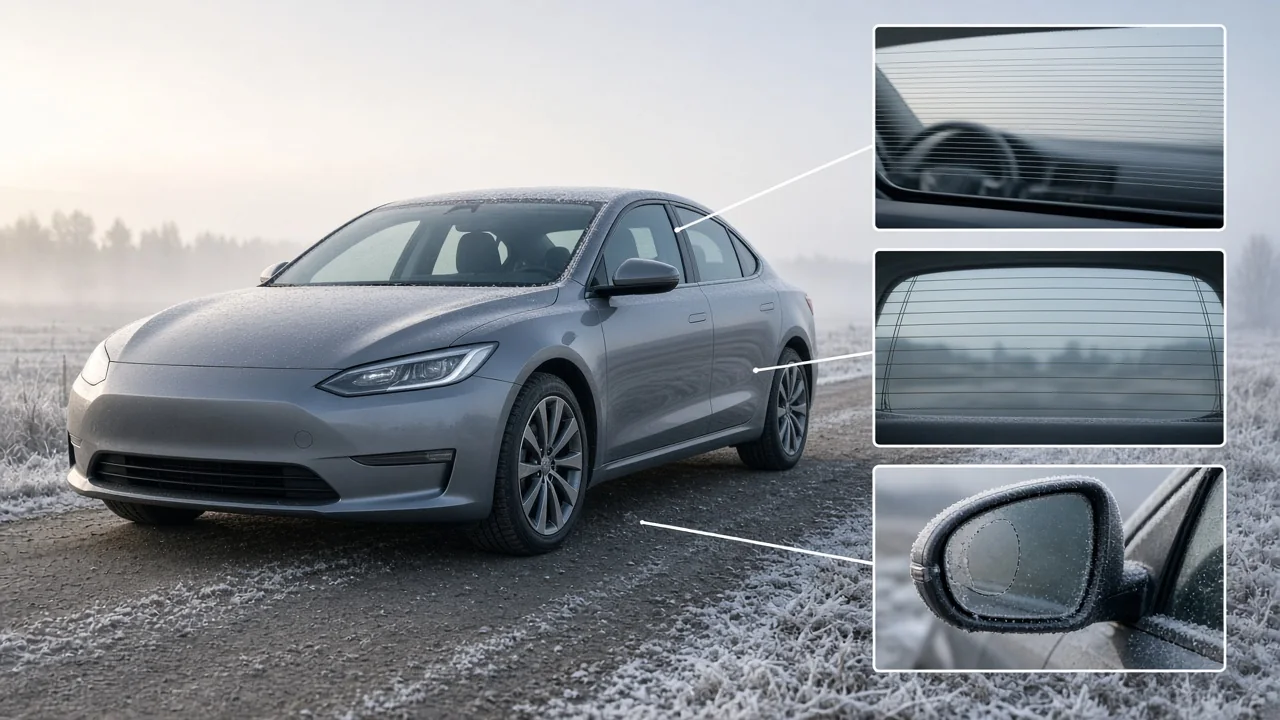
Factory and aftermarket glass heating restores a clear view when frost or interior condensation covers the windshield, rear glass, or mirrors. A car mirror heater, a windshield heater for car use, and a rear window defroster warm those surfaces electrically, while cabin airflow still removes moisture. Knowing how each system works, how it is switched on, and what incomplete clearing can mean helps drivers use the equipment they actually have.
How Electric Glass Heating Clears Frost and Condensation
Electric glass heating relies on resistive heating elements that convert current into warmth. Fine wires or a conductive coating in a heated windshield or rear window defroster raise glass temperature across the treated area. A car mirror heater typically uses an element bonded behind the reflective glass rather than a visible grid. Heat conducts through the glass to both surfaces. Whether the circuit is factory wired or added as a pad, current flows, resistance produces heat, and frost and moisture must leave that warmed surface.
Warming the glass helps melt exterior frost and discourages interior condensation by raising the surface above the dew point of nearby air. Clearing time still depends on ice thickness, outside temperature, and how much moisture is present. Exterior frost sits on the outside of the glass; interior fog forms as cabin humidity condenses on a cold inner surface. Electrically heated glass does not replace cabin airflow. Windshield defrost mode, air conditioning, and moisture removal still dry the air and speed clearing, especially when fog keeps returning after the glass has warmed.
Heated Windshields and Windshield Defrost Controls
A windshield car heater, a car windshield heater, or a windshield heater for car use can describe more than one design. Some vehicles have electrically heated glass with embedded wires or a conductive coating. Others heat only a wiper park area so blades can lift from ice. Many cars rely on warm air through dashboard defrost vents rather than heating the glass itself. Each system clears only the area it treats, so a heated wiper band will not clear the entire view.
Confirm fitted equipment and activation steps in the owner's manual. A windshield defrost mode button or a rear defroster switch does not prove the windshield glass is electrically heated. Some circuits include a defroster timer or other automatic shutoff, and operating requirements vary by vehicle. Drivers still need a clear view of the road, signals, and mirrors before moving. If ice or fog remains in the sight line after the system has had time to work, wait and use cabin heat and air conditioning rather than assuming the glass heater has finished the job.
Rear Window Defroster Grids and Clearing Patterns
A rear window defroster usually shows a visible conductive grid of thin lines bonded to the glass. When the circuit is on, those lines warm first, so frost and interior condensation often recede along the grid before the spaces between them clear. A car window heater can refer to that rear grid, a heated windshield, or a portable unit, and side windows commonly rely on cabin airflow rather than their own elements. Knowing which glass has a heater prevents waiting for a surface that was never designed to warm electrically.
Persistent uncleared bands between grid lines, a patch that never warms, or a complete lack of clearing are observations worth recording, including whether the indicator stayed on. Those patterns do not identify a failed part on their own. Clean around exposed grid lines with a soft cloth and nonabrasive cleaner so residue does not hide damage or block heat. Scraping, probing, or attaching abrasive materials can break the conductive traces. Avoid using the rear glass as a mounting surface for stickers or accessories that sit on the grid.
Heated Side Mirrors and Their Activation
Heated side mirrors use a heating element behind the mirror glass to raise the reflective surface temperature. That warmth helps melt frost on the face of the mirror and reduces condensation that would otherwise hide the adjacent lane. Activation may share the rear window defroster circuit, use a dedicated switch, or follow automatic control based on temperature. The owner's manual is the place to confirm how a car mirror heater is turned on for that vehicle. Watching for an indicator or timed shutoff still does not replace checking that both mirrors actually clear.
A mirror adjustment switch or a housing that looks similar to a heated design does not establish that heating is installed. Some mirrors have glass heaters, some have only power adjustment, and some combine both. Compare clearing on the left and right after the system has been on for a reasonable period in similar weather. One uncleared mirror does not identify the failed component; the cause could be the element, a connection, a switch, or heating that was never fitted on that side.
What to Check Before Choosing an Add-On Windshield Heater
Portable plug-in windshield heaters and retrofit glass-heating products are meant to add warmth to a limited area of glass, often to reduce frost or interior condensation in front of the driver. They are not a promise of complete windshield clearing in every condition. Before use, confirm the vehicle outlet rating, the product's electrical requirements, mounting provisions, and the intended application. A windshield heater for car use that draws more current than the outlet can supply, or that is aimed at a different surface than the one you need, should not be used.
Added equipment must leave the driver's view, airbags, and controls unobstructed. Do not drape cords across airbag covers, park a heater where it blocks the windshield, or run improvised wiring or fuse changes. Replacement heated glass or hardwired retrofits need professional assessment of electrical capacity, controls, fitment, and any camera or sensor requirements that share the glass. A car windshield heater bonded into the glass or tied into vehicle circuits is not a plug-in accessory.
Safe Checks When Glass or Mirrors Stop Clearing
Start with the owner's manual, the correct control, any stated operating conditions, and observation of indicator lights and timed shutoff. A defroster timer can turn a circuit off even when frost remains, so a dark indicator is not automatic proof of failure. Record whether the problem covers an entire surface or a localized area, and whether heated side mirrors, the rear grid, and the windshield behave the same. Those patterns cannot confirm a particular electrical fault. They only describe what the driver can see before any testing is done.
While parked, look for obvious glass or grid damage such as broken traces, cracked mirror glass, or a disconnected-looking connector that is visible without removing trim. Do not probe circuits, pull interior panels, or attempt heating-element repairs. Persistent failure, damaged connections, or repeated fuse problems belong with professional testing. Stop using the system if you notice smoke, a burning odor, or abnormal heat at the glass, switch, or wiring. Persistent interior fog may also need cabin moisture and ventilation attention. Do not drive until visibility through the windshield, windows, and mirrors is adequate.