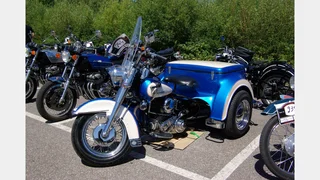
Harley Ironhead Transmission Oil: What to Use and Why It Matters
Direct answer
Harley-Davidson Ironhead Sportster models from 1957 through 1985 use a separate transmission and primary drive lubricated by the engine oil supply. In factory configuration, the transmission gears, clutch, and primary chain are not filled with a standalone gear oil. The correct approach is to use an engine oil suitable for the shared engine, transmission, and primary system, most commonly a 20W-50 or straight-weight oil meeting the viscosity and additive expectations for air-cooled Harley-Davidson engines and wet clutches. The key qualification is model year and any known modification: if the primary or transmission has been sealed off from the engine oil system as part of an aftermarket belt-drive or dry-clutch conversion, a dedicated transmission lubricant may be required.
Why Ironhead transmission oil is not a separate fill
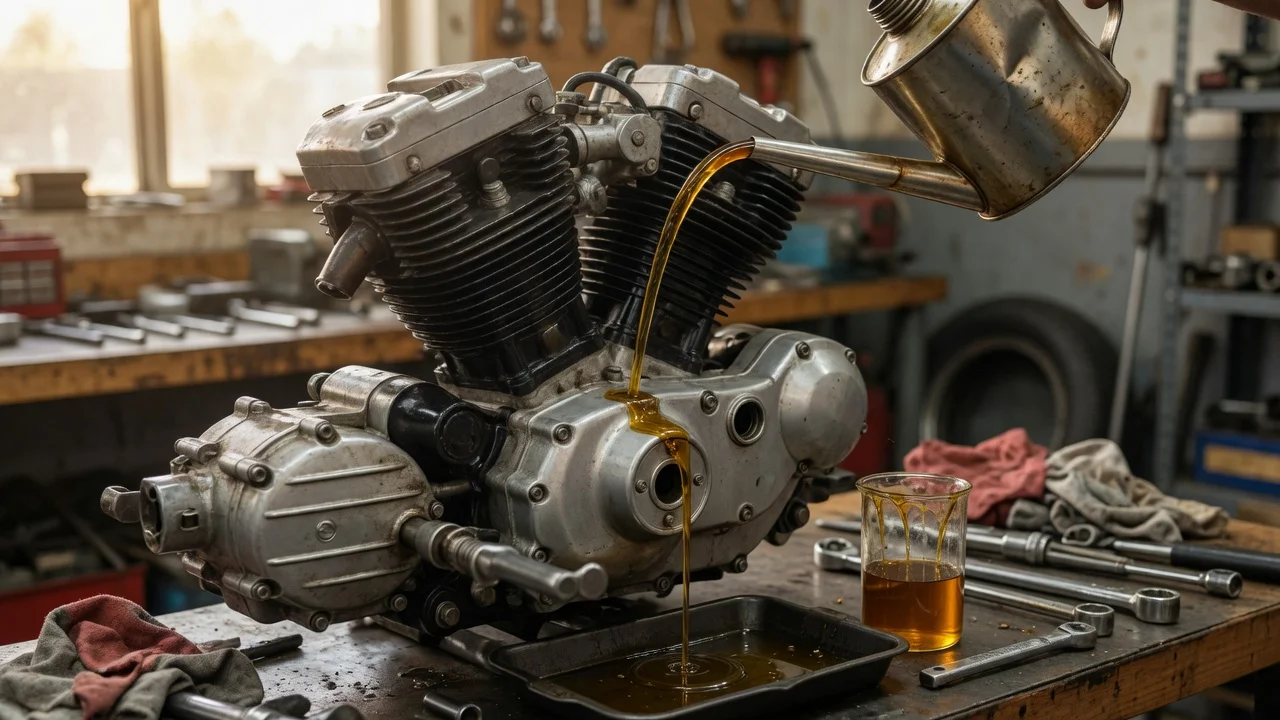
On stock Ironhead engines, the oil tank feeds the engine and returns oil through a system that also lubricates the transmission and primary components. The gearbox and primary cases receive oil mist and splash from the shared supply. Because of this, there is no separate transmission fill plug with its own gear-oil specification on a factory Ironhead. Riders asking for transmission oil are usually looking for the correct oil to put in the oil tank, which then serves the transmission, or they are trying to diagnose a noise or shift-quality concern.
Recommended oil for a stock shared system
For a stock Ironhead with the original shared lubrication layout, choose an engine oil rated for air-cooled V-twin use and safe for wet clutches. Common choices include SAE 50 or 20W-50, depending on ambient temperature and engine condition. Avoid high-friction-modified automotive oils that can cause clutch slip. Oils marketed specifically for Harley-Davidson engines or other air-cooled motorcycles generally avoid these friction modifiers. The oil should carry an appropriate viscosity for the expected operating temperature, but the owner's manual for the specific model year is the most reliable reference.
Oil capacity and checking procedure
Ironhead oil capacity varies slightly by model year and oil tank design, but many later Ironhead models hold approximately three quarts, or about 2.8 liters, including the oil tank and system. The rider should check the oil level with the engine warm and the motorcycle upright, following the procedure for the specific year. An overfilled or underfilled tank changes return flow to the transmission and primary area, so level is as important as oil type.
When a dedicated transmission lubricant is appropriate
Some Ironhead owners install a belt-drive primary conversion or a dry-clutch setup. In those cases, the primary and transmission area may be partially or fully isolated from the engine oil supply. If the conversion instructions require filling the transmission cavity separately, a dedicated gear oil or the converter's specified lubricant becomes necessary. Without knowing the exact aftermarket kit, no single transmission oil specification applies. The safe next action is to identify whether the motorcycle is stock or converted before choosing anything other than the shared-system engine oil.
Common shift-quality and noise concerns
Riders often investigate transmission oil because of hard shifting, clunking, or metallic noise. On a stock Ironhead, these symptoms may still point to the shared oil system: low oil level, old oil, or an oil with the wrong friction characteristics can affect clutch drag and shift feel. However, worn shifter forks, loose primary chain, or damaged transmission bearings can produce similar symptoms. A change to the correct oil is a reasonable first step, but it does not replace mechanical inspection if the problem continues.
Maintenance intervals
Ironhead engines benefit from regular oil changes because the same oil handles engine heat, gear loading, and clutch debris. Many owners use an interval of roughly 1,500 to 2,000 miles, or about 2,400 to 3,200 kilometers, though shorter intervals may be appropriate for hard riding or hotter climates. The oil filter, where fitted, should be changed at the same time. Models without a filter require more frequent changes because contaminants stay in circulation.
Gaps and what to check next
The applicable oil choice depends on whether the motorcycle retains its original shared lubrication system or has been modified. The exact capacity and viscosity recommendation should be confirmed against the owner's manual or factory service literature for the specific Ironhead year. Without documentation of a primary or transmission conversion, a dedicated transmission oil cannot be accurately specified.