GMC Terrain Shift Lock Release: How to Release the Selector
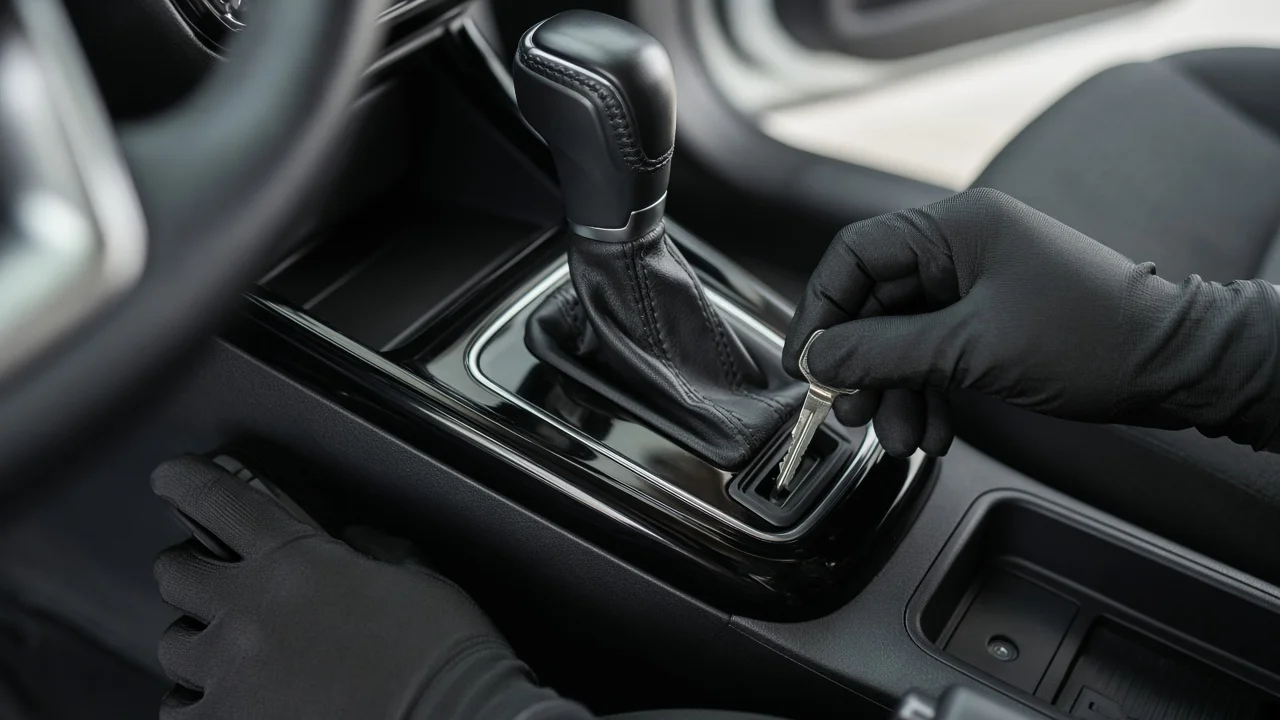
A GMC Terrain that will not come out of Park is usually stopped by its shift interlock, not by a broken transmission. This guide explains when a manual release makes sense, how the method depends on the shifter your Terrain uses, and what a stuck selector can and cannot tell you. The release is a way to move the vehicle, not a repair. Treat the owner's manual for your exact model year as the final word on any procedure.
What the shift lock release is for
The brake-transmission shift interlock keeps the selector locked in Park until the ignition is on and the brake pedal is pressed. It prevents the vehicle from being knocked into gear by accident. When the battery is dead or an electrical fault keeps the lock engaged, the release lets you move the selector to Neutral. You might need that to push the Terrain out of a garage, load it onto a flatbed or get it to a shop.
Before you start, park on level ground, set the parking brake firmly and chock the wheels if you can. Once the transmission is in Neutral, the parking brake is the only thing holding the vehicle. Have a second person ready at the brake pedal if you plan to roll it.
Identify your Terrain's shifter and transmission
Shifter design, not just model name, decides the procedure. The first-generation Terrain, sold for the 2010 through 2017 model years, uses a conventional console lever paired with a six-speed automatic. Many vehicles with this layout have a small override access point near the shift gate. The exact location and cover shape vary, so confirm them in the manual for your year.
The second-generation Terrain, introduced for 2018, replaced the lever with an electronic shifter that uses buttons and pull triggers on the center stack. There is no mechanical lever to unlock in the same way. Park is commanded electronically, so restoring 12-volt power is normally the first step. The manual describes how to select Neutral for towing or a car wash. Later redesigns change the layout again, so do not assume a procedure carries over between generations. If you bought the vehicle used, check the model year against the VIN rather than relying on its appearance.
How the override works on a lever shifter
On lever-equipped models the general sequence is similar across many GM vehicles: 1) Set the parking brake. 2) Put the ignition in the position the manual specifies. 3) Find the override cover near the shifter. 4) Lift the cover gently with a plastic trim tool or a small flat blade wrapped in tape. 5) Insert the key or a narrow tool into the slot and press down. 6) Hold it down, press the brake pedal and move the lever to Neutral. 7) Remove the tool and refit the cover so debris cannot fall into the mechanism.
Do not force the lever if it will not move with the override pressed. Heavy resistance can mean a binding cable, a broken shifter component or something lodged in the console. Pushing harder can turn a cheap fix into a replacement shifter assembly.
Features that change the approach
The biggest difference is whether you are dealing with a mechanical override or an electronic shifter. With a lever, the override bypasses an electrically operated lock, so it can work even with no power. With an electronic shifter, the system needs power and the correct conditions to leave Park. A jump start or charged battery usually matters more than any tool.
Tools are rarely the limiting factor. The vehicle key or a trim tool is usually enough for a lever shifter. Products sold as universal shift lock release tools add little and may not fit your console opening. Be wary of any kit that claims fitment across every model year without naming the shifter type it suits.
What a stuck selector can point to
A selector locked in Park is a symptom, and several unrelated faults can cause it. Common paths include: • A weak or dead battery. • A blown fuse in the shift lock or brake light circuit. • A brake light switch that no longer signals the pedal is pressed. • A failed shift lock solenoid or actuator. • A worn shifter cable or bushing. • A spilled drink that has gummed up the console mechanism. A quick first check is whether the brake lights come on when the pedal is pressed. If they do not, the switch or its circuit becomes a stronger suspect. Even then, that is not proof until it is tested.
Scanning for diagnostic codes can narrow the search, especially on electronic shifters, where the control modules record shift-related faults. Note the shift behavior once the vehicle does move. Harsh engagement, slipping or warning messages are a separate issue from the interlock. Those call for checking fluid level and condition against the fluid specification listed for your transmission, plus a proper diagnosis rather than repeated overrides.
Limitations and repair costs
The override only gets the selector out of Park. It does not restore normal interlock operation or confirm the cause. On an electronic shifter it may not be available at all without power. Repeatedly relying on it is a sign the underlying fault still needs attention. Repair options range from replacing a fuse or charging a battery to replacing a switch, solenoid, cable or shifter assembly. Cost depends on which part is actually at fault and on labor time for your configuration, so get a diagnosis before buying parts.
Your service history helps here. Recent battery work, console repairs or recall and service bulletin activity can point a technician in the right direction faster. Keep any records handy when you book the repair.
Quick checklist before you call for help
Run through these points in order: • Confirm the model year and whether your Terrain has a lever or an electronic shifter. • Check battery condition and try restoring power if the electrical system is weak. • Verify that the brake lights work with the pedal pressed. • Inspect the relevant fuses listed in the manual. • On a lever shifter, use the override gently with the parking brake set. • If the selector still will not move, or the vehicle drives poorly afterward, stop and arrange towing or a diagnostic visit rather than forcing components. Write down what you observed. That gives the technician a useful starting point and helps avoid replacing parts on a guess.