GMC Sierra Torque Converter Shudder: How to Diagnose It
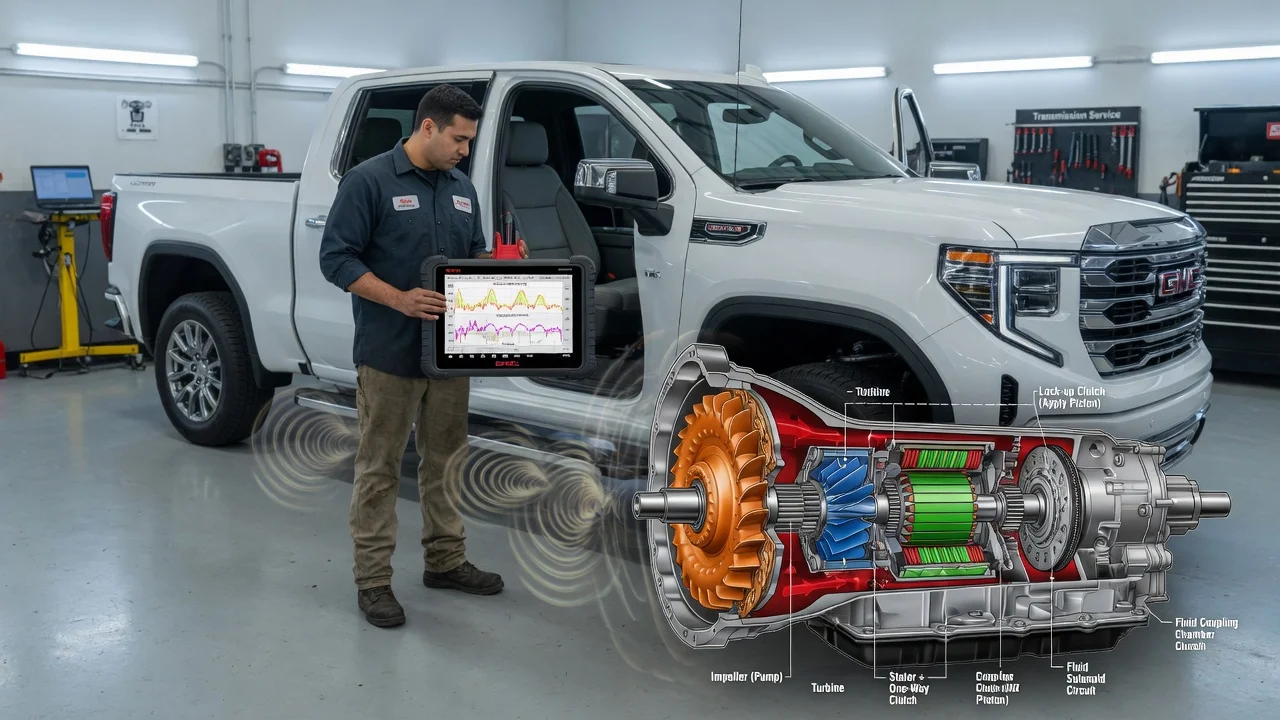
A shudder that feels like driving over rumble strips at a steady cruising speed is a common drivability complaint on GMC Sierra pickups, including the 2018 model year. It often comes from the torque converter clutch, but engine misfires and driveline vibration can feel almost identical. The Sierra has used several automatic transmissions across years, engines and duty ratings, so start by identifying exactly which unit your truck has. Then work from careful observation to confirmed findings before any parts are replaced.
Establish the symptoms
First confirm the transmission type. A 2018 Sierra 1500 left the factory with either a six-speed or an eight-speed automatic depending on engine and trim, later light-duty trucks added a ten-speed, and heavy-duty models use different transmissions altogether. The RPO code on the Service Parts Identification label, usually in the glove box, or a VIN lookup by a dealer will tell you which one is installed. This matters because the fluid specification, the fill and level-check procedure, and any factory service updates differ from one transmission to another.
Next, write down when the shudder happens. Note the speed range, whether it appears at light and steady throttle or during harder acceleration, whether it shows up only after the truck is fully warm, and whether climbing a grade or towing makes it worse. Describe the feel: a rhythmic rumble that comes and goes is different from a constant buzz that grows with road speed. Watch the tachometer for a small flicker during the event. Record associated signs such as a steady or flashing check engine light, harsh or delayed shifts, slipping, or new noises.
Finally, list recent changes. A transmission fluid service, especially if the fluid type is unknown, new or larger tires, a lift or leveling kit, a battery disconnect, software updates and recent heavy towing can all shape the diagnosis.
Distinguish plausible causes
Torque converter clutch shudder is the leading suspect when the vibration appears at light throttle in a steady speed band and fades when you accelerate harder or lift off. At cruise the transmission applies the converter clutch, often with a small amount of controlled slip. If the friction behavior of the fluid or the clutch lining has degraded, that controlled slip turns into a stick-slip motion you feel as a rumble. GM has issued service information addressing shudder on some of its eight-speed transmissions through a fluid exchange to an updated fluid, which is why eight-speed trucks from around 2018 are often discussed in this context. Not every shudder on those trucks has that cause, though.
An engine misfire under load can feel nearly the same. It becomes more likely if the check engine light flashes, if misfire data shows activity during the event, or if the shudder coincides with cylinder deactivation transitions on V8 engines. Driveline problems, including worn universal joints, a failing center support bearing, incorrect driveshaft angles after a lift, and tire imbalance or damage, tend to follow road speed regardless of throttle and do not change when the converter clutch releases. Internal converter damage becomes more likely when a correct fluid service does not help, when converter-related codes return, or when debris is found in the fluid.
Checks in a useful order
Begin with checks any owner can do safely. Read stored and pending diagnostic codes with a basic scanner; a code such as P0741, which relates to torque converter clutch performance or the clutch staying off, is worth recording along with any misfire codes. Look under the truck for transmission fluid leaks and check the tires for uneven wear, bulges or missing balance weights. Then repeat the drive on a familiar, empty road. On many GM trucks, lightly touching the brake pedal just enough to turn on the brake lights, without slowing down, commands the converter clutch to release. If the shudder stops at that moment, the converter clutch is strongly implicated. Only do this where traffic and conditions make it safe.
The remaining checks need tools, specifications or a qualified technician. Many of these transmissions have no conventional dipstick, and the fluid level is checked at a specified temperature through a check plug, so an incorrect level check can do more harm than good. A technician can log converter slip speed, commanded clutch apply, transmission temperature and misfire counters during a road test, then compare them with the moment the shudder occurs. The truck can also be put on a lift to inspect the driveshaft and joints. A fluid sample or pan inspection can reveal debris, and a VIN check will show any open bulletins, campaigns or software updates.
Interpret the findings
If the shudder disappears when the converter clutch releases and logged slip speed oscillates while the clutch is applied, the problem lies in the converter clutch system. That result still does not separate degraded fluid from worn converter hardware. The usual escalation is a fluid exchange using the fluid specified in current GM service information for your exact transmission, any procedure or relearn that information calls for, and then a repeat road test. If the shudder returns or slip codes reappear, converter replacement becomes the next step. Metal or friction debris in the fluid suggests wider internal wear, and a technician should judge whether a converter alone is sufficient.
If misfire counts rise during the event, diagnose the engine first, because a misfire can be mistaken for converter shudder. If the vibration is unchanged with the clutch released and tracks road speed, look to the driveshaft, joints and tires. Dark fluid or a burnt smell describes fluid condition, not a specific failed part. Likewise, a converter clutch code shows that the control module detected a performance problem, not which component caused it.
Urgency and next action
Stop driving and arrange inspection or towing if the check engine light flashes, the transmission slips or flares between gears, engagement is delayed or absent, a temperature warning appears, you smell burning fluid, fluid is pooling under the truck, or the vibration becomes violent or is accompanied by clunks. Avoid towing or hauling heavy loads until the cause is found. Ongoing converter slip generates heat and can contaminate the fluid, so no amount of remaining safe mileage can be promised.
For an efficient repair visit, bring the VIN, model year, engine, the transmission RPO code and current mileage. Include the service history with dates, who performed fluid changes and which fluid was used, plus your written notes on when the shudder occurs, any codes with freeze-frame data, and modifications such as tire size changes or a lift. Ask the shop which repair options they recommend and why, whether warranty or a factory bulletin applies, and whether they will document slip data before and after the repair to confirm the fix.