GMC Sierra EV Range by Model Year, Trim and Battery Pack
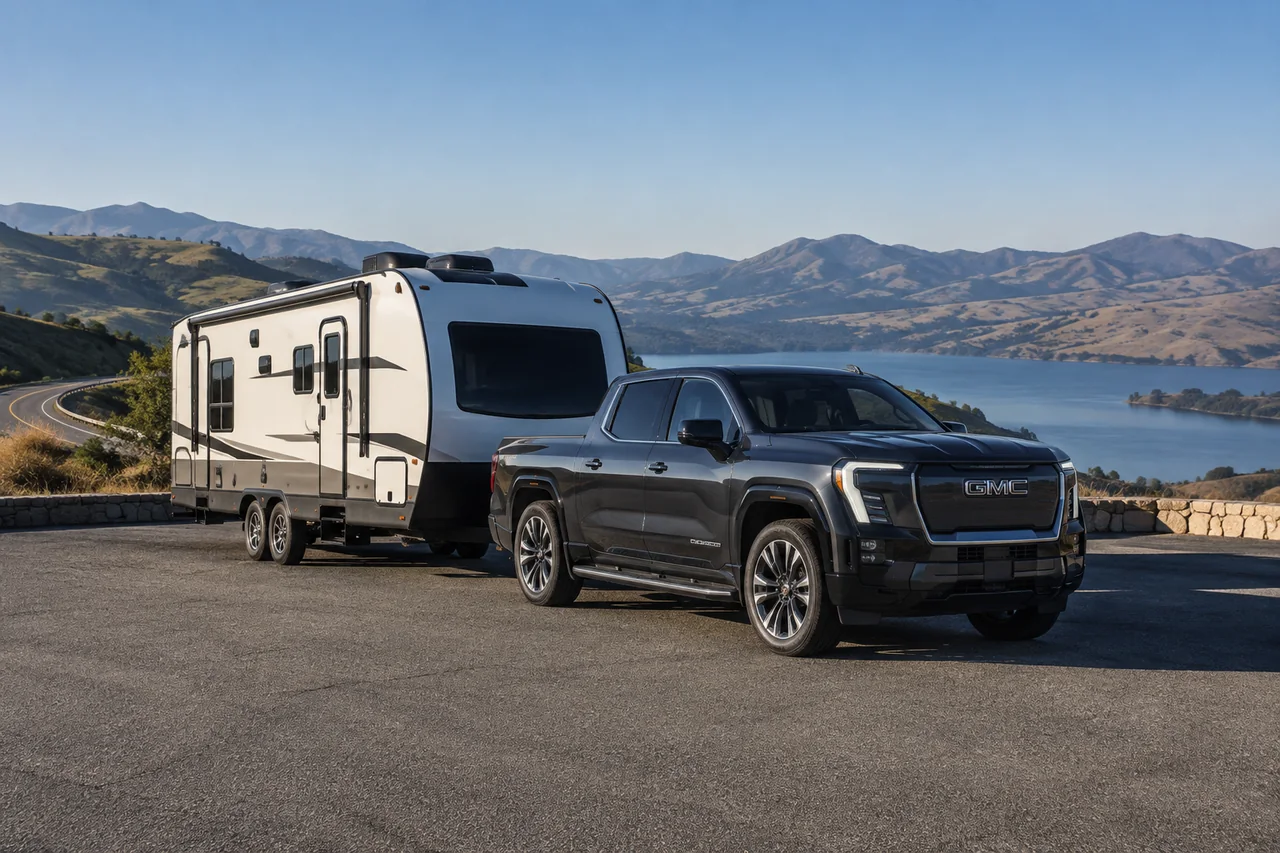
GMC Sierra EV range depends on model year, trim, and battery pack rather than the Sierra name alone. Elevation, AT4, and Denali trucks may carry Standard, Extended, or Max packs depending on year, so a Denali EV listing still needs that designation before an EPA-estimated or manufacturer-estimated figure applies. How far you can tow then follows energy use, state of charge, and conditions.
Finding the Range Rating for Your Sierra EV Model Year
The applicable driving-distance figure for a GMC EV Sierra is identified by model year, trim, battery designation, and configuration, because this electric pickup is not sold with one published number. A 2025 GMC Sierra EV, a 2026 GMC Sierra EV, and a used 2024 GMC Sierra EV Denali Edition 1 each carry their own rating. Read the EPA-estimated range on that truck's window label, and treat any manufacturer-estimated range as a separate figure with its attached qualification.
A full-charge estimated driving range is a comparison tool, not a guarantee of trip miles. Speed, temperature, payload, and battery temperature change energy consumption, so the remaining-range display follows recent driving instead of the label. Confirm year, trim, and whether the truck is Standard, Extended, or Max on the sticker or listing. If those details are missing, the advertised 2026 Sierra EV or 2025 GMC Sierra EV figure on the page is not yet identified.
Understanding Standard, Extended and Max Range Battery Names
Standard Range, Extended Range, and Max Range are configuration names inside the Sierra EV lineup, not nicknames for every GMC EV. Those labels still belong only to the matching designation, and not every trim-year mix exists. Elevation Standard and Elevation Extended packs are 2026 topics, while Max is often discussed with Denali and AT4, yet that does not prove every combination was built. A 2026 Sierra EV Standard, 2026 Sierra EV Extended, or 2026 GMC Sierra EV Max figure is usable only after the pack name is confirmed.
Check the pack on the window sticker, build sheet, owner information, and in-vehicle energy screens. A used GMC Sierra EV Denali Max Range advertisement can shorten GMC EV Max, Extended, or Denali EV wording, so paperwork still matters. Keep battery designation, usable energy capacity, and rated driving distance as separate facts. State a kilowatt-hour capacity only when it is published for that exact configuration; otherwise use the pack name and the EPA or manufacturer estimate that belongs to it.
Denali Max Range and Extended Range for 2025 and 2026
Denali is a trim. It does not by itself set the battery pack or how far a Denali-badged GMC electric truck can travel. GMC Sierra EV Denali Max Range for 2025, 2025 GMC Sierra Denali EV Max, and 2025 Sierra EV Denali Extended refer to different configurations, each with its own EPA-estimated or manufacturer-estimated figure. A 2025 Sierra EV Max Denali and a 2025 GMC Sierra EV Extended Denali are not interchangeable for rating, even with the same Denali badge.
On a 2026 Sierra EV Denali Max Range, confirm year, Denali trim, and Max pack naming before applying any estimate. Do not assume a 2026 GMC Sierra EV Denali Standard Range pack from the trim name alone. Used 2024 Denali Edition 1 trucks, later Sierra Denali EV Max examples, and ads that say only Denali EV truck, GMC Sierra Denali EV, or GMC Denali EV Max still need the sticker or the in-vehicle pack name.
Elevation Standard Range and Extended Range for 2026
For 2026, GMC Sierra EV Elevation splits by pack. A 2026 GMC Sierra EV Elevation Standard Range truck is Elevation trim plus that Standard designation, and its estimated driving distance applies only to that specification. Do not apply a Max pack or Denali figure to an Elevation Standard vehicle. Read the EPA-estimated miles on that window label, keep any manufacturer-estimated qualification attached to that number, and treat the in-vehicle energy screen as a second check.
A 2026 GMC Sierra EV Elevation Extended Range is a separate configuration with its own estimate. Ads that say only Elevation, 2026 GMC Sierra EV Elevation, or Sierra EV Elevation Standard are incomplete until Standard or Extended appears on the sticker or build sheet. Any configuration note that accompanies the estimate stays with it; do not invent mile penalties for wheels or packages the label does not quantify, and do not accept Max miles quoted for an Elevation without the matching pack name.
AT4 Max Range and Extended Range for 2026
The 2026 AT4 trim lists GMC Sierra EV AT4 Max Range and GMC Sierra EV AT4 Extended Range as different pack designations. A 2026 GMC Sierra EV AT4 Max rating applies only to that Max AT4, and a 2026 Sierra EV AT4 Extended rating applies only to the Extended AT4. Do not borrow a Denali Max number. Confirm the pack on the sticker and energy screens before planning around that estimate.
AT4 driving often mixes pavement, dirt, and weather that raise energy consumption without changing the rated miles. Tires, terrain, speed, and battery temperature can increase energy use, but there is no universal mile loss to subtract from the label. On a remote or unpaved route, plan charging around reachable stations, expected conditions, and an arrival-charge reserve. Keep extra state of charge for slow going, recovery, and a missed charging stop.
What Shapes Sierra EV Range in Everyday Driving
Everyday Sierra EV miles respond to highway speed, temperature, wind, elevation change, cabin conditioning, and payload. Higher speed and a cold cabin raise energy consumption, as do headwinds, grades, and a loaded bed. Battery temperature affects delivered energy and how the remaining-range display behaves after a heat or cold soak. Those conditions do not rewrite the EPA-estimated figure; they change miles available from the present state of charge.
The remaining-range display estimates distance from recent driving and current conditions, not from a second EPA test. A trip check multiplies recent miles per kilowatt-hour by remaining usable energy, assuming similar speed, climate load, and grades. That product is conditional and holds only while those conditions continue. A persistent indicated drop with warnings or charging trouble is a reason to review ordinary loads first, then seek professional evaluation rather than assuming the pack has failed.
Planning Sierra EV Towing Range and Charging Stops
GMC Sierra EV towing range is not one published distance, and Sierra EV towing miles are not a fixed percentage of the empty rating. Trailer aerodynamics, frontal area, loaded weight, speed, weather, and terrain change towing energy consumption, often more than the truck's empty setup. A tall enclosed trailer at highway speed uses energy faster than a lower, lighter load. Use consumption recorded with the actual trailer and load, then convert remaining usable energy into a cautious distance.
Plan charging stops from projected arrival charge, not from the unladen label. Pick sites the truck and trailer can enter and leave, and keep a backup location if the first charger is blocked. Towing capacity does not establish how far you can pull a load; capacity is a load limit, while available miles come from energy. Follow truck and trailer documentation for applicable load limits, and leave enough state of charge to reach a second charger if the first stop fails.