GMC Acadia Torque Converter Shudder Diagnosis
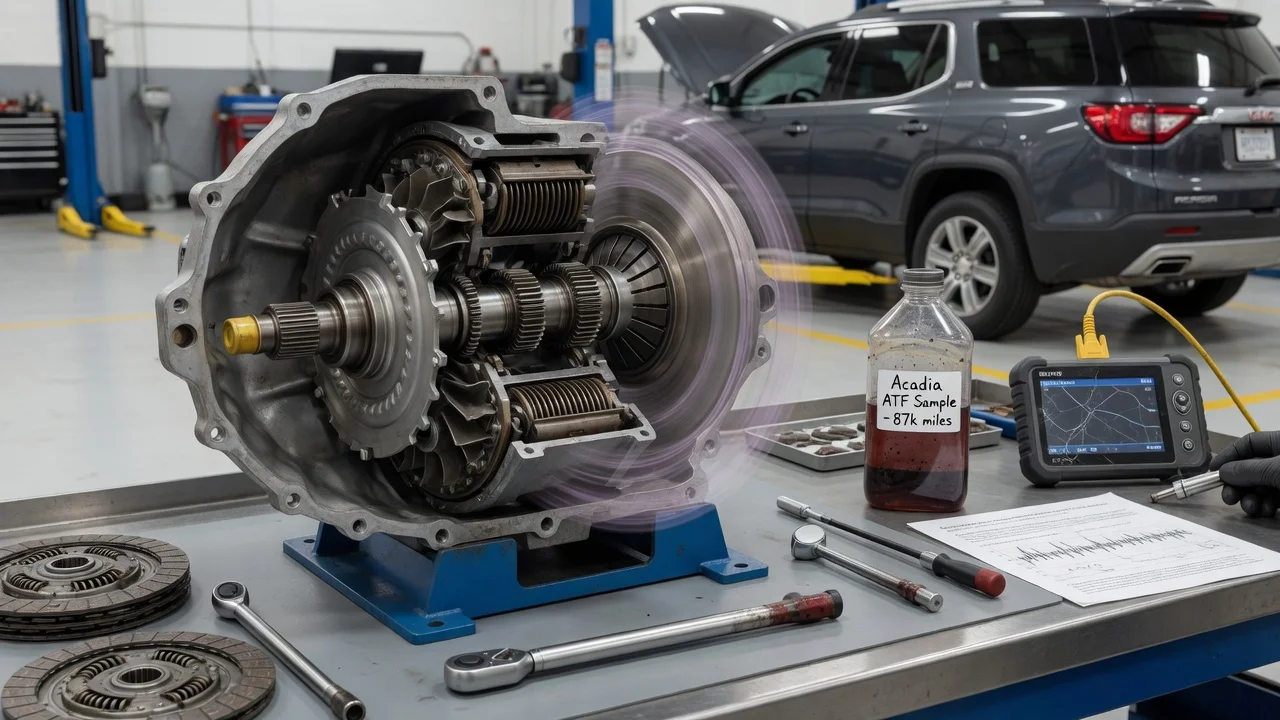
A shudder that feels like rolling over rumble strips at steady, light-throttle cruising often gets blamed on the torque converter. On a GMC Acadia, though, the engine, driveline or tires can produce the same feeling. This guide covers how to describe the symptom accurately, which causes fit which observations, and which checks should come before anyone condemns the converter or orders a transmission.
Identify the transmission first
Acadia transmissions have changed across model years, so start with the exact configuration. First-generation models, including the 2012 Acadia, pair a six-speed automatic with the 3.6-liter V6. Later generations use other gearboxes, including nine-speed units on many recent models and an eight-speed in the newest generation. Front-wheel drive and all-wheel drive versions also have different driveline parts that can vibrate. The VIN and the service parts identification label show the exact transmission type. That code determines the fluid specification, check procedures, software and parts fitment. Treat any general advice as provisional until you know which unit you have.
Establish the symptoms
Converter clutch shudder usually happens when the converter clutch is applying or holding at light throttle. That is commonly a steady cruise or gentle acceleration in a middle-to-upper gear, often somewhere between neighborhood and highway speeds. Note the speed range and gear when it starts. Note whether it happens cold, warm or only after a long drive, and whether light uphill load makes it worse. Pay attention to whether it is a rapid buzzing vibration or a slower surge, how long it lasts, and whether engine rpm rises or flickers at the same moment. A symptom you can reproduce on demand is far easier to diagnose than one described from memory.
Record any associated signs. These include a check engine light, especially one that flashes, a rough idle, harsh or delayed shifts, slipping, flares between gears, clunks, whining, leaks or a burnt smell. Also list recent changes: a fluid service and what fluid was used, new tires or wheel work, a battery disconnect or module reprogramming, towing, engine repairs or earlier transmission work. A shudder that began right after a specific event points the diagnosis in a different direction than one that developed slowly over thousands of miles.
Distinguish plausible causes
Converter clutch slip or chatter is the classic cause. Worn friction material, degraded or incorrect fluid that has lost its friction characteristics, and contamination can all make the clutch grab unevenly as it applies. Several things support this cause: the shudder appears only when the clutch is commanded on, it stops when the clutch releases, and scan data shows unstable converter slip. The case weakens if the vibration also occurs in neutral, while coasting or at speeds where lockup is not commanded.
Control problems can produce the same feel without a damaged converter. A sticking or failing clutch control solenoid, valve body wear, wiring faults or outdated software can apply the clutch harshly or erratically. Stored codes for converter clutch performance or solenoid circuits support this path. So does a symptom that changes with temperature or after a software update. Shifting problems that accompany the shudder suggest the issue goes beyond the converter alone.
Several conditions only mimic converter shudder. An engine misfire under load at low rpm, which is exactly when lockup happens, feels very similar. Misfire codes, misfire counters or a rough idle support this cause. Worn engine or transmission mounts transmit vibration that often changes with throttle on and off. Worn CV axles or all-wheel drive components, and out-of-balance or damaged tires, cause vibration that follows road speed regardless of gear or lockup state.
Checks in a useful order
Owners can safely start with observation. Reproduce the symptom on a familiar, safe road and note the conditions. Look under the vehicle for fluid leaks, and check the tires for uneven wear, bulges or missing balance weights. On many vehicles, lightly touching the brake pedal while cruising releases the converter clutch. If the shudder stops immediately when you do this, that is a useful clue, but only try it where traffic allows. Gather the service history, especially transmission fluid services and the fluid used.
A scan tool is the next step. Read stored, pending and history diagnostic codes from both the engine and transmission modules, along with freeze-frame data. With capable equipment, a road test while watching converter clutch command, slip speed, misfire counters and transmission temperature shows whether the vibration lines up with clutch apply or with misfires. Clearing codes before recording them destroys useful evidence.
Some checks belong to a qualified technician. Many Acadia transmissions have no conventional owner dipstick. Their level check is done at a specified fluid temperature through a check plug, following the procedure for that exact transmission. Fluid condition, pan debris, line pressure testing, solenoid testing, checks for applicable service bulletins or software updates, and inspection of mounts and axles on a lift also need the correct specifications and tools.
Interpret the findings
If the shudder appears only during commanded lockup and stops when the clutch releases, the converter clutch circuit is involved. That still does not prove the converter itself has failed. Fluid condition, control pressure and solenoid behavior must be checked before the converter can be blamed. If misfire counts rise during the vibration, the engine needs diagnosis first, because a converter replacement will not fix ignition or fuel problems. A vibration that tracks road speed in every gear and during coasting points to tires, wheels or driveline parts.
Fluid findings carry weight. Low fluid, the wrong fluid specification or badly degraded fluid can explain shudder. A correct fluid service may reduce it, but a fluid change is not a guaranteed cure. Heavy friction material or metal debris in the pan suggests internal wear that a service alone will not address. Ideally, confirm the result with a repeat road test after each repair step, so you know which step actually changed the symptom.
Urgency and next action
Stop driving and arrange inspection or towing in any of these cases: the check engine light flashes, the transmission slips or flares, the vehicle hesitates to move or drops out of gear, a transmission temperature or service warning appears, fluid is leaking noticeably, or you smell burning fluid. A mild, consistent shudder with no warnings still deserves prompt diagnosis. Continued clutch slip generates heat and debris that can turn a lower-cost repair into a larger one. No one can reliably predict how many miles remain before a worsening problem becomes a failure.
Bring the shop the VIN, engine and transmission identification, the mileage and the service history. Include any codes with their freeze-frame data and a clear description of when the shudder occurs. Repair options can include a fluid service with the specified fluid, a software update where applicable, solenoid or valve body repair, converter replacement, or a rebuilt or remanufactured transmission. Confirm part fitment by VIN, and ask the technician which test result supports the recommended repair before you approve it.