GMC Acadia Check Engine Light: Causes and First Checks
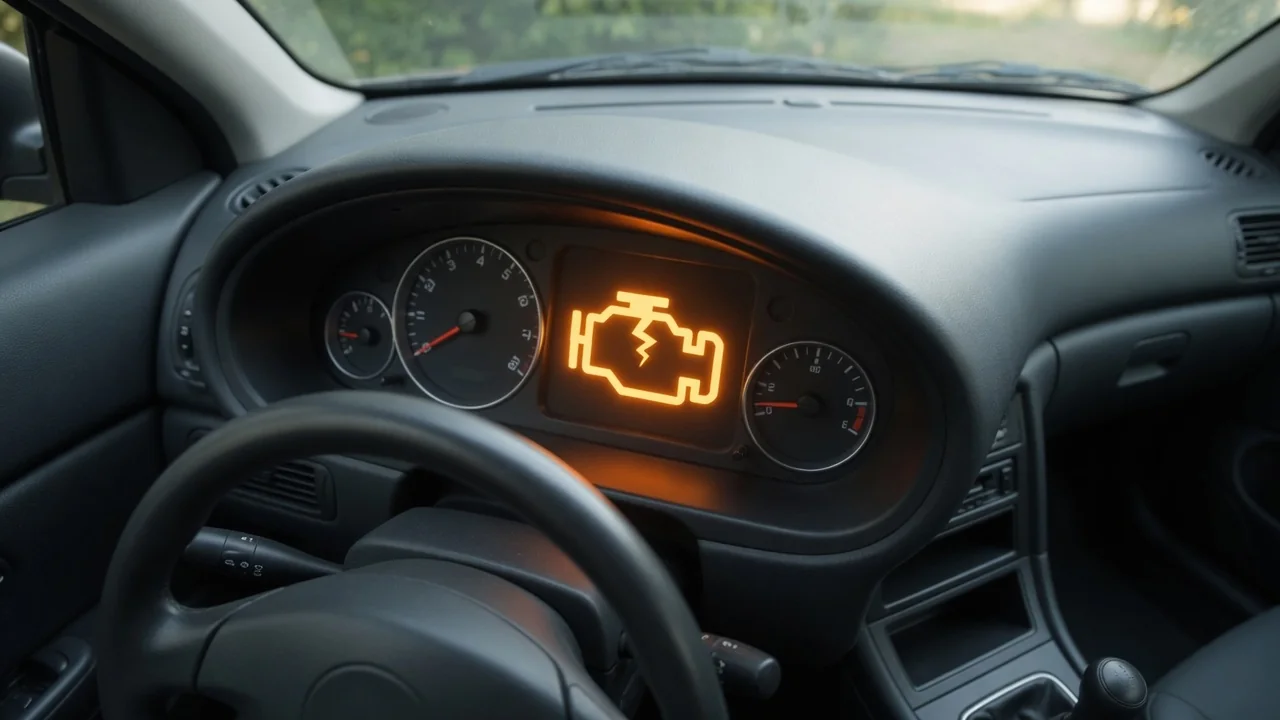
When a check engine light on a GMC Acadia stays illuminated after startup, the powertrain control module has stored a detected engine-management or emissions concern. The malfunction indicator lamp does not name a failed part. Model year, engine, driving symptoms, and any stored OBD-II trouble codes determine which systems deserve attention first, from evaporative emissions leaks to misfire-related fuel trim changes.
What the Check Engine Light Means on Your Acadia
The check engine light, also called the malfunction indicator lamp, is a status warning from the Acadia's engine-management and emissions controls. During a typical key-on lamp check it should light briefly, then go out once the engine is running if no fault is currently flagged. A check engine light on a GMC Acadia that remains on after start means the control module has detected a condition that exceeds its programmed limits. That detection is not a parts list. Sensors, wiring, fueling, ignition, and evaporative hardware can all produce similar illumination.
Narrowing the cause depends on more than the lamp itself. Different Acadia model years and engines use different calibrations, filler designs, and sensor layouts, so the same warning can have different meanings. Rough idle, hesitation, or no drivability change at all still point in different directions. Stored and pending OBD-II trouble codes, plus freeze-frame data captured when the fault set, help a technician choose a starting path. These causes are diagnostic possibilities, not a ranked list of how often they occur on this model.
When to Stop Driving and Seek Assistance
A flashing check engine light is treated differently from a steady lamp. A flashing lamp can indicate an active engine misfire severe enough that unburned fuel can overheat the catalytic converter. In that situation, ease to a safe stopping place rather than continuing at speed. Severe shaking, major power loss, visible smoke, a strong fuel odor, or a rising temperature warning are also reasons to stop safely and arrange assistance, even if the light is not flashing. Those symptoms can accompany misfire, fuel leaks, or cooling problems that should not be driven through.
A steady check engine light still needs timely diagnosis. Smooth running and normal idle do not prove that continued driving is safe, because evaporative emissions faults, oxygen-sensor issues, and some fuel-trim problems can illuminate the lamp with little feel at the pedal. Use the owner's manual for your Acadia's model year for any reduced-power or towing guidance, and ask a professional whether the vehicle should be driven or towed. Manufacturer-dependent messages on the driver information center can change the urgency even when the engine still starts and moves.
Useful First Checks Before a Diagnostic Appointment
Before an appointment, write down whether the check engine light appeared right after refueling, during a cold start, at idle, or under acceleration. That timing often separates evaporative emissions system concerns from misfire or air-metering issues. If your Acadia has a removable fuel cap, confirm it is seated and latched as the owner's manual describes; not every model year uses the same filler design, and a cap-related leak path is only one possible evaporative cause. Do not assume a tight cap has solved the problem, and do not keep cycling the filler in an attempt to reset the lamp.
Also note rough idle, hesitation, hard starting, unusual odors, and any other dashboard messages, without trying to recreate unsafe symptoms such as a flashing light or overheating. Those observations help a shop decide which tests to run first. Preserve stored codes rather than disconnecting the battery or clearing the light before diagnosis. Clearing erases freeze-frame data that shows engine speed, load, and temperature when the fault set, and it can delay emissions-monitor readiness. A light that goes out after a battery disconnect has not been repaired; the module simply lost its memory of the event.
Fault Areas That Can Trigger the Acadia’s Warning Light
An evaporative emissions system leak or purge-control fault can turn on the malfunction indicator lamp even when the Acadia idles and drives normally. The control module watches tank pressure and purge flow; a loose path, stuck valve, or related circuit issue can set a code without a drivability complaint. Ignition, fuel-delivery, and air-metering faults are more likely to produce engine misfire, rough idle, or abnormal fuel trim because they change how the mixture burns. Those systems should be treated as related possibilities, not as interchangeable failed parts, until live data and tests isolate the actual path.
Oxygen-sensor and catalyst-related codes require evaluation of operating conditions, wiring, and upstream engine faults before any part is replaced. A downstream sensor reading can look like a failing converter when a misfire or rich condition is actually dumping unburned fuel. Timing-related faults belong on the diagnostic path only when the specific engine, symptoms, and stored codes support that investigation; they are not a shared Acadia defect. Manufacturer-dependent codes in particular need vehicle-specific confirmation, because the same numeric identifier can describe different monitors depending on calibration.
How Trouble Codes Help Narrow the Cause
An OBD-II scan can show stored codes that already turned on the lamp, pending codes that have not yet matured, and freeze-frame data captured at the moment a monitor failed. Record the complete alphanumeric code, not a shortened description from a generic app. Then verify its meaning for that Acadia's year and engine, especially for manufacturer-dependent codes that are not universal. A code is evidence of a detected condition in a monitored circuit or system. It is not proof that a named sensor or component has failed and must be replaced.
A technician then compares those codes with symptoms and live data rather than replacing parts in isolation. Fuel trim, oxygen-sensor activity, misfire counters, and evaporative-system pressure traces can show whether several codes share one root cause, such as an air leak that upsets both idle quality and catalyst monitors. Targeted testing of wiring, connectors, and mechanical function follows that pattern instead of treating every related code as a separate failed part. Related codes are often investigated together because one genuine fault can set multiple monitors on the same drive cycle.
What to Bring to the Shop and How Resolution Is Confirmed
Bring the model year, engine if known, mileage, exact codes, recent repairs, refueling history, and when symptoms appeared, including whether the check engine light on your GMC Acadia came on after fill-up or only under load. That context shortens the first inspection. A shop may then use emissions-system leak testing, electrical checks, or misfire analysis as the codes and symptoms justify. Those tests belong in a professional setting because they involve fuel vapor, high voltage, and hot exhaust components. The goal is to confirm the monitored condition, not to swap parts until the lamp goes out.
Clearing the warning light alone does not confirm a repair. The underlying fault must be corrected and the vehicle operated so the same monitors can run again. If the light returns, report the new symptoms and the current codes rather than assuming the original part failed a second time. After codes are cleared, emissions-monitor readiness can take several drive cycles of mixed idle, cruise, and warm-up conditions to complete. That delay matters for inspection readiness and for verifying that an evaporative or catalyst monitor actually passed, not that the lamp was simply switched off.