Genuine Toyota ABS Wheel Speed Sensor: Fitment and Buying Guide
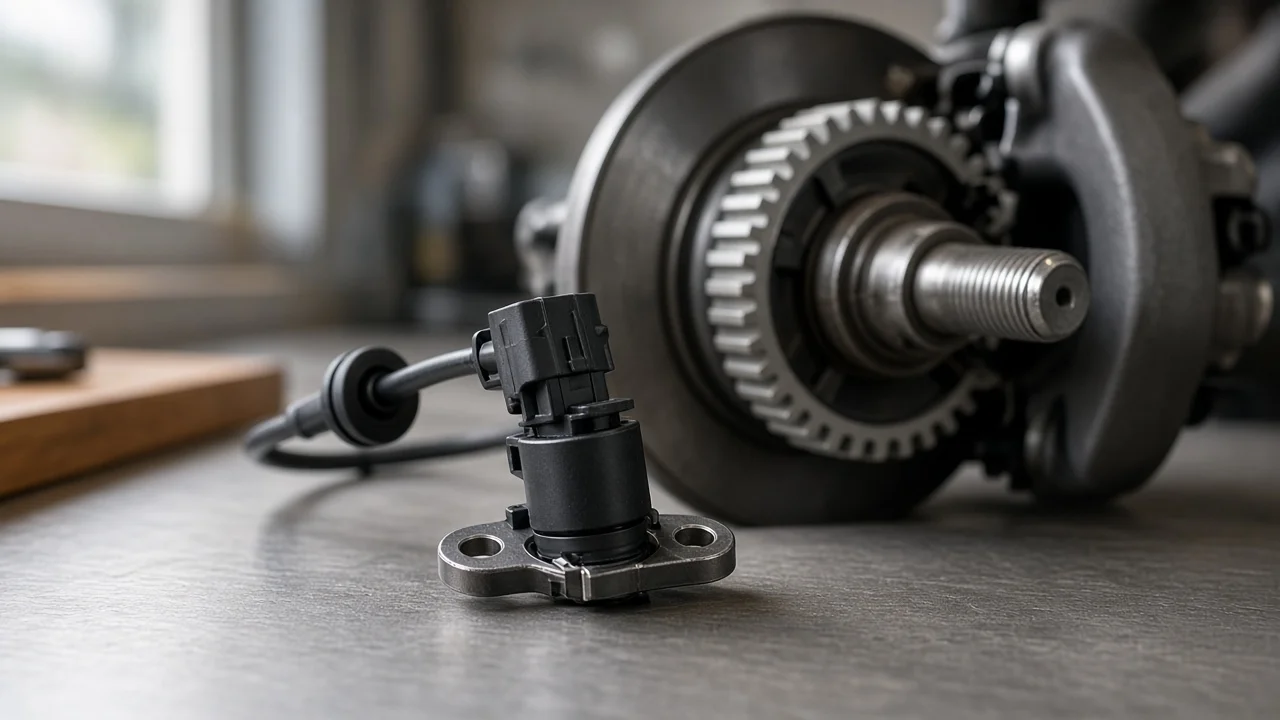
A failed wheel speed sensor usually shows up as an ABS warning light, often with the traction or stability control lights. Many owners choose a genuine Toyota part because it has the original design, connector and signal characteristics the vehicle expects. This guide explains how to confirm that the sensor is the real fault and how to match the part to your exact vehicle. It also covers what a sensor swap can and cannot fix.
Define the job the product must do
Before buying anything, confirm that the sensor is actually the fault. An ABS light can have several causes: a damaged sensor, a chafed harness, a corroded connector, a contaminated or cracked tone ring, too much wheel bearing play or a problem in the ABS control unit itself. Start with a scan tool that reads ABS codes and shows live wheel speed data. If one wheel reads zero or jumps around while the others agree, the problem is likely at that corner. Note which corner it is, front or rear and left or right. Toyota sensors are often side-specific, and front and rear designs are rarely interchangeable.
Most owners want three things from this repair: the warning lights cleared, ABS, traction control and stability control working again, and a low chance of the fault coming back. If you already have the corner apart for brake work, such as new brake pads or brake rotors or caliper service, inspect the sensor and wiring at the same time. If the red brake warning light is on, the pedal feels different or the vehicle pulls under braking, stop driving it and have the brakes inspected professionally. Those symptoms point to more than a sensor problem.
Check compatibility
Vehicle fitment decides the purchase. Toyota often uses different sensors on the same model depending on model year, drivetrain, engine, body style and production date, so the model name alone is not enough. The most reliable check is a part number lookup by VIN, either through a Toyota parts department or an official parts catalog. If the old sensor is still on the vehicle, the number on its body or label is a useful cross-check. Part numbers are frequently superseded, so a newer number may have replaced the original.
Compare the physical details as well. Check the connector shape and pin count, cable length, routing clips, grommets and mounting style, such as whether the sensor bolts into the knuckle or the bearing carrier. Front and rear positions, and left and right sides, may have different part numbers. On some Toyota models, particularly on certain rear axles, the sensor is built into the hub bearing assembly and is not sold separately. That changes both the part you need and the cost of the job.
Finally, confirm the sensor type. Older systems often use passive magnetic pickup sensors that read a toothed ring. Many newer Toyotas use active sensors that read a magnetic encoder built into the wheel bearing seal. The two types are not interchangeable. An active sensor will not work with a passive system or with a bearing that lacks the correct encoder.
Features that affect the choice
The main advantage of a genuine Toyota sensor is predictable fit. The connector, cable length, clip positions and air gap are designed for the specific application, and the signal matches what the ABS module expects. A sensor that plugs in but produces a weak or noisy signal can set intermittent codes, especially at low speed. Genuine parts also carry part numbers you can trace back to your VIN lookup.
Be cautious with marketing labels. Terms such as OE quality, OEM equivalent or direct fit describe what the seller intends, not verified compatibility, and they do not mean the part is genuine. Toyota buys many components from outside suppliers, so some aftermarket sensors may come from the same manufacturer, but a listing alone does not prove that. Useful evidence includes an exact Toyota part number match, clear photos of the connector and label, and a seller who can confirm fitment against your VIN. A price far below what a genuine part normally costs is a reason to question authenticity.
Limitations and ownership costs
A new sensor only fixes a sensor fault. It will not cure a damaged harness, a corroded connector, a cracked or rusted tone ring, a worn wheel bearing or a failing ABS module. In regions that use road salt, rust often builds up under the sensor. That rust can push the sensor out of position or widen the air gap, so clean the mounting bore carefully before installing the new part. A seized sensor can break during removal or damage the knuckle. Allow for penetrating oil, patience and possibly extra parts.
Installation is usually simple when the sensor is easy to reach. Some jobs, however, require removing the caliper and brake rotor, or even the hub, to reach the sensor or route its cable. Follow the vehicle-specific service information for torque values, harness routing and clip placement, because a cable that rubs on a moving part will fail again. Swapping a sensor does not open the hydraulic system, so the brake fluid normally stays untouched. If you move the caliper, keep its hose from twisting and check it for leaks afterward. While the corner is apart, check the friction material on the pads and the rotor thickness against published wear limits.
After installation, clear the codes, check live wheel speed data and road test the vehicle. Some systems keep the warning light on until the vehicle has been driven briefly. If the light comes back, read the codes again rather than replacing more parts. Beyond the part itself, costs can include labor, a hub bearing on designs with an integrated sensor, and diagnostic time to rule out wiring faults.
Build a practical shortlist
Keep the comparison simple and based on evidence. For each candidate, confirm six points. First, the part number matches the VIN-based lookup for your exact position and side. Second, the sensor type, passive or active, matches your system. Third, the connector, cable length and mounting style match the original. Fourth, the part is genuine Toyota rather than described as equivalent, if a genuine part is what you want. Fifth, the seller has a clear return policy for fitment errors. Sixth, you know whether your vehicle uses a separate sensor or one built into the hub bearing.
Before ordering, decide whether the job suits your tools and experience. A professional technician with a capable scan tool is the safer choice if the sensor is seized, the hub must come off, or the diagnosis still points to wiring or the ABS module. A correct diagnosis and a correctly matched genuine Toyota sensor usually make for a quick, lasting repair. Repeat failures and wasted parts usually come from guessing at either step.