Choosing Tie Rod Ends for an FZJ80 Land Cruiser
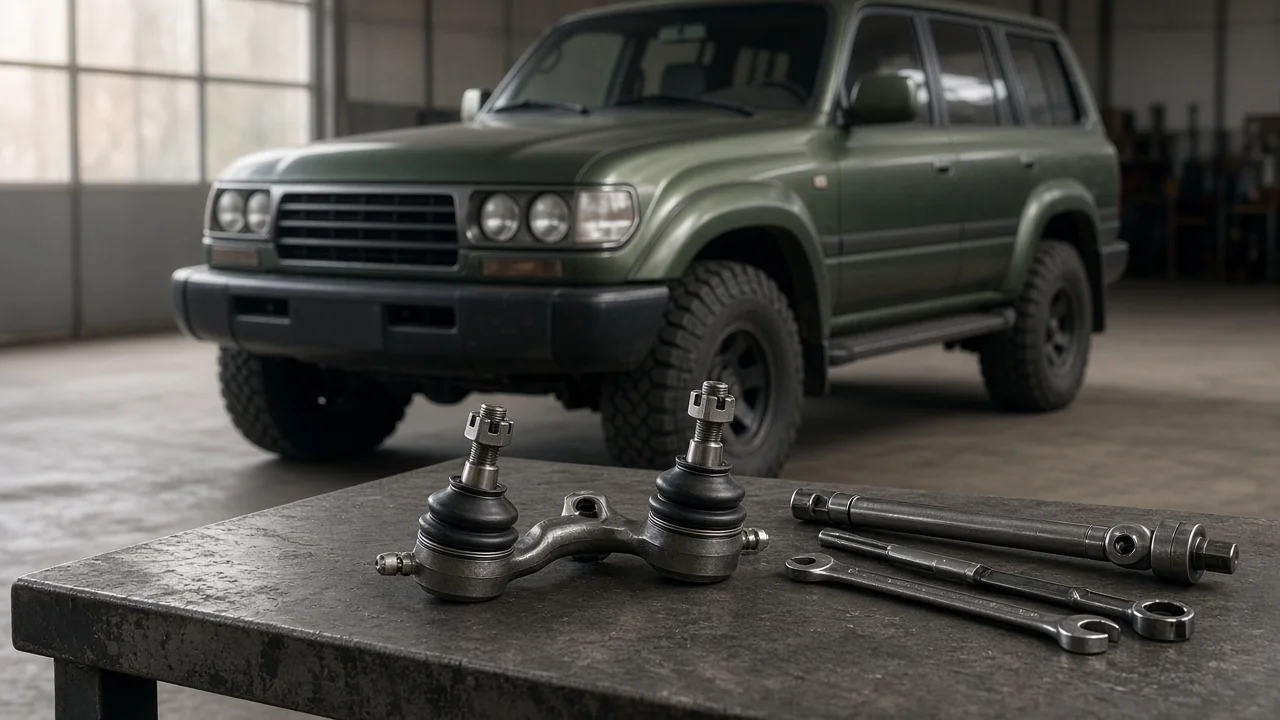
Tie rod ends on an FZJ80 Land Cruiser take a beating from heavy tires, trail impacts and decades of road salt. Worn joints show up as wander, a vague on-center feel and uneven tire wear. Choosing replacements is less about brand names than about matching the correct position, thread direction and stud taper. You also need to decide whether to replace the ends alone or the full tie rod assembly. This guide shows how to narrow the options for your truck.
Define the job the tie rod ends must do
Start with how the truck is actually used. A stock-height FZJ80 that commutes and tows a small trailer needs tie rod ends that restore factory steering feel and hold toe settings for years. A lifted truck on larger tires that sees rocky trails puts more load on the joints and on the tube between them, and the tie rod itself is more exposed to rock strikes. Decide which category your truck falls into before you compare parts. That decision determines whether original-equipment-style ends are enough or whether a stronger assembly is worth the extra cost and fitting work.
Also confirm that the tie rod ends are really the problem. With the wheels on the ground, have a helper rock the steering wheel slightly either side of center while you watch each joint from a safe position beside the wheel. Visible joint play, a torn boot leaking grease, or a stud moving in its housing points to the ends. If the joints look tight, the looseness may be coming from the steering box, drag link, steering damper or knuckle bearings, and new tie rod ends alone will not cure it.
Check compatibility with your FZJ80
The FZJ80 was sold in the US from 1993 to 1997, and the Lexus LX450 shares the same platform for its 1996 and 1997 model years. Even so, verify fitment by VIN or by a cross-reference to the factory part number rather than trusting a broad year range in a listing. Make sure the part is described as a tie rod end for the track rod that links the two steering knuckles, not a drag link end. Sellers sometimes list them together, and the two are not automatically interchangeable.
On the factory tie rod, the two ends thread into the tube in opposite directions, so one end has a left-hand thread and the other a right-hand thread. That arrangement lets the tube be turned to set toe. Order the correct pair, check that the thread pitch and diameter match your existing tube, and confirm the stud taper matches the knuckle arm. A stud that does not seat fully in its taper will not hold its fastener specification properly and can work loose. If the steering damper attaches to the tie rod on your truck, confirm the replacement leaves room for its clamp or bracket.
Ride height matters too. A lifted FZJ80 often runs caster correction, different steering components or aftermarket arms, and some heavy-duty tie rod kits are designed around specific knuckles, mounting points or lift heights. Read the kit requirements closely, including any note that the knuckle arm tapers must be reamed or that wheel and tire clearance changes.
Features that affect the choice
The most practical distinction is between sealed original-equipment-style ends and aftermarket ends with grease fittings. Sealed ends need no routine service and keep contaminants out as long as the boot survives. Greasable ends let you purge water and grit, which helps on trucks that see mud, water crossings or salted roads, but only if you actually grease them on a schedule. Follow the manufacturer's guidance on how much grease to add, because overfilling can split some boots.
Treat marketing labels with caution. Phrases like heavy duty, premium or lifetime say little on their own. More useful evidence includes the stated material and construction of the housing, the boot material, whether the joint ships with a castle nut and cotter pin, the written warranty terms, and whether the listing names the exact factory part it replaces. Complete heavy-duty tie rod assemblies with a thicker tube resist bending from rock strikes, but they cost more, may weigh more and can require modification, so they make the most sense for trucks that actually face that abuse.
Joint feel straight out of the box is another clue. A new end should move smoothly through its range with even resistance and no clicking or free play. Loose or gritty movement is a reason to return the part before it goes on the truck.
Limitations and ownership costs
Tie rod ends restore one link in the steering system. They cannot fix a worn steering box, a bent tie rod tube, tired knuckle bearings or a damper that has lost its resistance. Replacing them also changes toe, so budget for a professional wheel alignment afterward. Measuring the overall length of the old tie rod, or counting thread turns as you remove each end, gets you close enough to drive carefully to the alignment shop, but it does not replace setting toe properly. Use the alignment specifications for your truck and its ride height rather than guessing.
Plan the job around safe vehicle support. Chock the rear wheels, raise the front with a suitable jack and rest the axle on rated jack stands before working, never relying on the jack alone. Use a tie rod end puller rather than hammering on the knuckle arm or forcing a pickle fork if you want to avoid damaging the arm or boots. Tighten the castle nuts to the value in the factory service manual, follow its instruction for aligning the cotter pin hole, which typically means tightening further rather than loosening, and fit new cotter pins. Greasable ends add a small recurring maintenance task, and any set of ends should be checked for boot damage and joint play at routine service intervals.
Build a practical shortlist
Narrow the options with a short checklist rather than a ranking. For each candidate, confirm that it lists your model and years or cross-references the factory part number, that it is for the tie rod rather than the drag link, and that you are getting the correct left-hand and right-hand thread pair. Check the stud taper and thread size, whether a castle nut and cotter pin are included, and whether the end is sealed or greasable. Note the boot material, the written warranty and whether the seller accepts returns on parts that arrive with excessive play.
Then match the shortlist to your truck. For a stock-height daily driver, a pair of quality original-equipment-style ends on a straight existing tube is usually the sensible choice. For a lifted truck that regularly sees rocks, weigh the cost of a complete heavy-duty assembly, including any required machining and the alignment that follows, against the risk of bending a factory tube on the trail. Whichever route you choose, inspect the drag link, damper and steering box at the same time so the new tie rod ends are not working against other worn parts.