Fuel Pump Removal Tools: Locking Ring Wrenches and Fit Checks
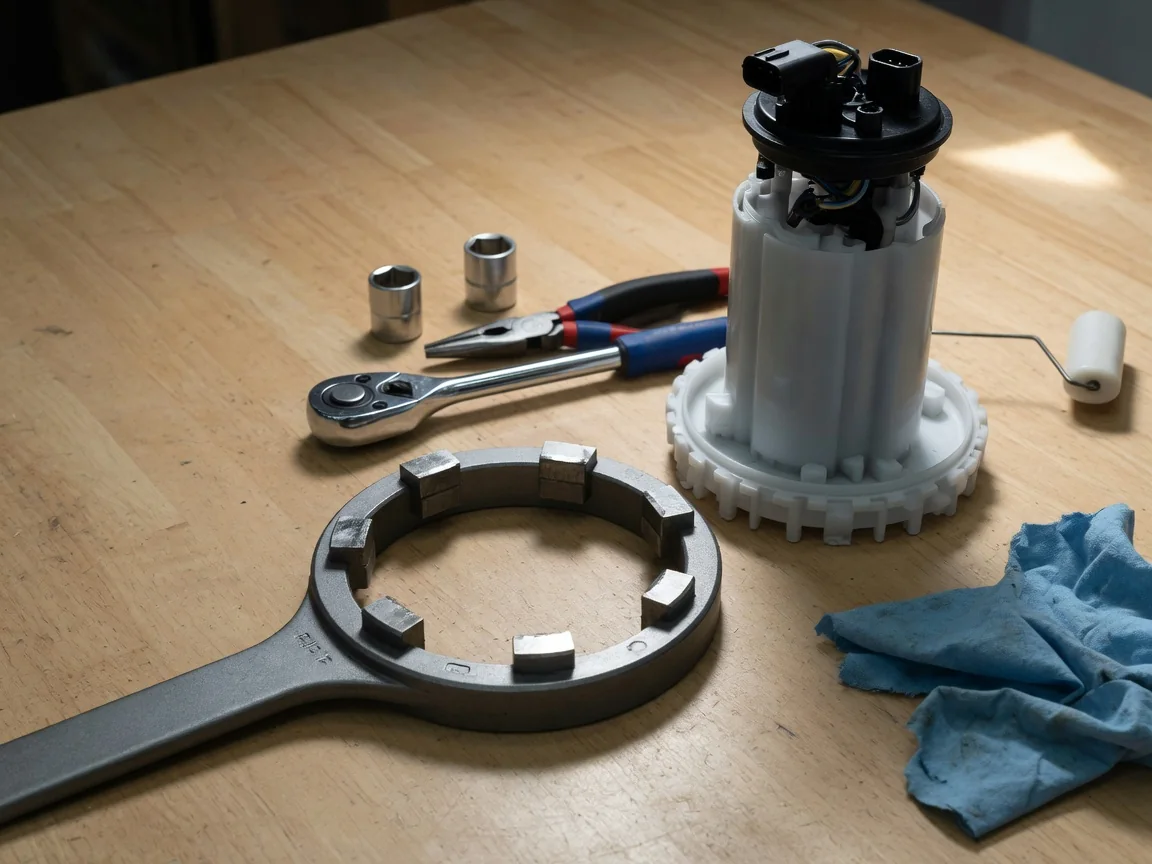
Replacing an in-tank fuel pump often stalls at one step: releasing the retaining ring that holds the fuel pump module in the tank. A fuel pump removal tool is built for that job, but fit matters more than the label. Knowing how locking ring tools engage, how to check wrench fit, which supporting equipment applies, and where safety limits sit helps you decide whether to proceed or hand the work to a qualified shop.
What a Fuel Pump Removal Tool Does
The tools discussed here apply to in-tank fuel pump modules, where the pump and related components such as the level sender form an assembly that seals against an opening in the tank. A retaining ring, sometimes called a lock ring, clamps the module flange against its seal. A dedicated fuel pump removal tool engages that ring so it can be released or secured evenly. It does not diagnose a weak pump, relieve pressure, disconnect lines, or complete the other steps of a fuel pump replacement.
Before shopping for fuel pump tools, find out how the module is retained and how it is reached. Some vehicles provide a service access panel under a seat or trunk floor, while others require lowering the tank first, and the retaining hardware may be a threaded ring, a cam-lock ring, or a bolted plate. A listing labeled simply as a fuel pump tool may be meant for a different ring design or even a different task, such as line disconnection, so intended use and fitment both need checking.
Locking Ring Tools and Their Engagement Points
The locking ring holds the module flange tightly against its seal so fuel and vapor stay inside the tank. A fuel pump locking ring tool typically has lugs, pins, or jaws that seat into the ring's lock ring tabs, slots, or other designated tool engagement points, spreading turning force around the ring rather than concentrating it at one spot. Tool selection depends on ring diameter, the spacing and shape of those contact points, whether the ring is metal or plastic, and how much clearance surrounds the flange.
Not every module uses a rotating lock ring, so confirm the retaining design in vehicle-specific service information before buying a fuel pump ring removal tool. When a tool sits only partly in its engagement points, force concentrates on a small area. That can round or crack tabs, distort the ring, or let the tool slip and damage the plastic module flange or nearby fuel lines. A ring damaged this way may no longer clamp the seal evenly, turning a straightforward module swap into a larger repair.
Checking Whether a Fuel Pump Wrench Fits
A fuel pump wrench comes in two broad forms: fixed-pattern tools made for particular ring designs and adjustable tools with sliding or pivoting jaws. For either, the useful fit information is the ring's outer diameter, the number and position of its engagement points, and the depth of those tabs or slots. Check the exact vehicle application and any documented tool specification. An adjustment range printed on packaging shows only the diameters the jaws can reach, not whether they will seat properly on a particular ring profile.
Practical fit checks go beyond the ring itself. The wrench's drive connection must suit a ratchet or breaker bar that can swing within the available space, and the tool's overall height matters when a seat frame, trunk floor, or body panel sits close above the service opening. Installation matters as much as removal. Some procedures call for a torque specification or require aligning index marks on the ring, module, and tank, so the wrench must support whatever method the service information documents.
Supporting Equipment a Replacement Job May Require
Fuel pump replacement tools extend beyond the ring wrench, and grouping them by purpose makes planning easier. Line disconnection needs approved tools matched to the fitting design, fastener work needs ordinary sockets and drivers for panels or straps, cleaning supplies keep dirt out of the open tank, and torque equipment is needed wherever a torque specification applies. Connector designs decide whether a dedicated fuel line disconnect tool is required. Prying or forcing a fitting apart can crack plastic connectors or damage retaining clips, creating a leak point.
Access layout changes the equipment list considerably. Working through a service access panel usually keeps the job to hand tools, while a design that requires tank removal may call for tank support equipment, such as a suitable jack or cradle, plus a safe way to raise and secure the vehicle. Replacement seals and retaining hardware are service parts, not tools, and should be verified separately against the vehicle and module. Whether an old module seal or ring can be reused should come from service information, not assumption.
Safe Options When the Correct Tool Is Unavailable
If the correct tool is missing, the practical fixes are straightforward: borrow one from someone who owns the right pattern, rent one from a tool rental or loaner source, or buy the tool documented for the vehicle. An alternative fuel pump tool is reasonable only when reliable tool or vehicle service information confirms that it fits the application and seats fully in the ring's engagement points. A universal-style tool is not automatically wrong, but its suitability needs the same confirmation as a vehicle-specific one.
Hammer-and-screwdriver methods, improvised striking tools, heat, and forced engagement do not belong on a fuel tank. Striking metal parts near fuel vapor can create sparks, heat introduces an obvious ignition hazard, and impact loads can crack rings, tabs, or the module flange. When fitment remains uncertain after checking the available information, or when the job needs lifting, tank support, or ventilation beyond what a home workspace offers, handing the work to a qualified shop is the useful next step rather than a setback.
Safety Limits and Conditions That Need Professional Service
Opening the fuel system carries real hazards. Fuel vapor ignites easily, residual line pressure can spray fuel when connections are opened, and electrical sources such as power tools, work lights, or the vehicle's own circuits can supply ignition. Pressure-relief and disconnection steps should follow the vehicle's documented procedure. Stop and seek professional assessment if you find visible corrosion on the ring or tank opening, cracked retaining hardware, deformed lock ring tabs, or damaged electrical or fuel connectors, since any of these can prevent a reliable seal.
Symptoms alone do not prove the pump is at fault. Fuel odor, hard starting, or stalling can stem from leaks, sensor faults, ignition problems, or fuel delivery issues elsewhere, and a stored fault code is evidence to interpret, not confirmation of a failed pump. Professional diagnostic testing may be needed before replacement. After any installation, the module seal and connections need the sealing and leak checks the vehicle's service information specifies. If leakage is suspected, the vehicle should not be started or driven until it is inspected.