Fuel Injector Leak Repair: Identifying and Fixing the Leak
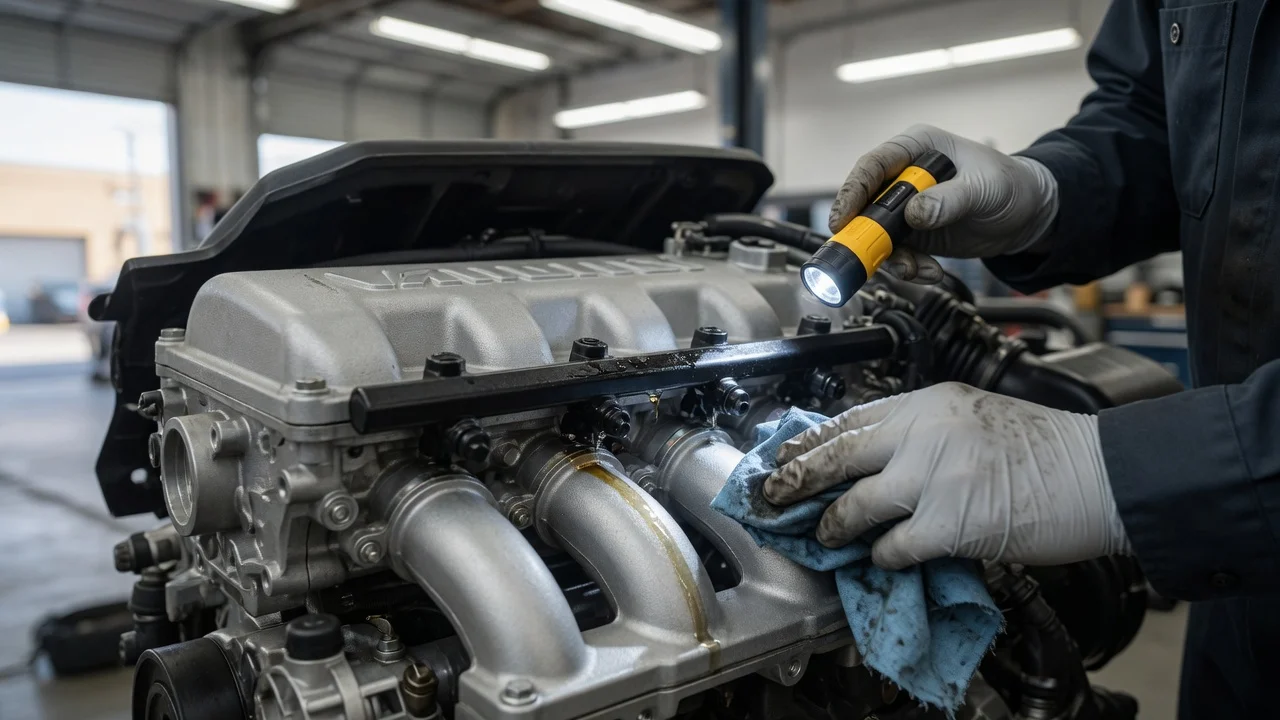
Fuel injector leak repair starts with identifying where fuel is escaping. An external leak may require a replacement seal, connection, fuel line or injector. An injector that leaks internally into the engine needs a different diagnosis and may require specialist servicing or replacement. Replacing seals will not correct an injector that fails to shut off internally.
Make a suspected fuel leak safe first
If you see liquid fuel around an injector or notice a strong fuel smell, stop the engine and avoid restarting it until the source is checked. Keep flames, smoking materials and other ignition sources away. Arrange recovery if an active leak is suspected; driving can expose hot engine parts to escaping fuel.
Fuel systems can retain pressure after the engine stops. Gasoline direct-injection and common-rail diesel systems use high-pressure fuel circuits that require specific handling procedures. Never loosen a connection to check for pressure or use your hand to search for a leak. High-pressure fuel can penetrate skin, and a suspected injection injury requires immediate emergency medical attention.
Identify what is actually leaking
An external leak releases fuel outside the intended fuel circuit. Possible sources include an injector seal, the injector body, a fuel rail connection, a supply pipe or, on applicable diesel engines, a return connection. Fuel can travel across nearby surfaces, so the wettest area does not necessarily identify the failed part. A technician should trace the source using the vehicle’s prescribed leak-check procedure.
An internal leak occurs when fuel passes through an injector into an intake port or cylinder when it should not. There may be no visible wetness outside the engine. Difficult starting, rough running or excessive fueling can be consistent with this fault, but these symptoms also have other causes and do not establish that an injector is leaking.
On some diesel engines, a failed seal between the injector and cylinder head allows combustion gases to escape around the injector. Soot deposits or a chuffing sound can support that possibility. This is a combustion-sealing problem, which must be distinguished from a liquid-fuel leak at a supply or return connection.
Use checks that distinguish the possible causes
Start by establishing whether the concern is visible escaping fuel, suspected internal leakage or combustion leakage around the injector. For an external leak, locating the exact point of escape helps distinguish a failed seal from a damaged injector or connection. Inspection alone may not reveal whether a sealing surface or adjoining component is also damaged.
For suspected internal leakage, a technician may use a fuel-pressure retention test if the manufacturer specifies one. A pressure drop can support a loss of pressure somewhere in the system, but it does not identify an injector by itself. Other components can also allow pressure to fall. Follow-up isolation or injector testing must establish where the fuel is going.
On applicable diesel systems, a return-flow test measures fuel returning from the injectors. Excessive return flow can help identify internal leakage into the return circuit; it does not by itself prove that an injector nozzle is dripping into a cylinder. Results require the specified operating conditions and limits for that engine.
Fault codes can guide testing, but a misfire, fuel-pressure or fuel-mixture code alone does not prove that an injector needs replacement. Code definitions, test conditions and acceptable readings depend on the vehicle. No vehicle details or test results were supplied here, so a failed component or numerical pass/fail limit cannot be identified.
Match the repair to the confirmed fault
A leaking replaceable seal may be repaired with the specified new seal if the injector and mating surfaces remain serviceable. A cracked injector body or damaged fuel connection needs repair or replacement of the affected component. A combustion-seal repair also requires checking the injector seat and following the prescribed cleaning and installation procedure.
An injector confirmed to leak internally may need replacement or specialist testing and servicing, depending on its design and the manufacturer’s requirements. Injector cleaner cannot repair a split seal, cracked body or damaged connection, and it should not substitute for diagnosing a suspected leak.
Before removal, obtain the service procedure for the exact model year, engine and fuel-system configuration. It determines how to release pressure safely, which seals, pipes or fasteners must be renewed, and whether special installation tools, injector coding or adaptation are required. Do not improvise tightening values or apply sealant unless the procedure calls for it.
Verify that the repair solved the leak
After repair, complete the manufacturer’s leak check under the specified conditions before returning the vehicle to use. Confirm that the original concern is resolved and repeat the relevant diagnostic test when internal leakage was suspected. If fuel contamination of the engine oil is suspected, have that assessed and addressed as part of the repair.