Fuel Injector Kits: Choosing a Compatible Kit
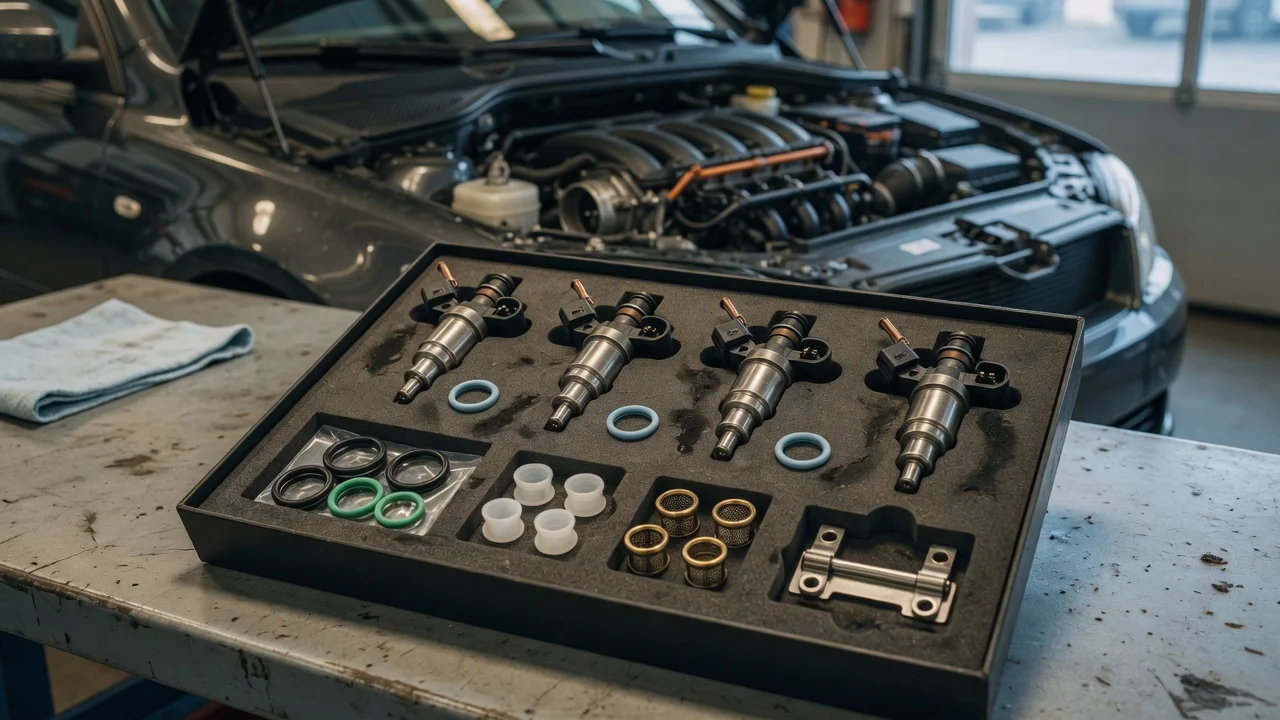
What a compatible kit actually means
A fuel injector kit is compatible only when the injectors, seals, clips and electrical connectors match the engine’s fuel system—not merely the vehicle make. The kit must suit the same model year, market, trim and powertrain, because injector type, flow, impedance and plug shape often change between those details. If any of those differ, the injectors may physically go in and still starve, flood or fail to fire.
Start from the engine, not the parts listing. Confirm gasoline versus diesel, port injection versus direct injection, cylinder count, and the OEM injector part number or a documented equivalent. A kit sold for a nameplate without that powertrain match is not a confirmed fit.
Match the injection system first
Port (multi-point) injectors spray into the intake runners. Direct-injection injectors spray into the combustion chamber at much higher pressure and use a different body, seat and electrical interface. Diesel common-rail injectors are another family again, with their own rails, pumps and control. These types are not interchangeable, even when the engine displacement looks similar.
Kits that include only the injectors assume the existing rail, lines and pump stay. Kits that add rails, lines, O-rings, clips or wiring pigtails still need those extras to match the same fuel-system generation. Mixing a later rail with earlier injectors, or a gasoline kit onto a diesel engine, is a mismatch even if the cylinder count agrees.
What to confirm on the injectors themselves
OEM or documented equivalent part number for that model year, market, trim and engine code. Unresolved differences in those four details mean the listing is not yet proven. Flow rating in the same units and test condition as the stock or intended tune (often cubic centimetres per minute or pounds per hour). A higher-flow injector without a matching fuel map can run rich or lean. Impedance class: high-impedance (saturated) versus low-impedance (peak-and-hold). The engine control unit’s driver circuit is built for one class; swapping classes without the correct drivers or resistors can damage hardware or leave cylinders dead. Connector and lock style, plus pigtail pinout if the kit includes harness adapters. A plug that seats but does not lock, or a reversed pin, will cause intermittent misfires. Physical envelope: length, O-ring diameters, clip type and how the injector seats in the rail and manifold or head. A kit that “almost” seats can leak fuel or unseat under pressure. Cylinder count and whether the kit is a complete set. Partial kits leave mixed old and new injectors, which is a common source of uneven idle.
If the seller quotes flow or spray pattern without stating the test pressure, fluid and pulse width, treat those figures as incomplete. Do not rank two kits on flow until the units and test conditions match.
Checks before you buy
Confirm the diagnosis before you order. Misfire, poor fuel economy or a rich or lean code can come from a pump, filter, rail pressure sensor, wiring, vacuum leak or a failed injector on one cylinder. A kit is the right next step when injectors are known to be clogged, leaking, electrically open or the wrong specification for a planned fuel-system change. A single-cylinder fault often points to testing or replacing that injector first rather than buying a full set.
Record the VIN-derived engine code, model year, market and fuel system (port, direct, or diesel common-rail). Cross-check that against the kit’s stated applications, not a generic make-and-model list. Compare the kit’s injector part numbers with the numbers on the existing injectors or in the service parts catalogue for that powertrain. If they differ, find out whether the difference is a supersession or a different flow and connector. Inspect what the kit includes: injectors only, or O-rings, clips, pintle caps, spacers, pigtails and rail hardware. Missing seals and clips are a leak risk; extra hardware for a different rail generation will not fit. Plan the control side. Stock-replacement injectors of the same flow and impedance typically keep the existing calibration. Different flow, a change from high to low impedance, or a move between port and direct injection needs a compatible control strategy and, where required, a professional calibration. That cost and capability belong in the purchase decision. Budget installation as well as the kit. Access, rail removal, new seals, fuel-system depressurization and a leak-down or balance test after fitment are part of making the kit work. Labour and shop diagnostic time are often larger than the parts themselves; quoted kit prices rarely include them, and completed-job totals vary by market and date. Check condition if the kit is remanufactured or used. Ask what was replaced (filters, coils, nozzles, seals), whether flow was matched as a set, and whether there is a return path if a unit fails leak or resistance tests on arrival.
Total ownership is the kit plus seals, any pigtails or resistors, calibration if flow or impedance changes, and labour or tools. Advertised kit prices are not completed-job prices. Without a stated market, date, currency and a list of included parts, treat any figure you see as incomplete.
When a “performance” kit is the wrong kit
Larger-than-stock injectors are only suitable when the rest of the fuel system and the engine control calibration are built for that flow. On an otherwise stock engine they can idle poorly, smell of fuel and throw mixture codes. Direct-injection engines add another constraint: aftermarket injectors must match that engine’s pressure, spray targeting and driver type; a port-injection performance kit does not convert a direct-injection head.
If the goal is restoring factory behaviour, a stock-spec or OEM-equivalent set with matched flow and the correct seals is the usual fit. If the goal is supporting more fuel for a known modification, size the injectors to that fuel demand and confirm the pump, rail, lines and calibration at the same time. Do not choose on advertised horsepower claims unless those claims name the engine, fuel, boost and test conditions they were measured under.
A practical next step
Identify the exact engine and injector part number, decide whether you need a stock replacement or a flow change, then shortlist only kits that match type, impedance, connector and included hardware. If the listing cannot name those details for your model year, market, trim and powertrain, keep looking. Have the injectors flow-tested or electrically checked if the fault is still unproven; a compatible kit is only the right purchase once the injectors are the part that actually needs replacing.