Understand Front vs Rear Brake Bias
The short answer
Brake bias is how a vehicle's total braking force is divided between the front and rear axles. On almost all road vehicles the bias favors the front, so the front brakes do most of the stopping. The reason is weight transfer: when a car slows, load shifts forward onto the front tires, giving them more grip to use while the rear tires lose grip. The exact split depends on the specific vehicle, its weight distribution, its brake hardware and how it is loaded. No manufacturer figures were supplied for this article, so it does not give percentages for any particular model. The correct bias for your vehicle is the one its manufacturer engineered, and on a road car that is not something owners normally adjust.
What brake bias means
Each axle can only use as much braking force as its tires can transmit to the road before they lock or, with ABS, before the system steps in. Brake bias, also called brake balance or brake proportioning, describes how the system divides the driver's pedal input between the front and rear brakes. A front-biased setup sends more force to the front axle. A rear-biased setup sends more to the rear. The goal is for both axles to approach their grip limit at about the same time, so the car stops in the shortest distance while staying stable.
Why the front brakes do most of the work
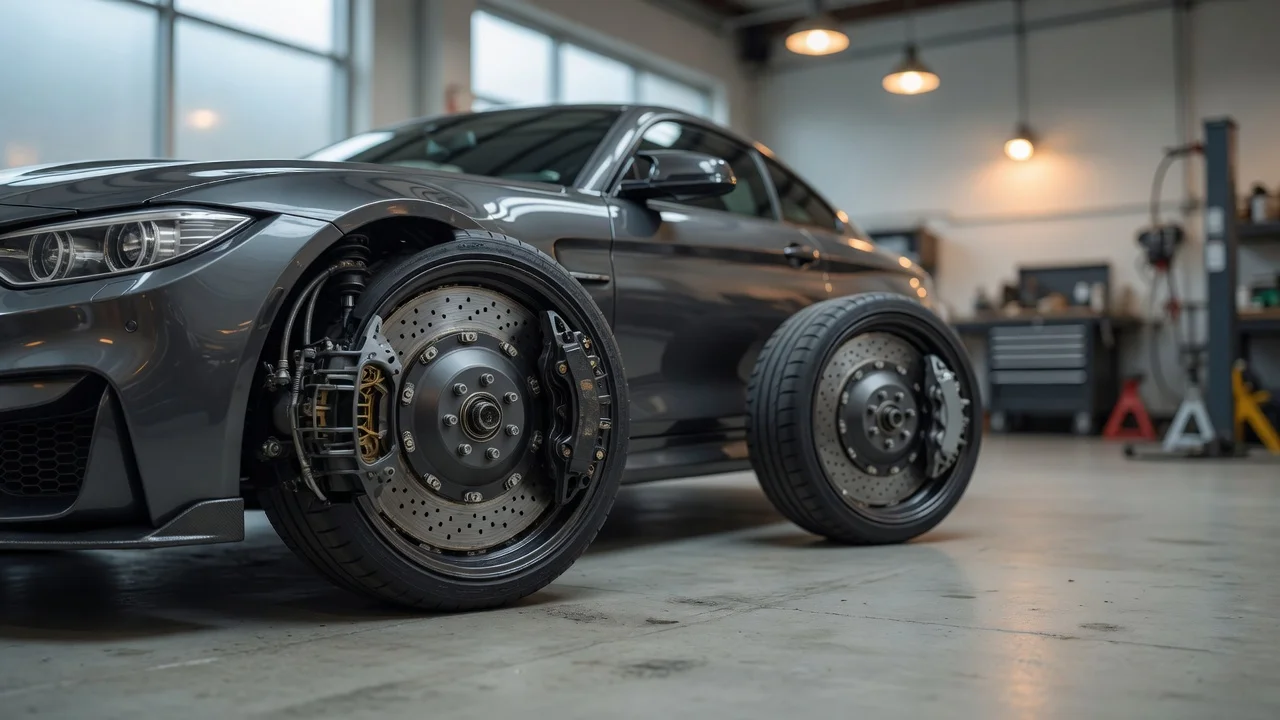
Under braking, the vehicle's mass keeps moving forward while the tires slow it down. Because the center of gravity sits above the road, this produces a pitching effect: the nose dips, the front tires are pressed harder into the road, and the rear tires are partly unloaded. More load on a tire generally means more available grip, so the front axle can handle more braking force than the rear. This is why front brake components are usually larger than rear ones on the same vehicle, and why front pads and rotors tend to wear faster. The harder the stop, the more weight moves forward and the more the ideal balance shifts toward the front.
What happens when the balance is wrong
Condition | What tends to happen | Effect on control; Too much front bias | Front tires reach their limit first; without ABS the front wheels can lock | The car tends to push straight ahead and steering response fades, but it usually stays pointed in a stable direction; Too much rear bias | Rear tires reach their limit first; without ABS the rear wheels can lock | The rear can slide sideways and the car may spin, which is generally harder for a driver to recover; Well-balanced bias | Both axles approach their grip limit at about the same time | Shortest stopping distance with stable, predictable behavior
Both extremes lengthen stopping distances because one axle is not contributing its full share. Engineers generally err on the side of slight front bias on road cars because front lockup is more forgiving than rear lockup: a car that understeers keeps going roughly straight, while a car whose rear wheels lock can rotate unexpectedly.
How modern vehicles manage bias
Older vehicles typically used fixed hardware to set the split, such as differences in caliper and rotor sizes, sometimes combined with a proportioning valve that limits rear hydraulic pressure. Some designs used load-sensing valves that adjusted rear pressure according to how heavily the rear was loaded. Most current vehicles with anti-lock brakes also use electronic brakeforce distribution, usually shortened to EBD. EBD uses the ABS wheel-speed sensors and valves to adjust rear braking pressure continuously, so the balance can adapt to changes in load, road surface and how hard the driver is braking. Whether a particular vehicle uses a valve, EBD or both varies by model, generation and market, so check the owner's or service documentation for your vehicle.
Things that can shift bias on a road car
• Load: heavy cargo, passengers in the rear or a loaded roof rack changes weight distribution, and towing adds further load behind the rear axle. • Mismatched brake parts: fitting higher-friction pads or larger brake components on only one axle can move the balance away from what the vehicle was designed for. • Tires: different grip levels front to rear, or worn tires on one axle, change how much braking force each axle can use. • Faults: a seized caliper, contaminated pads, a failing proportioning valve or an ABS or EBD fault can unbalance braking.
Warning signs include the car pulling or the rear feeling unsettled under firm braking, uneven brake wear between axles that goes beyond normal front-heavy wear, or an ABS or brake warning light. Any of these is a reason to have the brakes inspected rather than to attempt adjustment.
Adjustable brake bias in motorsport
Race and track cars often have an adjustable bias system, commonly a balance bar connecting two master cylinders, sometimes with a cockpit adjuster. Drivers and engineers tune the split to suit the track, tires, fuel load and driving style, and may change it during a session. This is a specialist setup that requires testing and experience. It is not a typical modification for a road vehicle, where the factory balance and electronic systems have been calibrated together.
Practical takeaways
• Front bias is normal and intentional on road vehicles because weight shifts forward when braking. • Too much rear bias is the more dangerous error because it can make the rear of the car slide. • If you upgrade brakes, use parts designed to work together across both axles, or follow the vehicle maker's or a qualified specialist's recommendation. • Manufacturer specifications for a given vehicle were not part of the supplied material; consult official service information for model-specific details.