Freightliner Cascadia Check Engine Light: Causes and Next Steps
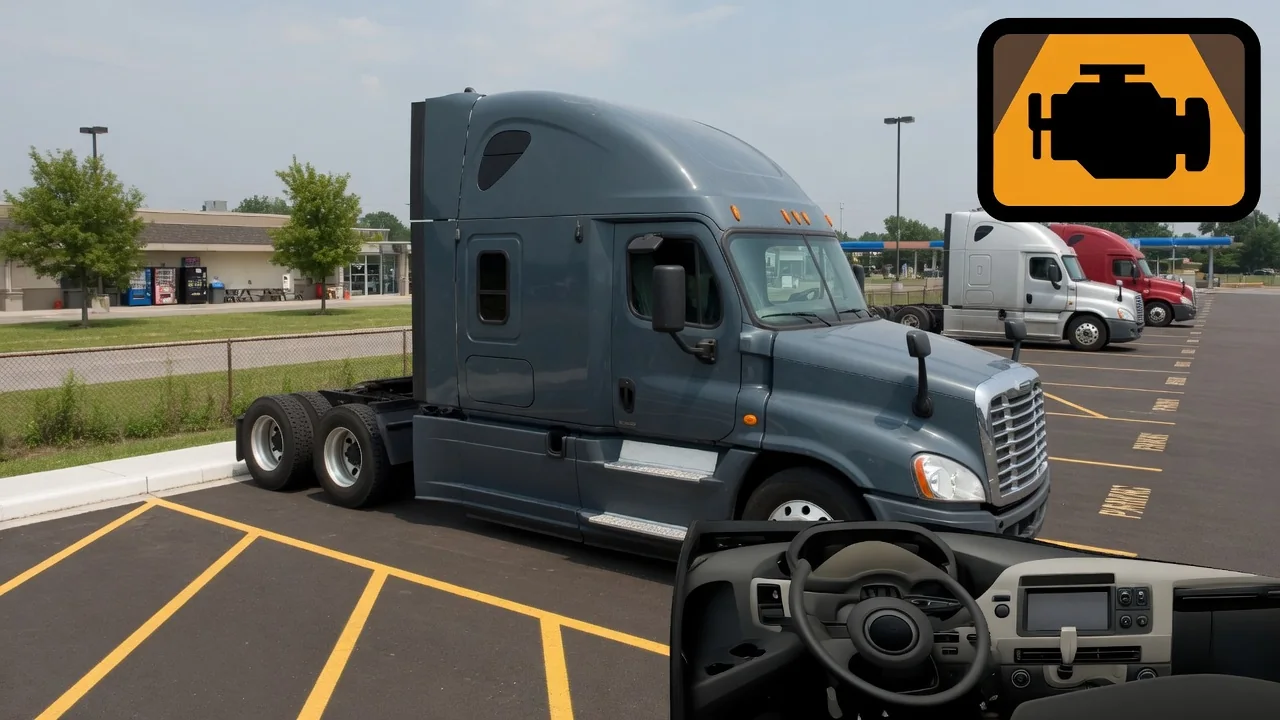
A check engine light on a Freightliner Cascadia means the engine or aftertreatment controls have detected a monitored fault. The Freightliner Cascadia check engine light does not identify a failed component or establish whether the truck must stop. Note the model year, engine, accompanying engine warning light indications, and displayed messages first. The operator's manual supplies the meaning of that combination, including when aftertreatment or sensor wiring deserves attention.
What the Cascadia Check Engine Light Can Tell You
The engine warning light on a Cascadia reports that a control module has detected a condition outside its expected range. That detection is evidence to interpret, not proof that a named part has failed or that a repair is due immediately. Before you assign meaning, confirm the truck's model year and engine, then note every accompanying lamp and the exact message on the display. Those details change how the same amber or red indication should be read from one configuration to another.
Possible sources include engine controls, the aftertreatment system, sensors, and electrical connections that carry those signals. None of those areas can be ranked as more likely from the lamp alone. The applicable operator's manual defines the warning combination you actually have and the response it requires, which may differ from a similar lamp on another Cascadia. Treat the light as a prompt to collect that vehicle-specific information rather than as a diagnosis of a failed part.
Warnings That Require a Safe Stop
A red stop-engine warning, a low oil-pressure warning, an overheating indication, or a severe drivability problem is reason to pull over safely when traffic allows and then follow the operator's manual. Do not keep rolling solely because the check engine lamp is familiar. Reduced power or a displayed engine derate message can limit speed, gradeability, or the ability to merge, which may make continuing a route unsafe even if the engine still runs. Treat those limits as a driving constraint, not as a minor inconvenience.
An amber engine warning light alone does not establish that continued driving is safe. Accompanying messages, changes in how the truck pulls, unusual exhaust, and the operating guidance for that lamp combination still matter. If warning urgency is unclear, if power loss creates a traffic hazard, or if severe symptoms appear, contact fleet maintenance or roadside assistance rather than guessing. A derate that leaves you slow in traffic or unable to hold a grade is a safety issue even when the engine has not shut down.
Aftertreatment Faults That Can Trigger the Warning
On Cascadia trucks equipped with them, the diesel particulate filter traps soot from the exhaust stream, diesel exhaust fluid supplies ammonia for NOx conversion, and the selective catalytic reduction system uses that chemistry to meet emissions limits. Those systems depend on sensors, dosing hardware, and temperature conditions that the engine controls monitor. Soot-loading concerns, unsuccessful regeneration, diesel exhaust fluid delivery or quality faults, and aftertreatment sensor faults can all generate a check engine or related aftertreatment warning. Each of those paths can look similar on the dash until the exact message is recorded.
Write down any diesel particulate filter, diesel exhaust fluid, regeneration, or derate message exactly as displayed. Do not assume those notices share one cause, because a quality issue, a dosing interruption, a sensor circuit fault, and a regeneration that did not complete are different problems. A check engine light alone does not justify a parked regeneration. Leave regeneration decisions and procedures to the applicable operating guidance and to qualified service personnel, rather than attempting a parked cycle from the lamp by itself.
Engine Sensors, Airflow, Fuel Delivery, and Electrical Faults
Depending on the engine configuration, faults involving engine sensors, air handling, exhaust gas recirculation, or fuel delivery may also turn on the check engine lamp. A sensor-related active fault code can reflect the circuit the module is watching, not a confirmed failed sender. Damaged sensor wiring, a poor connection, or a power-supply problem can produce the same type of report without proving the sensor itself has failed. That is why a code that names a sensor still needs vehicle-specific confirmation before any part is condemned.
Rough running, hard starting, reduced power, or unusual exhaust belong in the diagnostic history because they describe how the truck behaved when the warning appeared. They are observations, not conclusive diagnoses of a fuel, airflow, or aftertreatment failure. Limit what you inspect to safely visible conditions while the truck is parked and cooled as the manual requires. Leave hot aftertreatment components, pressurized fuel systems, electrical probing, and under-truck inspection to qualified personnel rather than tracing harnesses from the shoulder.
How to Record and Interpret Cascadia Fault Codes
Fault information on a Cascadia may appear through the truck's diagnostic display or a compatible heavy-duty diagnostic tool, depending on how the truck is equipped. Record the complete code, the reporting module, whether the fault is active or stored, the exact message, and the operating conditions when it set, including load, temperature, and any derate. In heavy-duty reporting, SPN and FMI identify the suspect parameter and the type of failure mode. Manufacturer-dependent codes still require vehicle-specific, engine-specific, and module-specific confirmation before you interpret them.
A code identifies a monitored condition or circuit. It does not by itself authorize replacing the named component, and it is not proof that the part has failed. Preserve active fault codes and the rest of the diagnostic history before the truck goes into service, because that snapshot is often more useful than a later guess about what the lamp meant. Avoid clearing faults or disconnecting batteries merely to extinguish the light; doing so can erase the evidence a technician needs to choose the right tests.
What to Document Before Professional Diagnosis
Before professional diagnosis, write a service handoff that identifies the truck and engine, copies dashboard messages and fault codes, describes symptoms, and notes when the warning first appeared. Add recent fueling, diesel exhaust fluid filling, maintenance, and operating conditions as context, without treating that timing as proof of cause. A fill, a filter service, or a long idle period may be relevant, but coincidence is not a diagnosis. That written snapshot helps a technician select live-data review, wiring checks, and engine or aftertreatment tests from the verified faults rather than from a guess.
A warning that disappears can still leave stored diagnostic information. Report it if the lamp returns or if it accompanied a serious symptom such as a derate, overheating indication, or loss of oil pressure. Do not treat an extinguished light as evidence of repair until the underlying fault has been addressed and normal operation has been verified under the conditions that previously set the code. Confirmation belongs with qualified service using the recorded history, not with a dark lamp after a restart or a disconnected battery.