Ford Transit Turbo Boost Control Position Sensor: Identification
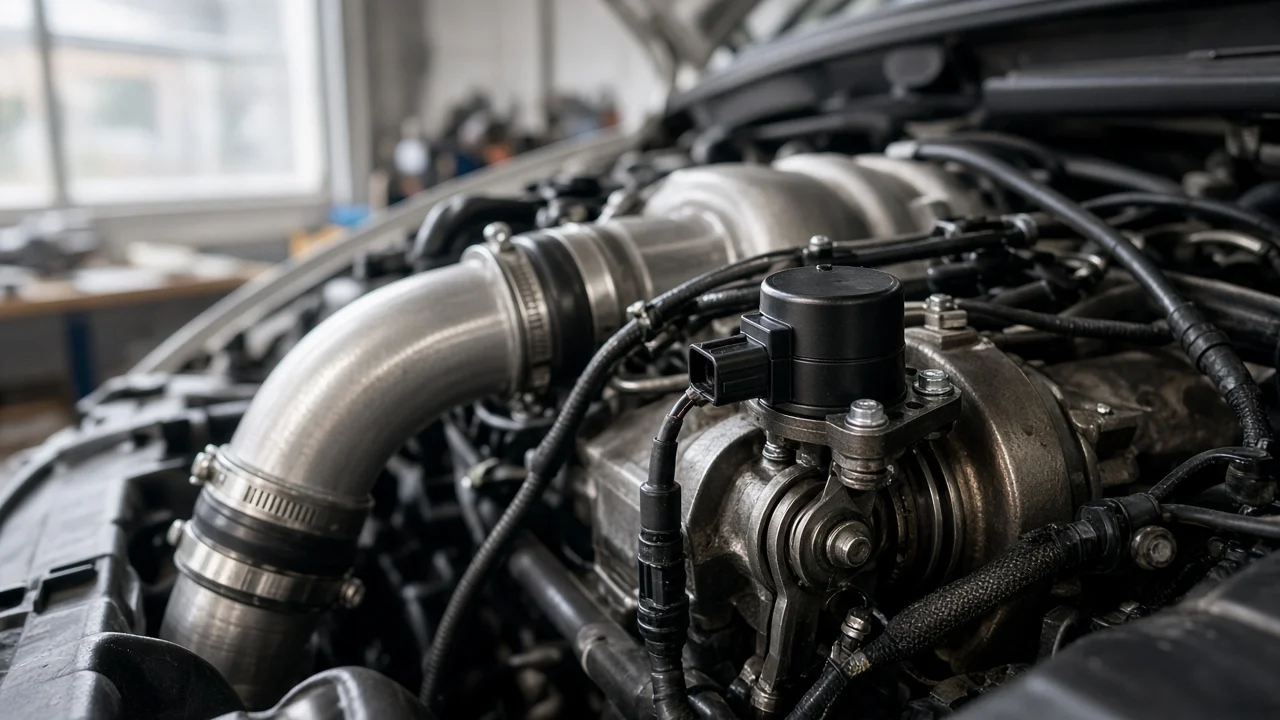
If a scan tool shows a fault for the turbo boost control position sensor on your Ford Transit, the first job is finding out what that sensor actually is on your van. Depending on the engine and model year, it may be a separate part, or it may be built into the turbocharger actuator. This guide explains how to identify it correctly before you buy parts or start any repair.
What the boost control position sensor is on a Transit
The turbo boost control position sensor reports the position of the mechanism that regulates turbo boost. On engines with a variable geometry turbocharger, that mechanism is the vane assembly inside the turbine housing. On engines with a conventional wastegate, it is the wastegate actuator. The engine control module uses the signal to confirm that the actuator has moved where it was commanded to move.
On many Transit configurations, especially diesel versions, the position sensor is not a stand-alone part you can unbolt. It is often integrated into an electronic actuator mounted on the turbocharger, and the manufacturer may supply only the complete actuator or, in some cases, the actuator together with the turbocharger. Some configurations do not use a boost control position sensor at all. So the honest answer to identification is: confirm your exact engine and parts listing first, because the sensor's form and serviceability vary.
How the sensor and actuator work together
The engine computer calculates how much boost it wants based on throttle input, engine speed, load and other inputs. It then commands the actuator to move the turbo vanes or wastegate. The position sensor sends back a voltage signal that changes as the actuator moves. If the reported position matches the commanded position, the system is working as designed.
When the signal is missing, out of range, or does not track the command, the engine computer sets a diagnostic trouble code and may limit power to protect the engine. Generic codes in the P2562 to P2565 range describe faults in the turbocharger boost control position sensor circuit, such as range or performance problems, or signals that are too low or too high. A code like this tells you which circuit flagged the problem, not which component has failed. A sticking vane mechanism, a wiring fault or a connector problem can produce the same code as a failed sensor.
What changes the answer for your van
The Ford Transit has been sold with several engine families across different markets and model years, including gasoline engines with and without turbocharging and several diesel engines. The diesel versions sold in some North American years and the TDCi and EcoBlue diesels used in other markets use different turbocharger designs and actuator arrangements. Petrol EcoBoost versions use wastegate control rather than variable vanes, and how that wastegate is actuated and monitored depends on the engine generation.
Because of this, the vehicle configuration matters more than the model name. Two vans that look identical can have different turbos, actuators and connectors. Mid-year production changes can also alter part numbers. Operating conditions affect diagnosis too: heavy towing, frequent short trips and long idling can encourage soot and carbon buildup that makes vane mechanisms stick, which can show up as a position sensor performance fault even when the sensor itself is fine.
How to identify the correct part
Start with your Vehicle Identification Number. A Ford dealer parts department or a reputable parts catalog can decode the VIN to the exact engine, model year and build details, then show whether the position sensor is sold separately or only as part of the actuator or turbo assembly. Write down the engine code and the production date from the door jamb label, because both can affect the correct listing.
Next, check the hardware itself. With the engine cold, look at the turbocharger and its actuator. Electronic actuators usually carry a label with a part number, and the turbocharger housing often has its own identification plate. Compare those numbers with the catalog result. Follow the wiring from the actuator to its connector and note the connector shape and pin count. If the catalog part does not match what is physically on the engine, stop and resolve the difference before ordering anything.
What the owner can check before replacing anything
Read and record all stored codes, including any freeze frame data, before clearing anything. Note whether the fault appeared under load, at idle, after a cold start or while towing. Related codes, such as boost pressure, actuator control circuit or sensor supply voltage faults, help separate a sensor problem from a wiring or mechanical one.
Inspect the connector for corrosion, bent pins, oil contamination or a loose locking tab. Look along the harness for chafing near hot exhaust parts and brackets. On vans with a separate vacuum-operated actuator, check vacuum hoses for cracks or disconnections. Review the service history for previous turbo, actuator or wiring work, and check whether any technical service bulletins or software updates apply to your van. A scan tool that displays commanded and actual actuator position can show whether the sensor reading follows the command smoothly or jumps and lags.
Limitations and when to get professional help
This guide cannot tell you the exact part, voltage values or test procedure for your specific Transit, because those depend on the engine, model year and market. Use the manufacturer specifications and the factory service information for any electrical test values, torque figures and replacement steps. Do not rely on generic numbers from other vehicles.
Professional help is a good idea when the sensor is integrated into the actuator, because many electronic actuators need calibration or a learn procedure with dealer-level software after replacement. It is also the right call if the van is in reduced power mode, if boost faults return after clearing, or if a stuck vane mechanism is suspected, since that can require turbo removal and inspection. A technician can confirm the diagnosis with proper testing, check your maintenance schedule for related items, and order parts by VIN so the replacement matches your van.