Ford Transit Mk6 Glow Plug Relay Location
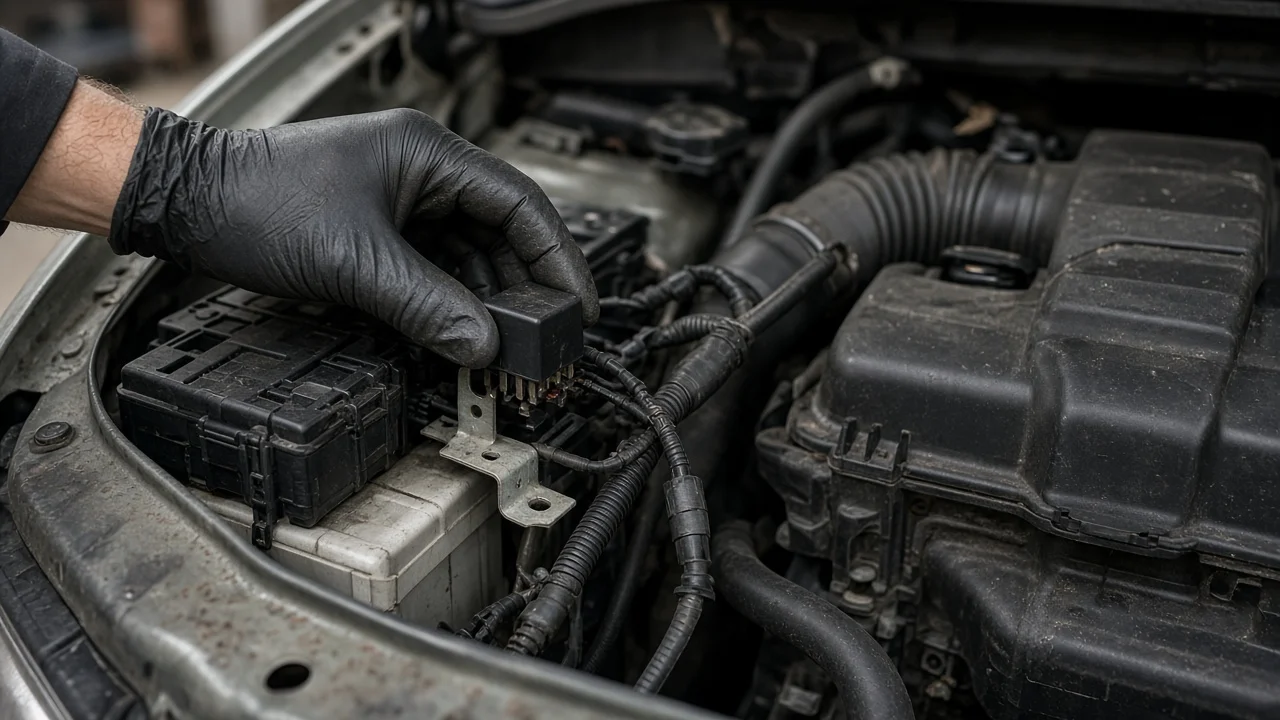
On a diesel Ford Transit Mk6, the glow plug relay is generally found under the hood rather than inside the cab. Its exact mounting point, however, varies with engine, drive layout and production changes. Photos from another van are unreliable, so the most dependable approach is to trace the glow plug feed back to its source. This guide explains where to look, how the circuit works and how to check it without disturbing the high-pressure fuel system.
Where the glow plug relay is usually found
On most diesel Mk6 vans, the part that switches the glow plugs is a separate relay or control unit mounted in the engine compartment. It is usually a squarish module fixed near the battery, on the inner fender or on the firewall area. It is easy to recognize by its wiring: one heavy-gauge cable carries battery supply, another heavy cable runs toward the cylinder head, and a smaller connector brings the control signal from the engine management system. On many vans it is not one of the small plug-in relays in the main fuse box, which is why owners often miss it when searching there. Check the fuse box cover legend first. If it shows a glow plug position, that answers the question for that particular van.
If the legend does not help, start at the glow plugs themselves. They sit in the cylinder head, one per cylinder on the four-cylinder Duratorq diesels, and are joined by a bus bar or individual leads. Follow that wiring away from the head and it will lead you to the relay. If tracing it would mean moving injector pipes or the fuel rail, stop and work from the relay end instead.
How the glow plug circuit works
When you switch the ignition on with a cold engine, the powertrain control module reads coolant temperature and decides how long to preheat. It then energizes the relay, which switches battery current to the glow plugs and lights the coil symbol on the dashboard. The relay exists because the plugs draw far more current than an ignition switch or control module could handle directly. On later engines the system may keep the plugs powered for a while after starting to reduce cold-running smoke and noise.
Typical failure points are burnt relay contacts, a corroded or loose connector, a blown supply fuse or fusible link, and a missing control signal from the module. Keep in mind that glow plugs only help the first combustion events. The engine still needs correct fuel pressure and proper injector delivery, so a healthy relay does not guarantee an easy cold start.
What changes the answer
Fuel type comes first. Gasoline Mk6 Transits, such as the 2.3-liter versions, have spark ignition and no glow plugs, so there is no glow plug relay to find. Engine configuration matters next. Front-wheel-drive Mk6 vans use a transversely mounted 2.0-liter diesel, while rear-wheel-drive versions use a longitudinally mounted 2.4-liter diesel. Because the engine sits differently in the bay, harness routing and the relay mounting point can differ between the two layouts.
Injection technology also changed during production. Earlier diesels used an electronically controlled injection pump, while later TDCi versions use common rail injection, which holds fuel at very high pressure in the rail and injector lines close to the glow plugs. Do not loosen those lines to gain access or bleed the system. Fuel escaping at that pressure can penetrate skin and ignite on hot components. Finally, left- or right-hand-drive build, conversions and earlier repairs may have moved the relay or added extra wiring, so treat any general location as a starting point.
What the owner can do
Start with simple observations on a cold engine. Watch whether the glow lamp comes on and goes out normally, and listen near the suspected relay for a click when you turn the ignition on. A multimeter connected between the glow plug bus and engine ground should briefly show close to battery voltage at key-on, then drop once preheating ends. No voltage with a good supply fuse points to the relay, its connector or its control signal. Voltage present but a slow cold start points toward the plugs themselves.
To check the plugs, disconnect the battery, let the engine cool, remove the feed from each plug and measure resistance from its terminal to ground. A plug showing an open circuit has failed, and a value far different from its neighbors is also suspect. Before unplugging or replacing the relay, disconnect the battery and inspect the heavy terminals for heat damage. On TDCi engines, a scan tool that reads Ford diesel codes can confirm whether the module has flagged a glow circuit fault.
If the relay and plugs test good but cold starting remains poor, look at the fuel side without opening high-pressure components. Check the fuel filter for age, water or cold-weather waxing, confirm that the low-pressure supply from the fuel pump is primed, and do a visual leak check for wet joints or air entering at the filter housing. Excessive injector leak-off is a job for a workshop. Fuel additives are not a proven fix for any of these faults.
Limitations and next step
Without a wiring diagram for your exact VIN, nobody can promise the precise bracket or connector position on a given Mk6. A Ford parts catalog or workshop manual looked up by VIN, or a dealer parts desk, can confirm the correct part and its location. When replacing the relay, match the part number printed on the original unit instead of choosing by appearance.
Get professional help if the high-current wiring shows melting or chafing, if the control signal is missing and the module needs diagnosis, or if testing points to the common rail system, injectors or high-pressure pump. Those repairs need proper tools, clean working conditions and safe handling of pressurized fuel.