Ford Transfer Case Linkage Identification
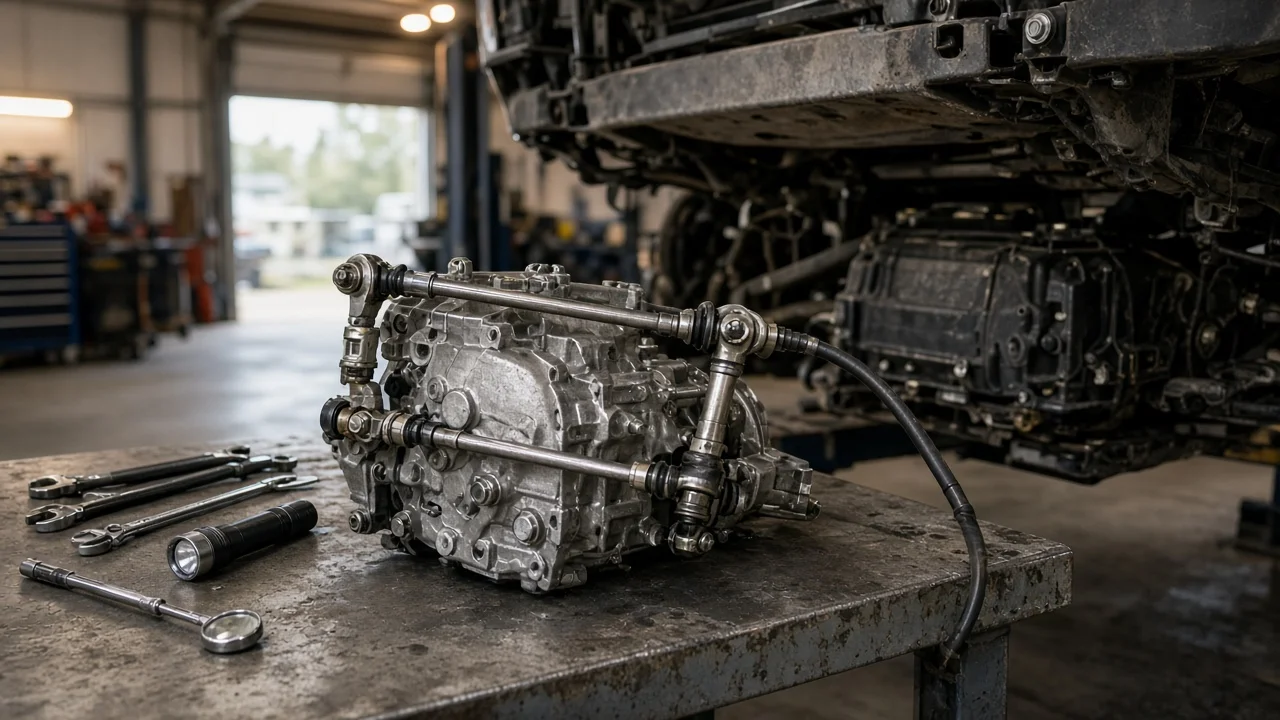
Identifying the transfer case linkage on a Ford truck or SUV starts with one question: is the four-wheel-drive system shifted by a floor lever or by a switch on the dash? The answer determines which parts you are dealing with, how they tend to fail and what a replacement must match. This guide explains how to tell the linkage types apart, which differences in vehicle configuration matter, and how to confirm the exact parts for your vehicle before you buy or adjust anything.
Identifying Your Ford Transfer Case Linkage Type
Ford four-wheel-drive vehicles generally use one of three arrangements. A manual-shift transfer case is moved by a floor-mounted lever connected through a rod or a lever-and-pivot assembly to the selector arm on the case. An electronic shift-on-the-fly system replaces that mechanical connection with a dash knob or buttons, a control module and an electric shift motor mounted on the case. Full-time and many all-wheel-drive systems have no driver-operated range lever at all.
The quickest check is inside the cab: a second lever beside the transmission shifter means a mechanical linkage, while a rotary knob or push buttons mean an electric shift. Neither tells you the exact part, though. Linkage rods, brackets, bushings and levers differ by model, model year, transmission, cab and wheelbase, so the transfer case identification tag and the vehicle's VIN are what pin down the correct components.
How Ford Transfer Case Shifting Works
On a manual-shift Ford, the lever in the cab pivots on a bracket, usually attached to the transmission or the transfer case itself. Movement travels through a shift rod, held at each end by bushings and retaining clips, to the selector arm on the side of the case. Inside the case, that arm moves a shift rail and fork that select two-wheel drive, four-wheel high, neutral or four-wheel low, depending on the design. Because everything is connected mechanically, worn bushings or a bent rod show up directly as a sloppy, misaligned or hard-to-move lever.
On an electronic system, the dash control sends a request to a module, which drives the shift motor on the case. The motor turns the internal shift shaft much as a lever would, and a position sensor reports back so the module can confirm the selected range. There is no cab-to-case rod to wear, but wiring, connectors, the motor and the module can fail instead. Front hub locking or front axle engagement, whether manual, vacuum or electric, is a separate system and should not be confused with the transfer case linkage.
What Changes the Configuration
Several factors affect what is actually installed on your vehicle. Ford offered both manual and electronic shift within the same model line in many years, so two trucks of the same year can carry different cases and controls. Transmission choice matters because the lever bracket often mounts to the transmission, and the case model may differ between automatic and manual transmission builds. Mid-year production changes also occur, which is why the build date on the door-jamb certification label is worth noting along with the model year.
Service history and modifications can override the factory configuration entirely. A previous owner may have swapped in a used transfer case, converted an electronic shift to a manual lever, or installed a suspension or body lift that required a longer or relocated linkage. Operating conditions also shape what you find: trucks used off-road, in mud or on salted roads often have seized pivots, corroded clips or rods bent by rocks, which can make an original part look unfamiliar. Identify the linkage by what is installed, not only by what the vehicle should have.
How to Identify and Inspect the Linkage
Start with the identification tag on the transfer case housing, usually riveted or bolted near the rear or side of the case. It normally shows the manufacturer, such as Borg-Warner or New Process/New Venture on many Ford applications, along with a model number and often a Ford part number. Clean the tag gently with a soft brush rather than a wire wheel, photograph it, and record the VIN and build date. A Ford parts counter can use the VIN to look up the factory linkage parts, and you can compare that result with the tag.
With the engine off, the vehicle parked securely on level ground and the wheels chocked, inspect the linkage from underneath. Look for cracked or missing bushings, worn clevis holes, missing clips, a bent rod and loose bracket bolts. Move the lever through its positions and watch whether the selector arm on the case follows without excessive free play. Lubricating pivot points with a product suited to the bushing material can help a stiff linkage, but a worn or bent part should be replaced rather than packed with grease.
Before blaming the linkage for a stiff lever, consider driveline windup. On a part-time system, driving in four-wheel drive on dry pavement or through tight turns can load the case so the lever resists moving out of four-wheel drive. Rolling a short distance straight ahead, or briefly in reverse, often relieves it. If the lever still will not travel fully, will not hold a range, or the dash indicator disagrees with the lever position, adjustment or repair is likely needed, and the procedure should come from the service information for your exact vehicle.
Limits of General Guidance and Next Steps
No single linkage part or adjustment specification fits all Ford four-wheel-drive vehicles, and this guide does not set an inspection interval; check your vehicle's own maintenance schedule. Adjustment procedures, the range the case must be in during adjustment and fastener torques come from the manufacturer specifications for the specific model, year and case. If the tag is missing or unreadable, or the installed parts do not match the VIN lookup, treat the configuration as unconfirmed until the case model is verified.
Get professional help when the case jumps out of gear, grinds or clunks during shifts, leaks fluid around the shift shaft, or when an electronic system shows warning lights or will not change ranges. These symptoms can point to internal wear, a failing shift motor or electrical faults that a new linkage part will not fix. A shop with the correct service information can confirm the configuration, check the case internally if needed and set the linkage correctly.