Choosing a Torque Converter Shudder Additive for a Ford
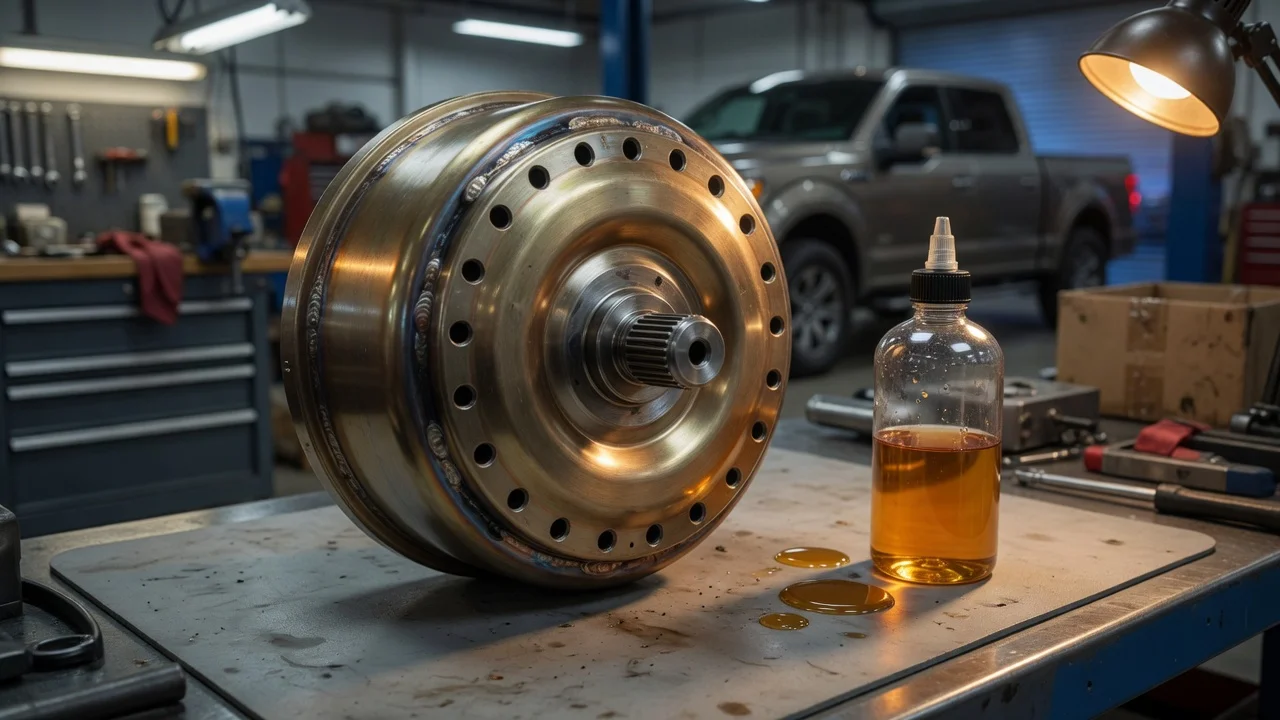
A shudder that feels like rolling over rumble strips during light-throttle cruising is a common complaint on Ford automatics. Often it shows up when the torque converter clutch is engaging or holding partial lockup. A shudder additive can sometimes calm it, but only if the product suits your transmission and the cause is actually fluid-related. This guide covers how to choose one without wasting money or masking a bigger problem.
Define the job the product must do
A torque converter shudder additive is a friction modifier concentrate. Its purpose is to restore or adjust the friction behavior of the fluid so the converter clutch engages and slips smoothly instead of grabbing and releasing rapidly. That makes it a reasonable tool when the fluid has aged and lost some of its friction properties. It is not a cure for worn clutch lining, a damaged converter, debris in the fluid or a faulty control solenoid.
Before shopping, be clear about your situation. Note the model year, mileage and service history, especially whether the fluid has ever been changed. Consider whether the vehicle is still under warranty, whether it tows or carries heavy loads, and whether you want a long-term fix or just need to get through until a proper repair. An owner with an older high-mileage truck and original fluid has different needs from someone with a newer vehicle that started shuddering recently, which may be better handled by a dealer visit first.
Confirm the symptom first
Several problems can feel like converter shudder. Engine misfires, worn engine or transmission mounts, driveshaft or U-joint issues and out-of-balance components can all produce vibration at cruising speed. A useful clue is timing: converter shudder usually appears at steady light throttle and often disappears when you press the accelerator harder or lift off slightly, because lockup is released or changed. A misfire tends to follow engine load and may trigger a flashing check-engine light.
Scan for diagnostic codes before adding anything. Codes such as P0741, which relates to torque converter clutch performance, point toward the lockup system but do not identify a single failed part on their own. Misfire codes, solenoid circuit codes or fluid temperature sensor faults change the diagnostic path entirely. Also note any harsh, slipping or delayed shift behavior, since problems beyond lockup suggest an additive is unlikely to help.
Check compatibility
Start by identifying the transmission type. Ford has used many automatics across its cars, SUVs and trucks, including six-speed and ten-speed designs, and the specified fluid differs between them. Your owner's manual lists the required fluid specification, and the vehicle certification label or service records can help confirm the transmission. Common Ford specifications include Mercon V, Mercon LV and Mercon ULV, and they are not interchangeable.
The additive's label should explicitly state compatibility with your fluid specification. Low-viscosity fluids such as Mercon LV and ULV are engineered within narrow limits, so a generic product that only says it suits all automatic transmissions offers weaker assurance than one naming the exact spec. Also check that your vehicle actually has a torque converter. The PowerShift dual-clutch automatics used in some Focus and Fiesta models do not, and many Ford hybrids use a different drivetrain design, so a converter shudder additive does not address their vibration complaints.
Features that affect the choice
Dosage matters more than branding. Each bottle is designed to treat a certain volume of fluid, and Ford transmissions vary in total capacity. Check that the dosing instructions make sense for your unit and whether the maker recommends adding it to existing fluid or installing it with fresh fluid. Overdosing a friction modifier can change how other clutches inside the transmission apply, which may alter shift feel.
Separate useful evidence from marketing labels. Helpful signs include a clearly named fluid specification, precise dosing per quart, guidance on what to do if the shudder persists and an available safety data sheet. Phrases like rebuild in a bottle, instant fix or stops all slipping are promotional rather than technical. Some products also add seal conditioners or detergents; those may be irrelevant if you have no leaks or deposits and can complicate the product's effect on fluid behavior.
Limitations and ownership costs
Installation is less simple on many late-model Ford automatics than on older ones. Many have no conventional dipstick, and checking or topping off fluid involves a check plug with the fluid at a specified temperature. Adding an additive therefore means you may also need to remove some fluid to avoid overfilling, which takes tools, a scan tool or thermometer for temperature, and care. If you are not set up for that procedure, factor in shop labor.
The bottle itself is usually the cheapest part of the job. Results are often better when the additive accompanies a fluid exchange, which adds the cost of several quarts of correct-spec fluid. Some owners find the shudder returns and the product needs repeating. Software calibration can also play a part in lockup behavior, and a dealer may have an update for your vehicle. Manufacturers generally specify their fluid alone, so read your warranty terms before adding anything to a covered transmission.
Know when to stop. If shudder persists after a correct treatment, or returns quickly, the remaining repair options include proper diagnosis of the lockup control circuit, valve body or solenoid service and converter replacement. Continuing to drive with a slipping converter clutch can create debris and heat that damage the rest of the transmission.
Build a practical shortlist
Narrow your options with a short checklist rather than relying on rankings. Confirm the vehicle has a torque converter and that the symptom fits converter shudder rather than a misfire or driveline vibration. Record any diagnostic codes. Identify the exact fluid specification from the owner's manual, then keep only additives whose labels name that spec.
Next, compare the remaining candidates on dosing clarity relative to your transmission's fluid capacity, whether the maker recommends use with fresh fluid, and whether the product adds ingredients you do not need. Check warranty implications and whether a software update is available. Finally, decide whether you can perform the fill and level check yourself or need a shop, and include fluid and labor in the real cost. A product that passes these checks gives a fluid-related shudder its best chance; one that does not is a gamble with your transmission.