Ford Tire Pressure Sensor Fault: Why It Appears and How to Clear It
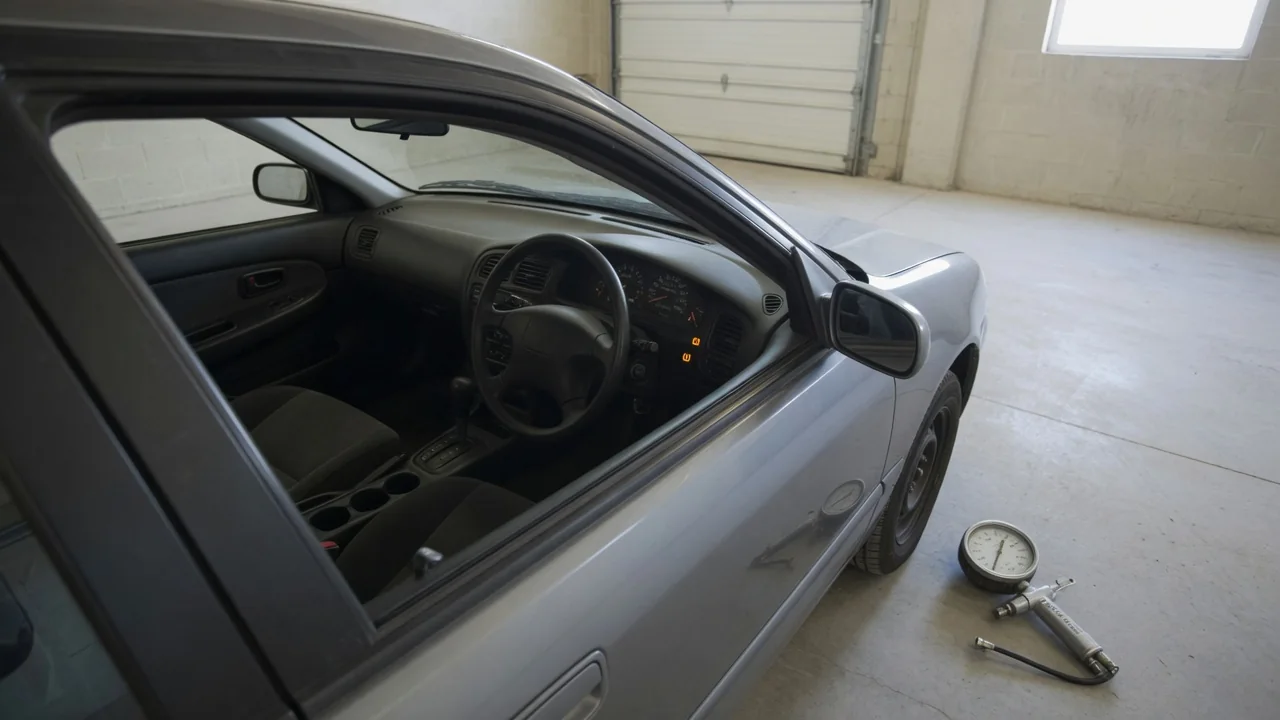
A Ford tire pressure sensor fault means the monitoring system may not be reporting inflation reliably. On many models, including the Explorer, that can appear as a message, a TPMS warning light, or both. The wording can cover a tire pressure monitor fault, a communication issue, or a sensor that stopped transmitting. Confirm the exact display, check the tires, and use the vehicle-specific relearn path.
What a Ford Tire Pressure Sensor Fault Message Means
When a Ford tire pressure sensor fault appears, the system is saying it cannot rely on its usual inflation reports. That notice is a status message, not proof a component has failed. A tire pressure fault on a Ford cluster can reflect missing sensor communication, a tire pressure monitor fault the module stores, or incomplete inflation data. Confirm the exact wording and how the TPMS warning light behaves before assuming which hardware is at fault.
Low-pressure alerts and system-malfunction indications are not the same event. The owner's manual for that Ford model explains whether a solid TPMS warning light, a flashing light that then stays on, or tire pressure monitor fault text points to underinflation versus a monitoring problem. Record when the message appears, whether individual pressures are missing, and whether the light flashed first. A tire pressure sensor warning on a Ford does not prove the tires are correctly inflated or safe to drive. Treat the fault as evidence to interpret, then verify cold tire pressure.
Check Tire Pressure and Visible Tire Condition First
Start with cold tire pressure, measured with a reliable gauge before the tires have been driven and warmed. Compare each reading to the specified pressures on the door-jamb tire placard, not the sidewall maximum. A warning from Ford tire pressure sensors can follow a slow leak, a recent fill, or a large temperature swing even when every sensor is still transmitting. If a tire is obviously low, inspect the tread and sidewall for cuts, bulges, or objects without removing the wheel. Recurring loss of pressure after a fill still needs leak service.
Note recent tire replacement, wheel changes, rotation, or puncture repair, because those jobs often coincide with the first appearance of a Ford tire pressure sensor alert. A sensor can be disturbed during dismount, left unregistered after a wheel swap, or damaged at the valve. Stop driving and seek assistance if a tire is obviously flat, if you see serious sidewall or tread damage, or if the vehicle pulls, vibrates, or feels unstable. Correct inflation and a visual check separate a low tire from a monitoring problem.
Why Ford Tire Pressure Sensors Stop Reporting
Ford tire pressure sensors can stop reporting for several independent reasons. A depleted sensor battery, impact or corrosion at the valve, lost sensor communication with the receiver, unregistered replacement sensors, or a receiver or wiring fault can all produce the same cluster text. Missing readings or an intermittent tire pressure monitor fault help a technician decide what to test next, but they do not confirm which part must be replaced. Treat each Ford tire pressure sensor as one possible source until activation testing and a TPMS diagnostic scan narrow the field.
Replacement sensors must match the exact vehicle and the installed monitoring system. Ford tire pressure sensors are not automatically interchangeable across model years, wheel designs, or aftermarket kits. A unit that looks similar can still use a different frequency, protocol, or identifier, so compatibility has to be verified before installation. A technician may need to trigger each sensor, confirm wheel position registration, and scan the TPMS network before recommending parts. That sequence avoids replacing a working sensor when the issue is an unlearned identifier, a receiver problem, or incomplete communication after wheel work.
Ford Explorer Details to Confirm Before a Reset
A Ford Explorer tire pressure sensor fault needs confirmation unique to that vehicle. Record the Explorer's model year, the exact dashboard message, and any recent wheel or tire service before choosing a reset path. A tire pressure sensor fault on a Ford Explorer after a rotation or a spare-wheel event can be an unlearned sensor rather than a failed one. The applicable owner's manual describes pressure-display behavior, malfunction indications, and any owner-accessible training steps for that year. Those pages, not a generic ignition sequence, decide whether a reset is available.
If the Explorer shows individual pressures, missing values help document which wheel is not reporting, but a blank reading still does not prove that particular sensor has failed. Receiver range, recent service, or incomplete wheel position registration can produce the same blank. Keep Explorer guidance tied to its year-specific procedure. Some years offer a training mode from the message center; others require a TPMS activation tool and a shop scan. Do not assume one key-cycle clears a tire pressure sensor fault on a Ford Explorer for every model year.
Using a Ford TPMS Reset Tool and Relearn Procedure
A Ford tire pressure sensor reset tool is typically a TPMS activation tool used to wake each sensor during a supported training procedure. Confirm coverage for the exact Ford model and year, because a tool that works on one application may not trigger another. Before using training-mode entry, wheel order, or horn-and-light confirmation, verify the relearn procedure in the owner's manual or service information. The supported outline stays consistent at a high level: set correct cold tire pressure, enter the prescribed training mode, activate sensors in the specified order, then confirm a completed sensor relearn.
Some replacement sensors also need programming so the vehicle can recognize their identifiers, then a separate vehicle relearn to map wheel positions. That dual step depends on the sensor type and application, so it cannot be assumed for every Ford. A relearn cannot repair a damaged sensor or restore a depleted sensor battery. If a sensor fails to activate, training mode times out, or the TPMS warning light remains, stop repeating the sequence and move to diagnosis. Failed activation is a reason for individual sensor response testing, not another attempt to force the message off with the same reset tool.
Confirm the Fault Has Cleared and Handle a Returning Warning
Clearing a Ford tire pressure sensor fault depends on fixing its cause and completing any required relearn or vehicle-specific update conditions. After the applicable procedure, check that individual readings have returned where the vehicle displays them and that the TPMS warning light and message no longer indicate a malfunction. Do not treat a short drive as a guaranteed timer for clearance. Some systems update after a completed training cycle; others wait for valid sensor communication during later operation. Restored readings and a dark warning lamp show the monitor is reporting again.
If the warning returns, record when it came back, whether pressures vanished again, and whether the light flashed before staying on. Arrange sensor activation testing and a TPMS diagnostic scan so the stored information can be read in context. Manufacturer-dependent codes require vehicle-specific confirmation; a fault code is evidence to interpret, not proof a part has failed. Erasing codes without repairing the cause does not establish a successful repair, because the monitor can set the same tire pressure monitor fault as soon as communication or inflation data fails again. Keep those scan results with the vehicle's service history.