Ford Throttle Body Problems: Focus, Fusion, Escape and Five Hundred
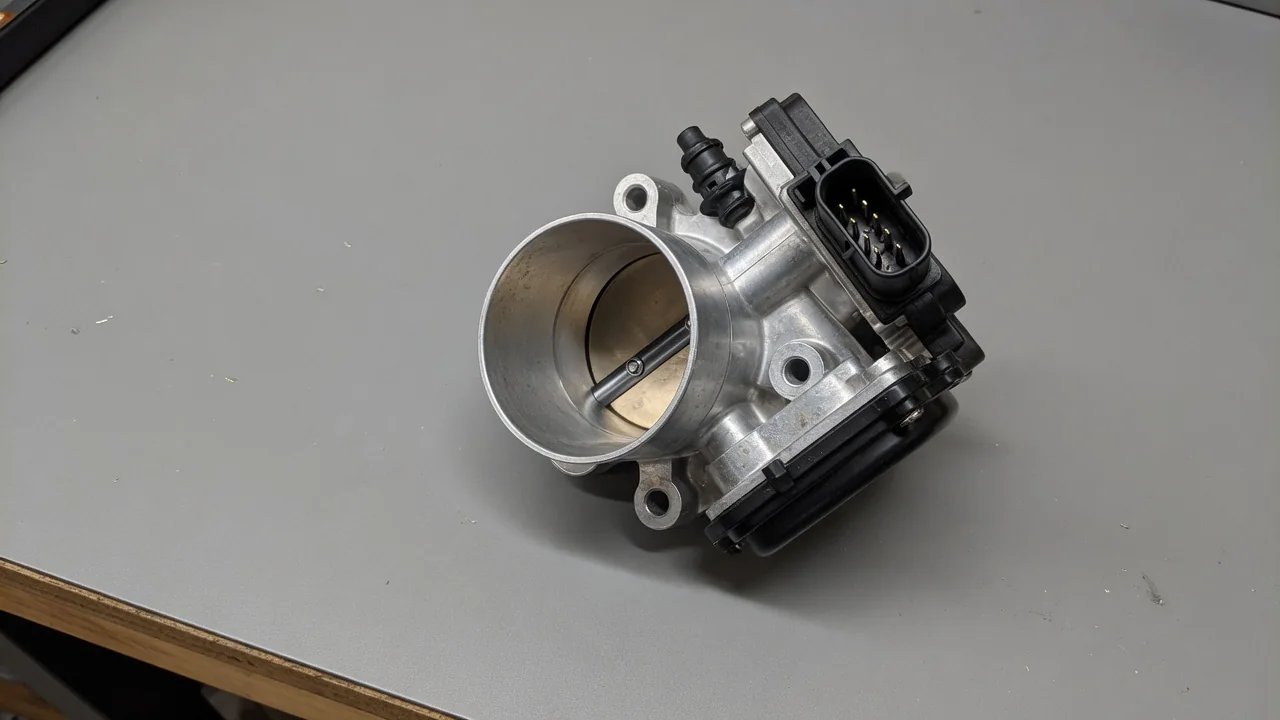
Ford throttle body issues on the Focus, 2010 and 2012 Fusion, 2010 Escape, and 2005 Five Hundred often show as hesitation, rough idle, or weak accelerator pedal response. Electronic throttle control relies on throttle position feedback, so a wrench warning light or diagnostic trouble codes can appear without proving a Ford throttle body sensor has failed. Confirm the engine and vehicle identification before interpreting symptoms or planning replacement.
Ford Throttle Body Symptoms and Wrench-Light Behavior
On a Ford throttle body, a motorized plate meters intake airflow while sensors report throttle position feedback to the engine computer. Electronic throttle control matches that reading to accelerator demand, but the arrangement depends on the specific vehicle. Hesitation, uneven idle, stalling, or limited accelerator pedal response can appear when that feedback is inconsistent, yet those complaints do not prove the throttle body has failed.
A wrench warning light on these Fords requires vehicle-specific interpretation and does not identify a failed throttle body by itself. Reduced engine power can accompany the light, but wiring, pedal sensors, and software strategy can produce the same indication. If power loss or stalling makes continued driving unsafe, stop in a secure location. Once parked, record which warning lights are on, whether the engine stalled, and the speed, load, and temperature at the time.
Ford Focus Throttle Position Sensor Diagnosis
A Ford Focus throttle body sensor complaint cannot be diagnosed from the nameplate alone. The model year, engine, and vehicle identification must be known before describing sensor arrangement or replacement options, because electronic throttle control packaging differs across Focus production. A technician typically starts with stored diagnostic trouble codes, inspects connectors and wiring, then compares commanded and actual throttle position feedback on live data. Those steps do not, by themselves, prove the sensor or the entire Ford throttle body assembly has failed.
Any manufacturer-dependent diagnostic trouble code on a Focus must be verified against service information for that exact vehicle before it is treated as a throttle position sensor fault. Code titles can look similar across Ford lines while pointing to different circuits or enable conditions. Sensor serviceability is equally vehicle-specific: some Focus throttle bodies integrate the position sensors, so a separately replaceable Ford throttle body sensor cannot be assumed. Confirm from the published procedure whether a sensor or a complete throttle body replacement is even listed.
2010 Ford Fusion: Investigating Intermittent Throttle Complaints
Intermittent complaints on a 2010 Ford Fusion need the engine and powertrain identified before the throttle body or a test plan is discussed. Catalog listings for a throttle body on a 2010 Ford Fusion can look interchangeable while serving different engines and electronic throttle control calibrations, so VIN identification comes first. After an episode, write down engine temperature, road speed, load, whether a wrench warning light appeared, any loss of accelerator pedal response, and whether reduced engine power continued.
When 2010 Ford Fusion throttle symptoms vanish after a restart, that only shows the current key cycle is usable. It does not establish the cause and does not demonstrate that the vehicle is repaired. Professional diagnosis of a throttle body for a Ford Fusion should still consider throttle position feedback, electrical supply, wiring, and intake-related faults before recommending an assembly. Replacing the unit because an episode cleared itself can leave the original intermittent condition in place.
2012 Ford Fusion: Diagnosis Before Ordering a Throttle Body
Year and model are not enough when ordering a throttle body for a 2012 Ford Fusion. Engine, induction configuration, and VIN-based catalog confirmation are required because a 2012 Ford Fusion throttle body that fits one powertrain may not match another. Stored diagnostic information, plus commanded versus actual throttle readings, can guide professional testing of electronic throttle control. Those values highlight a correlation or circuit concern; they do not prove the assembly has failed on their own.
Carbon or oily deposits on a 2012 Ford Fusion throttle body can be visible and still be unrelated to hesitation or reduced engine power. Residue alone cannot establish the cause of a drivability complaint or justify throttle body replacement. Before authorizing work, confirm the diagnosed fault, the correct assembly for that VIN, and any applicable setup or idle relearn steps in the service procedure. Skipping that confirmation risks installing a throttle body for a 2012 Ford Fusion that does not address the original problem.
Ford Fusion Throttle Body Replacement Planning
Useful diagnosis of a Ford Fusion throttle body should document the reported symptom, relevant diagnostic trouble codes, test findings, and the evidence that supports replacement. An estimate for a 2010 Ford Fusion throttle body or a 2012 Fusion unit then needs the verified part, labor, any required seals, and applicable programming or idle relearn work. A quote that lists only a generic Ford throttle body leaves those vehicle-specific steps undefined.
Calibration and idle relearn requirements after Ford Fusion throttle body replacement depend on the exact vehicle and the published service procedure. There is no universal reset sequence for every Fusion electronic throttle control system. Repair verification then checks wrench warning light status, idle quality, accelerator pedal response, and whether diagnostic trouble codes remain or return after a road test. A dark dash immediately after installation is not enough; a technician still needs to review remaining or returning faults.
2005 Ford Five Hundred: Assessing Throttle Body Concerns
The 2005 Ford Five Hundred, also called the 05 Ford 500 in some records, still needs vehicle identification before anyone selects a throttle body. A throttle body for 2005 Ford Five Hundred must match the engine and configuration on that VIN. Rough idle, hesitation, stalling, or a warning light can reasonably start throttle-system diagnosis on this car. Those complaints justify inspecting the throttle body on a 2005 Ford 500; they do not confirm that the assembly has failed.
Intake leaks, connector condition, wiring, and throttle operation can produce the same rough idle and hesitation as a failing 05 Ford Five Hundred throttle body, so those items deserve testing first. A circuit problem can store diagnostic trouble codes without a failed assembly. Replacement planning for the throttle body on a 2005 Ford 500 should use verified fitment and the applicable service procedure. Cleaning or a sensor-only repair should not be promised as a cure when service information has not confirmed that path.
2010 Ford Escape: Responding to Reduced Throttle Response
Reduced throttle response on a 2010 Ford Escape still starts with the exact engine and powertrain, not with a generic throttle body. Fitment for a Ford Escape 2010 throttle body changes with those details, so VIN confirmation comes first. After hesitation, reduced accelerator pedal response, stalling, or wrench-light behavior, park the vehicle and then write down lights displayed, whether power dropped, engine temperature, and the driving condition at the time.
Recurring reduced engine power or unreliable accelerator pedal response on a 2010 Ford Escape is a reason to stop using the vehicle and arrange professional assessment or towing, especially if stalling could occur in traffic. Diagnosis should establish the cause rather than assuming the throttle body for a Ford Escape 2010 has failed. After throttle body replacement, verification must confirm idle, throttle response, and warning-light status under the same conditions that produced the complaint. A restart or a cleared wrench warning light alone is not proof the cause is gone.