Ford Serpentine Belt Replacement: F-150, Fusion, and Focus Guide
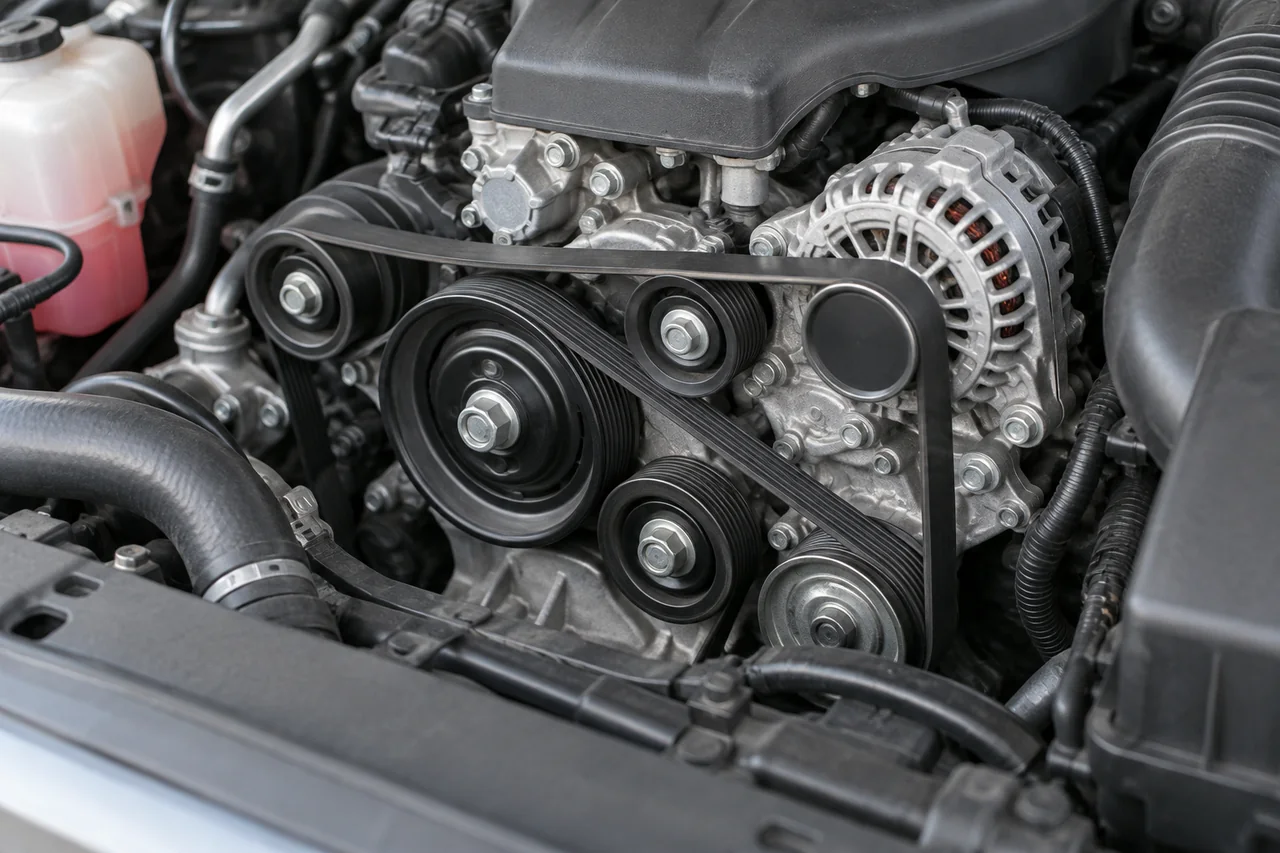
A Ford F-150 serpentine belt, a Fusion accessory drive, and a Focus belt look similar until you compare engines. Model name does not lock in length, rib count, routing, or tensioning. Confirm year, engine identification, and equipment before ordering parts or estimating labor. This guide covers replacement planning and inspection boundaries for those three Fords; the exact procedure still belongs to the identified vehicle and its documented accessory drive.
Identify Your Ford’s Engine and Belt Configuration
Calling a truck an F-150, or a car a Fusion or Focus, does not establish serpentine belt fitment. Across years, Ford used different engines, optional accessories, and accessory drive layouts, so belt length, belt ribs, and pulley stack can change with the same badge. Record model year, engine identification, and equipment such as air conditioning before you request a Ford F-150 serpentine belt or a matching Fusion or Focus part. VIN-based parts data plus vehicle-specific service information names the applicable accessory drive.
Before planning replacement, check the documented belt routing diagram and the tensioning method for that engine. Some Fords use one serpentine accessory drive belt; others run more than one belt or a stretch-fit arrangement, so assuming a single wrap is a common mistake. Note whether a spring-loaded belt tensioner, an idler pulley, or another method keeps the belt seated. This article stays at planning and inspection boundaries. The exact removal, routing, and tensioning steps require the service information that matches the vehicle you identified.
Ford F-150 Serpentine Belt Replacement Planning
When you need a serpentine belt Ford F-150 application, gather the pickup's model year, engine identification, and VIN-based fitment confirmation before you order. F-150 engines have used different pulley counts, accessory packages, and routing paths, so a belt that fits one truck will not automatically fit another. Ask for the applicable belt routing diagram and confirm how many accessory belts that engine actually uses. Selecting parts or estimating hours without that confirmation is guesswork, not a parts match.
Access, tensioning method, and replacement scope must be established for the specific F-150 engine rather than assumed from the nameplate. Some layouts hide the belt behind covers, engine mounts, or crowded accessory brackets; others are more open. Ask a technician to perform an accessory drive inspection that covers belt condition, belt tensioner operation, pulley alignment, and accessory drag. Treating belt replacement as a complete repair can miss a seized idler pulley, a weak tensioner, or an accessory that is loading the drive.
Ford Fusion Serpentine Belt Replacement Details
Ford Fusion serpentine belt replacement starts with identifying the car's model year, engine, and powertrain type. Some Fusion powertrains use a conventional accessory drive belt; others may not, depending on how the accessories are driven. Confirmed vehicle details then guide belt selection, the correct routing information, and the shop's assessment of access requirements. A serpentine belt Ford Fusion estimate that skips engine and powertrain confirmation can specify the wrong length, rib profile, or labor path.
A useful replacement estimate names the applicable belt, the labor scope for that engine bay, and any tensioner or pulley work that inspection separately justifies. Do not bundle extra parts by habit. Persistent squeal, chirp, or charging concerns also need diagnosis of the relevant system rather than an assumption that a new belt will restore charging or silence the drive. An alternator, tensioner, or alignment issue can survive a belt change if the shop never tests those components.
Ford Focus Serpentine Belt Fitment and Service Scope
A Ford Focus serpentine belt claim is not valid until model year, engine, and powertrain type are confirmed. Focus applications have used more than one accessory drive approach, so belt length, rib count, routing, and tensioning method must match verified application information rather than a catalog search on the model name alone. Once those details are locked in, the serpentine belt Ford Focus parts list and the shop's access plan can be written against the actual engine instead of a generic compact-car layout.
Check whether the identified Focus setup uses a spring-loaded belt tensioner or a stretch-fit belt, because that choice changes tools, labor, and whether a tensioner is even in the job. Do not treat those methods as interchangeable. If the belt shows uneven wear, has walked off a pulley, or keeps making noise after a recent change, ask the shop to document the cause before you authorize extra parts. Pulley alignment, a failing idler, or accessory drag can produce those patterns even when the belt itself is new.
Belt Symptoms and Safe Checks Before Service
Squealing, chirping, fraying, damaged belt ribs, or a belt that has left its pulley can justify an accessory drive inspection, but those signs do not name a single failed part. A glazed belt, a weak tensioner, a misaligned idler pulley, or a dragging accessory can all produce similar noise. Limit owner observations to visible areas with the engine off and cool, the vehicle secured against starting, and hands clear of belts and cooling fans. Do not probe a moving drive or reach near the radiator fan.
Visual inspection has limits. A belt can be worn, glazed, or stretched without obvious cracking, and damage on the back side or at a hidden pulley still needs professional assessment. If the engine overheats, you see smoke, or steering assist disappears suddenly, stop safely and arrange assistance rather than continuing to drive. What fails next depends on which accessories that specific belt drives on your F-150, Fusion, or Focus. A water pump, alternator, or power steering pump may be on that circuit, or it may not.
What to Confirm With the Repair Shop
Belt configuration, access requirements, and any confirmed related faults shape the estimate without needing a posted price. A crowded F-150 engine bay, a Fusion layout that needs extra covers removed, or a Focus stretch-fit belt each changes labor even when the part is only an accessory drive belt. Request an itemized scope that separates belt replacement from tensioner, idler pulley, or accessory repair that inspection actually supports. Related work should rest on observed wear, play, noise, or drag, not on a bundled package.
After the job, professional completion checks should confirm correct routing, full seating of the belt ribs in the pulley grooves, straight tracking, and whether the reported squeal, chirp, or charging complaint is gone. If the symptom remains, the drive still needs diagnosis. Maintenance timing belongs to the applicable Ford schedule for that vehicle and to the belt's observed condition. Do not assign one replacement interval to the F-150, Fusion, and Focus together, because engines, duty cycles, and documented service plans differ.