Ford Ranger Turbo Boost Control Position Sensor: Identification
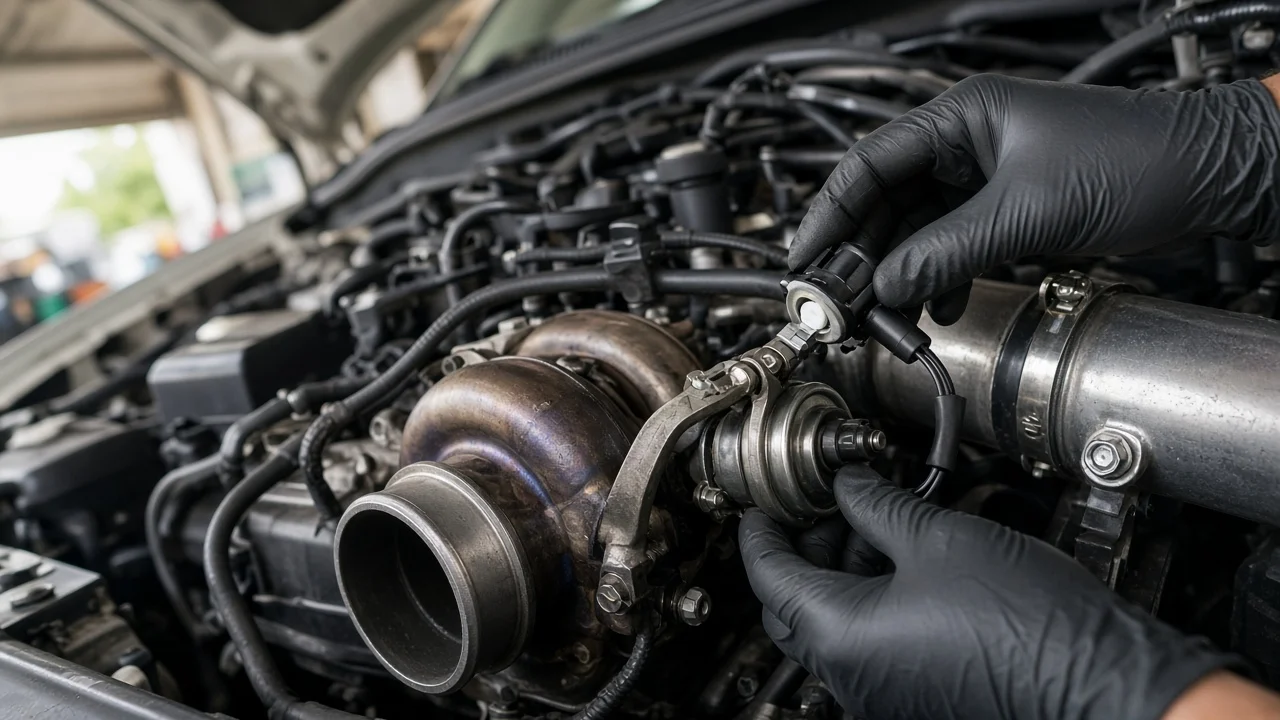
If a scan tool has flagged the turbo boost control position sensor on your Ford Ranger, the first job is working out what that part is on your truck. On many turbocharged engines it is not a separate sensor you can unbolt by itself. Instead, it is a position feedback element inside the turbo actuator. This guide explains how to identify it, why the answer depends on your vehicle configuration, and what to check before you buy parts.
The short answer
The turbo boost control position sensor tells the engine computer where the boost control mechanism actually is, so the computer can compare that with where it commanded the mechanism to be. On a Ranger, that mechanism is either the wastegate, which routes exhaust around the turbine, or the vane mechanism on the variable geometry diesel turbochargers sold in some markets. In many designs the sensor is built into an electronic actuator mounted on the turbocharger. Identifying it therefore usually means identifying the actuator assembly, and sometimes the turbocharger it belongs to.
The generic diagnostic trouble codes for this circuit are P2562 to P2565. They cover circuit, range/performance, low input and high input faults. A code names a circuit, not a failed part. Damaged wiring, a poor connector, a faulty actuator, or a sticking wastegate or vane mechanism can all set a similar code, so the code alone does not tell you which component to replace.
How boost control position feedback works
The engine control module decides how much boost it wants from load, throttle position, engine speed and other inputs, and then commands the actuator. The actuator moves a linkage or shaft. That movement opens or closes the wastegate, or changes the vane angle on a variable geometry unit. The position sensor sends a voltage or digital signal back so the module can confirm the movement matched the command. In many electronic actuators this sensor is a non-contact design that reads the moving shaft.
The module sets a code if the reported position is missing, outside the expected range, or slow to follow the command. It may also limit boost to protect the engine. Owners usually notice reduced power and a check engine light, and sometimes a reduced-power mode. Boost leaks, faults in other sensors and turbocharger problems cause the same symptoms, which is why identification and testing should come before replacement.
What changes the answer for your Ranger
Ford Ranger configurations differ by model year and market. In the United States, the Ranger returned for the 2019 model year with a turbocharged 2.3-liter EcoBoost gasoline engine. The current generation added a 2.7-liter EcoBoost option and a twin-turbo V6 in the Raptor. Rangers sold in other markets have used several turbodiesel engines, some with variable geometry turbochargers. Most earlier U.S. Rangers, through the 2011 model year, used naturally aspirated engines, so this sensor does not apply to them.
Boost control hardware is not the same across these engines. Some engines use a vacuum- or pressure-operated wastegate controlled by a solenoid valve. On those systems the module infers wastegate behavior instead of reading a dedicated position sensor. Others use an electric actuator with built-in position feedback. Twin-turbo engines can have one actuator per turbocharger, so the code may specify turbo A or turbo B. Production changes and superseded service parts can also mean that two trucks from the same model year carry different hardware.
Operating conditions matter as well. A fault that appears only on a cold start, under heavy towing or after a pressure wash points to a different cause than one present at every start.
How to identify the part on your truck
Start with the exact vehicle configuration, not just the model name. Confirm the model year, engine and drivetrain from the VIN and the vehicle certification label. Record the full code, the freeze frame data, and whether the code is current or stored. Then find the turbocharger and look at the actuator. An electric actuator has a multi-pin electrical connector and no vacuum hose operating the wastegate. A vacuum or pressure type has a hose fitting instead. Any part number on the actuator label or turbocharger housing is the most reliable reference for a dealer or parts counter.
Before ordering parts, do a basic inspection with the engine off and cool. Check the connector for corrosion, bent pins and a broken locking tab. Follow the harness for heat damage or chafing near the exhaust. On vacuum-operated systems, look for cracked or loose hoses. If the wastegate or vane linkage is visible and you can reach it without disassembly, check that it is not seized. Review your service history for recent turbo work, harness repairs or software updates, because a connector left unseated or a calibration change often follows that kind of work.
Ask a Ford dealer to check your VIN for open recalls, technical service bulletins and programming updates. For some engines the actuator is sold only as part of the turbocharger assembly. Knowing that early can change both the repair decision and the cost.
Limitations and when to get professional help
This guide cannot tell you which actuator or sensor fits your Ranger, what voltage or position readings to expect, or how long the part should last. Those details come from Ford's manufacturer specifications and service information for your exact build. There is no universal replacement interval for this sensor. It is normally replaced only after testing confirms a fault, so treat your owner's maintenance schedule and dealer records as the authority for your truck.
Get professional help if the truck is in reduced-power mode, if boost-related codes return after a connector repair, or if you see smoke, find oil leaks around the turbocharger or hear unusual whistling. A technician can command the actuator with a scan tool, read its position in real time and check the factory wiring diagram. That separates a sensor fault from a wiring or mechanical problem. Some electronic actuators also need a relearn or calibration procedure after replacement, so confirm that step is available before installing a new part.