Ford Ranger TCC Solenoid: Identification and Location
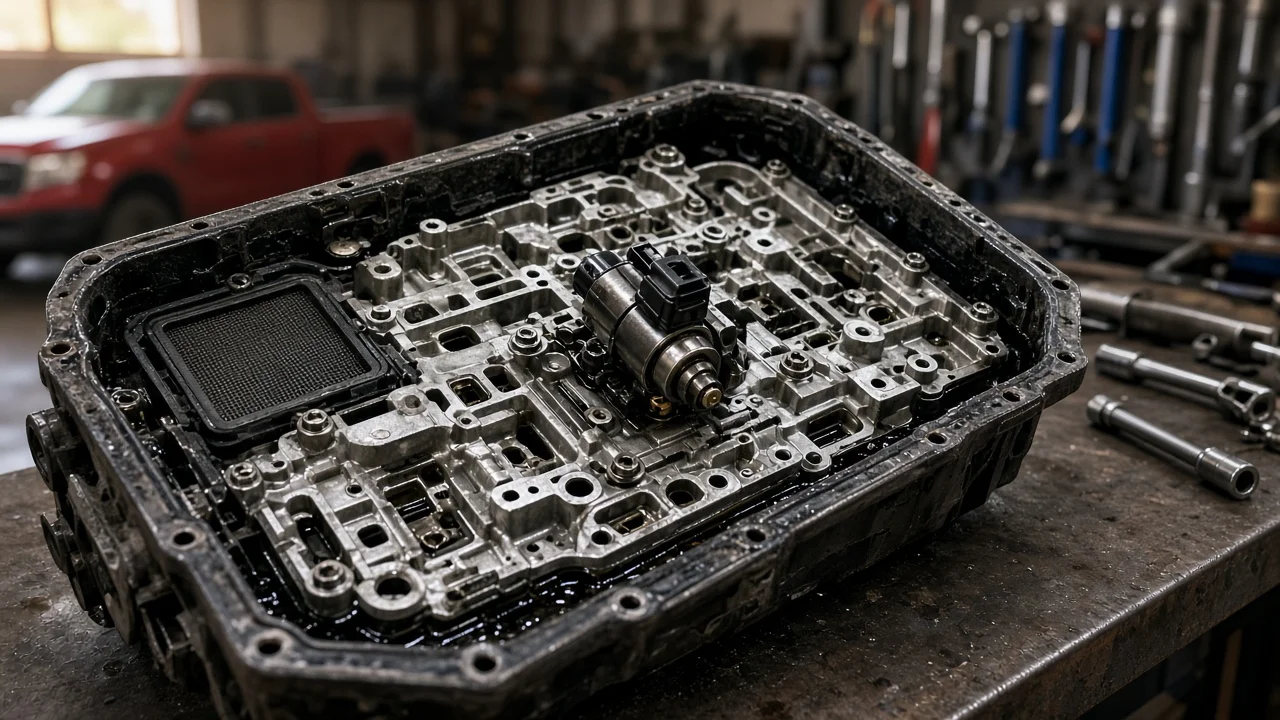
Finding the torque converter clutch (TCC) solenoid on a Ford Ranger starts with knowing which automatic transmission the truck has, because the answer changes across generations. On Ranger automatics the solenoid is not visible from under the truck. It sits inside the transmission, on or within the valve body. This guide explains how to identify your unit, where the solenoid is located, and what a TCC-related code does and does not tell you.
Where the TCC Solenoid Sits on a Ranger
On Ford Ranger automatics, the TCC solenoid is an internal component. Many 1990s and 2000s Rangers use electronically controlled four- and five-speed units such as the 4R44E, 4R55E and 5R55E. On these, the solenoid is part of a solenoid body, often called a solenoid pack, bolted to the valve body. To reach it you drain the fluid and remove the transmission pan, and usually the filter. The TCC solenoid on these units is typically serviced as part of the solenoid pack rather than as a separate piece. Earlier Rangers with the A4LD used separate solenoids, and their layout varies by model year. The Ranger sold in the US from the 2019 model year uses the 10R80 ten-speed automatic. On that transmission the solenoids are integrated into the main control assembly inside the case. A Ranger with a manual transmission has no torque converter and therefore no TCC solenoid.
To identify the transmission, start with the Safety Compliance Certification Label on the driver's door pillar. It includes a transmission code, which you can compare with Ford service information for your model year. Many transmissions also carry an identification tag on the case, and a dealer or parts counter can decode the VIN. Confirming the transmission type matters because solenoid fitment, fluid specification and the diagnostic procedure all depend on it.
How the Torque Converter Clutch Works
A torque converter couples the engine and transmission through fluid. That lets the truck idle in gear, but it always allows some slip. The converter clutch removes that slip at steady cruising speeds by mechanically locking the converter, which lowers engine speed, reduces heat and improves fuel economy. The powertrain control module, or a transmission control module where fitted, decides when to apply the clutch. It bases that decision on vehicle speed, throttle position, gear, fluid temperature and brake input. The TCC solenoid is the electrically operated valve that turns the decision into hydraulic pressure, routing fluid to apply or release the clutch. On most later units it is pulse-width modulated, so the clutch engages gradually instead of snapping on.
The solenoid only controls pressure, so the result also depends on the valve body passages, the converter clutch itself and the condition of the fluid. A working solenoid cannot produce clean lockup if a valve bore is worn or the converter clutch lining is damaged.
What Changes the Answer for Your Truck
Generation is the biggest variable. On the older pan-access designs, an owner with the right tools can physically reach the solenoid pack, provided the pan gasket, filter and refill procedure are handled correctly. On the ten-speed, the solenoids are part of a precision main control assembly. Replacing control components on modern Ford automatics may involve software steps such as loading calibration data or resetting adaptive shift values, which requires suitable scan equipment. Market also matters. Rangers sold outside North America have used different automatic transmissions, so parts and procedures for a global model may not match a US truck.
Fluid specification differs between older and newer units. The newer transmissions use a low-viscosity fluid that is not interchangeable with older types. The ten-speed also lacks a conventional dipstick, so its level is checked through a check plug at a specified fluid temperature. The wrong fluid or an incorrect level can by itself cause converter clutch shudder or slip-related codes. For that reason, review the service history before blaming a part.
Symptoms, Codes and Practical Checks
TCC problems usually show up in shift behavior at cruising speed. Common signs are engine speed that stays higher than expected on the highway, or a shudder that feels like driving over rumble strips during light throttle. If the clutch stays applied, the truck may stall or buck as it comes to a stop. Diagnostic codes commonly associated with this system include the P0740 to P0744 range and the Ford-specific P1744. These codes mean the system is not behaving as commanded. They do not prove the solenoid has failed, because a wiring fault, a worn converter, low fluid or a valve body problem can set the same codes.
Steps an owner can take: First, confirm the transmission type. Next, read all stored codes with a scan tool that can display transmission data, ideally including commanded TCC state and converter slip. Then check fluid level and condition using the procedure for your unit, noting any burnt smell or debris on the dipstick or in drained fluid. Inspect the transmission harness and its connector at the case for corrosion, damage or fluid intrusion. If service data is available, compare the solenoid circuit's resistance at the connector with the published range. During a road test, note the speed, load and temperature at which the symptom appears, since intermittent faults are much easier to trace with that detail.
Repair options run from correcting the fluid level or fixing a wiring fault, to replacing the solenoid pack on older units, to valve body or main control work. Replacing the torque converter requires removing the transmission. Match the part to the exact transmission and calibration, because solenoid packs and control assemblies that look alike are not always interchangeable.
Limitations and When to Get Professional Help
This overview cannot replace model-year service information. Connector pin assignments, resistance values, fluid capacities and torque figures vary, and any pan or valve body work must follow the specification for your transmission. A transmission specialist with Ford-capable diagnostic equipment is the safer route in three cases: codes return after basic checks, the fluid is dark with heavy debris, or the truck has the ten-speed with its integrated main control. A pressure test and a review of live converter slip data usually separate a solenoid fault from a converter or valve body problem before money is spent on parts.