Ford Ranger Sway Bar Links: Fitment Guide
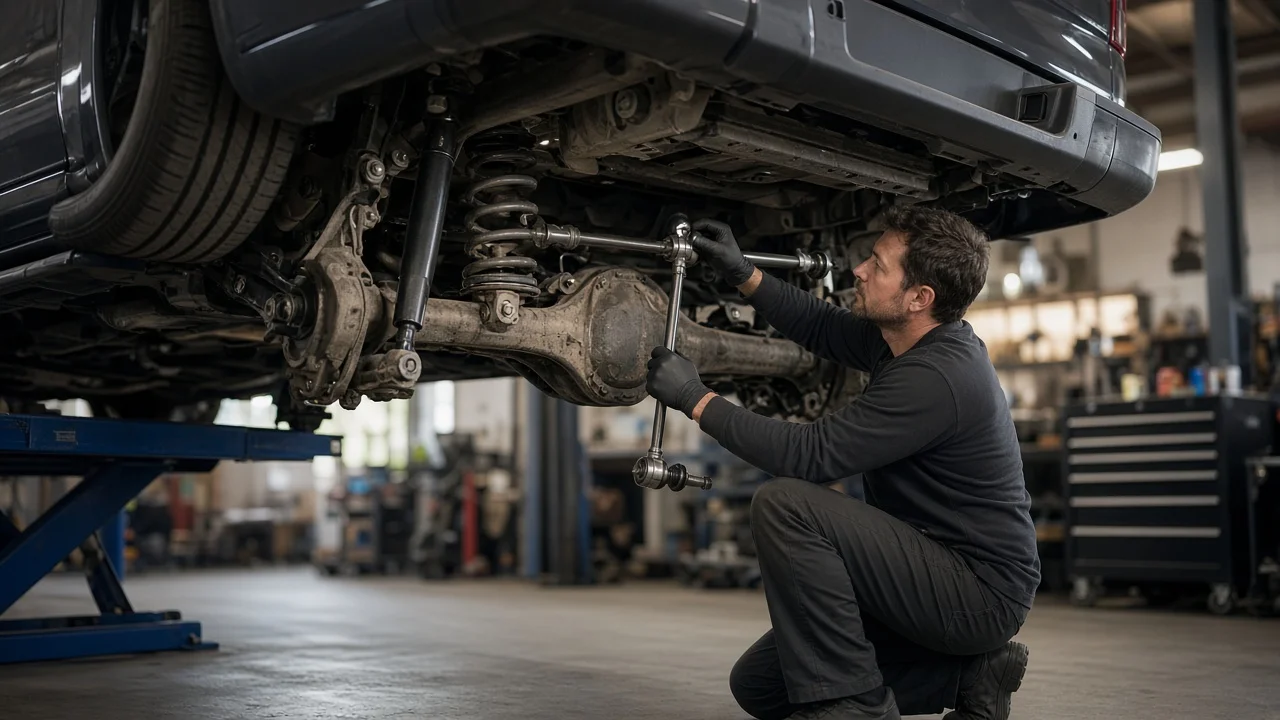
Sway bar links on a Ford Ranger look simple, but the right part depends on which Ranger you actually own. Model year, generation, drivetrain, trim package and any suspension modifications can all change link length, end style and mounting hardware. This guide explains how to narrow down fitment, what the links do, how to recognize wear during an inspection, and when the manufacturer's service information should guide the job instead of a generic catalog listing.
The Short Answer on Fitment
No single sway bar link fits every Ford Ranger. The correct link is determined by the exact vehicle configuration: model year and build date, generation, two-wheel or four-wheel drive, trim or off-road package, and whether the suspension is stock or modified. Front links and rear links, on trucks that have a rear stabilizer bar, are normally different parts and should not be treated as interchangeable.
The most reliable way to confirm fitment is to look up the part by the vehicle identification number in a parts catalog or at a dealer parts counter, then compare the result with the link currently on the truck. If the original part number is still legible on the old link, it makes a useful cross-check. Listings that simply say a link fits a Ranger, without year and drivetrain detail, deserve extra scrutiny before you buy.
How Sway Bar Links Work
The sway bar, also called a stabilizer or anti-roll bar, is a torsion spring that ties the left and right sides of the suspension together. When the truck leans in a corner, one wheel compresses while the other extends, and the bar twists to resist that body roll. The links are the short connectors that transfer force between the ends of the bar and the suspension, typically a control arm or the axle, depending on the design.
Because the links move every time the suspension articulates, they use either ball joints sealed by rubber boots or bolts clamped through rubber or polyurethane bushings. Length matters: the link has to hold the bar at a sensible angle at ride height so it can work through the full range of travel without binding or running out of joint movement. That is why a link that physically bolts up is not automatically the correct one for your truck.
What Changes the Answer
Generation is the first dividing line. Rangers sold in the United States through the 2011 model year use a different chassis and suspension from the Ranger that returned for 2019, and the redesigned generation introduced for 2024 is different again. Within a generation, two-wheel-drive and four-wheel-drive trucks can use different front suspension components and therefore different links. Off-road packages and performance variants, such as FX4, Tremor or Raptor configurations where offered, may carry their own suspension parts, so a link listed for a base model should not be assumed to fit.
Modifications change the picture just as much. A leveling kit or suspension lift increases the distance between the bar and its mounting point, which can leave stock-length links overextended, preload the bar or make the joints bind. Lift kit makers often specify extended or adjustable links for that reason. Operating conditions matter too: trucks that tow, haul heavy loads, travel rough roads or see regular off-road use put more articulation and shock through the links than a truck that stays on pavement.
Finally, confirm whether your specific truck has a rear stabilizer bar before ordering rear links, because equipment varies by configuration and a quick look under the rear axle settles the question.
Inspecting the Links Yourself
Worn links commonly show up as a clunk or rattle from the suspension over bumps, potholes or driveway transitions at low speed, sometimes with a looser feel during lane changes. The same noises can come from stabilizer bar bushings, control arm bushings, ball joints or shock mounts, so a sound alone does not confirm that the links are the problem.
With the truck parked safely and the wheels chocked, look at each link for torn or missing boots, leaking grease, cracked or flattened bushings, bent shafts and corroded hardware. Grip the link and try to move it; noticeable looseness or knocking at a ball joint end points to wear. Some joint types are easier to judge with one side unloaded, because the bar holds tension at ride height. Record what you find in the truck's service history so the next inspection has a baseline.
When ordering, have the VIN, model year, drivetrain, trim and details of any lift or leveling kit ready. Before installation, compare the new link side by side with the old one for overall length, stud size, end type and included hardware.
Installing Replacement Links
Many technicians replace links in pairs across an axle so both sides have similar condition and behavior, although a single damaged link can be replaced on its own. Ball joint style links often require holding the stud with a hex or Torx bit while turning the nut, and corroded fasteners may need penetrating oil and patience. Bushing-style links are generally tightened with the suspension at normal ride height so the bushings are not clamped in a drooped position.
Use the torque values from Ford's service information or the link manufacturer's instructions rather than guessing or borrowing a figure from a different model year. Check whether new self-locking nuts are specified instead of reusing the old ones. After installation, confirm the links clear the tire, brake hose and nearby components through the full steering range, then listen for noises on a short test drive.
Limitations and Next Step
This guide covers how to approach fitment, not a part number list, because the correct link depends on details only your truck and its records can confirm. There is no universal replacement interval for sway bar links; they are typically checked during routine suspension inspections in the maintenance schedule and replaced when wear or damage is found, which may come sooner under severe operating conditions.
Get professional help if the noise persists after new links are fitted, if other suspension or steering parts show play, if the truck has a lift or aftermarket suspension with unclear specifications, or if fasteners are seized. A qualified technician can trace the actual source of the problem, apply the manufacturer specifications for your exact truck and advise whether further repair is needed.