Ford Ranger Rear Axle Shafts: How to Confirm Fitment
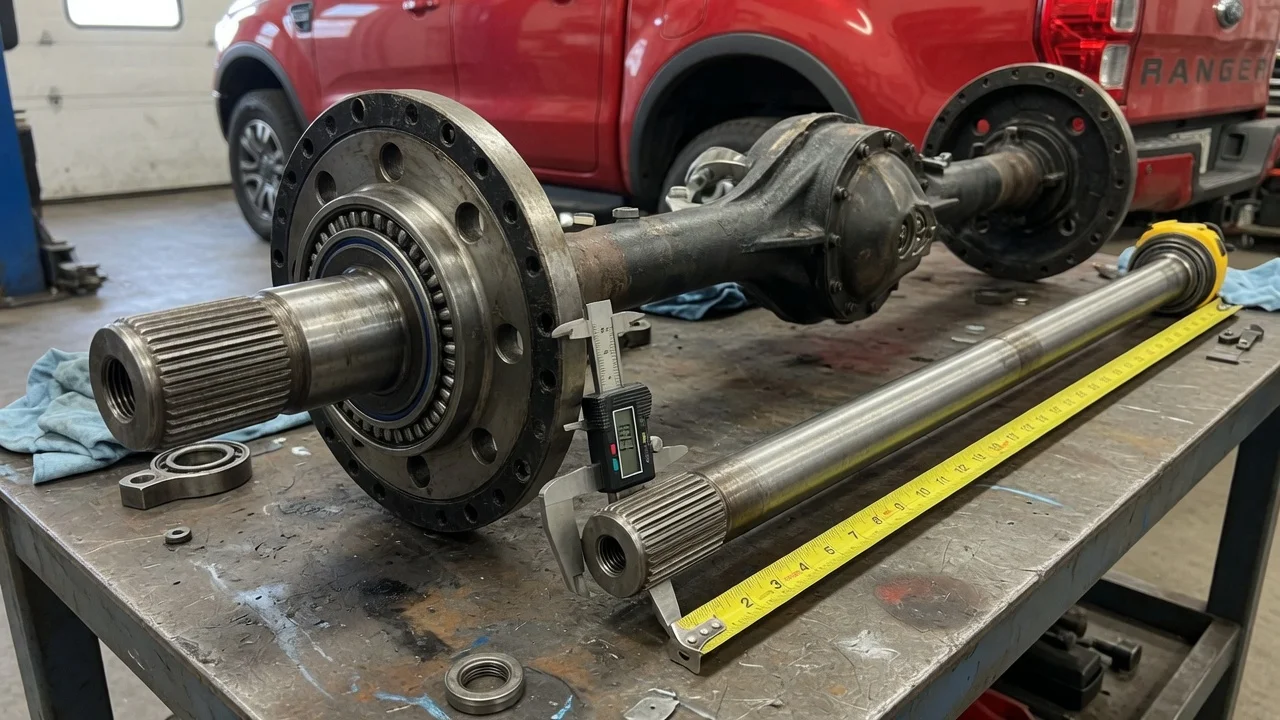
A rear axle shaft can match the year on a parts listing and still be wrong for your truck. Ford Ranger rear axles have changed across generations, markets and build options, and a shaft that is close but not exact can fail early or not install at all. This guide covers how to confirm fitment before you buy a replacement shaft, which details matter, and when to rely on the VIN or a dealer parts lookup instead of the listing alone.
The short answer on Ranger axle shaft fitment
Match the shaft to your exact rear axle, not just to the model name and year. For a Ford Ranger, that means identifying the rear axle model and gear ratio, whether the differential is open or limited-slip, the rear brake type, the drive layout and the wheel stud pattern. The most reliable starting point is the VIN, decoded through a dealer parts catalog or a supplier lookup that reads the full factory build rather than a simple year, make and model filter. After that, compare the replacement against the original shaft: length, spline count, flange and stud layout, bearing location and how the shaft is held in the housing. If any of these differ, the part is not a direct replacement, whatever the listing says.
How a rear axle shaft locates and drives the wheel
Each rear axle shaft transfers torque from the differential to one wheel. The inner end is splined and slides into a side gear inside the differential. The outer end carries the wheel flange with the lug studs, and the shaft rides on a bearing near the end of the axle housing, with a seal keeping gear oil inside. The shaft is retained in one of two general ways: by a C-clip that locks into a groove at the inner end inside the differential, or by a bearing and retainer arrangement at the outer end that bolts to the housing flange. Brake parts mount around the flange, and the ABS wheel speed sensing hardware may sit near the shaft or the differential depending on the build.
Because every one of those interfaces has to line up, small differences matter. A shaft that is slightly too long or short changes spline engagement and moves the bearing surface away from the bearing and seal. A different spline count will not engage the side gear at all. A shaft made for a different retention method has nowhere to hold it, which is a safety problem, not just an inconvenience. That is why near enough is not an acceptable standard for this part.
Configurations that change which shaft fits
Start with the generation and market. The Ranger sold in North America through the early 2010s and the Ranger reintroduced there for the 2019 model year are different trucks with different rear axle assemblies, and Rangers built for other markets have their own variations. Earlier North American Rangers were also offered with more than one rear axle size depending on engine, drivetrain and towing equipment, so two trucks from the same year can need different shafts. A listing that only says Ford Ranger without a year range, drivetrain and axle detail is not enough to order from.
Within one generation, the answer can still change with two-wheel or four-wheel drive, an open, limited-slip or locking differential, drum or disc rear brakes, the ABS arrangement and mid-year production changes. On many axles the left and right shafts are different lengths, so the side matters too. Service history can override the factory build entirely: a previous owner may have swapped in a rear axle from another vehicle, installed a locker or regeared the differential. In that case the VIN describes the truck as built, not the vehicle configuration you actually have.
How to confirm fitment before you order
Gather the identifying information first. Note the full VIN and check the certification label on the driver door jamb, which on many Ford trucks includes an axle code that identifies the ratio and differential type. Look for a metal tag held by one of the differential cover bolts, since many Ford axles carry one with axle and ratio information; photograph it before cleaning. Look through the wheel to confirm drum or disc brakes and count the lug studs. Give this information to a dealer parts counter or a supplier and ask them to confirm the shaft by VIN and axle code, not just by year.
When the old shaft is out, do a side-by-side inspection before installing the new one. Compare overall length, spline count, flange diameter and stud pattern, the bearing journal position and diameter, and whether the inner end has a C-clip groove. If your axle uses a pressed-on bearing and retainer, confirm whether the replacement comes with those parts installed or needs them pressed on. Also inspect the side gear splines, the housing bearing bore and the seal surface; a worn housing or damaged side gear will shorten the life of a new shaft regardless of fitment.
Order the matching bearing and seal with the shaft, and use the manufacturer specifications for fastener torque, gear oil type and fill level, including any friction modifier a limited-slip differential requires. Avoid generic torque or fluid values copied from another vehicle. If the shaft failed rather than simply leaking, try to find out why before reassembly, since a bent shaft or broken clip often points to an impact, overload or bearing problem that will repeat.
Limits of a parts lookup and when to get help
A VIN lookup reflects how the truck left the factory, and listings themselves sometimes contain errors, so neither replaces a physical comparison with the original shaft. Nothing in this guide sets a universal replacement interval: axle shaft and bearing wear depends on operating conditions such as towing, off-road use, water crossings and load, and the inspection points for your truck belong to its own maintenance schedule and service information. If the axle tag is missing, the door label has been replaced, or the measurements do not match any listed part, treat the axle as unidentified until a dealer or driveline shop confirms it.
Professional help is worth it when the differential has to be opened to remove C-clips and you are not comfortable with that work, when a bearing must be pressed on or off, or when there are signs of housing damage, side gear wear or a bent housing. The practical next step is to collect the VIN, the door label axle code, photos of the axle tag and your shaft measurements, get written fitment confirmation before ordering, and record the parts used in the truck's service history for the next repair.