Ford Ranger PCV Valve Location and Replacement: 2.3L and 4.0L
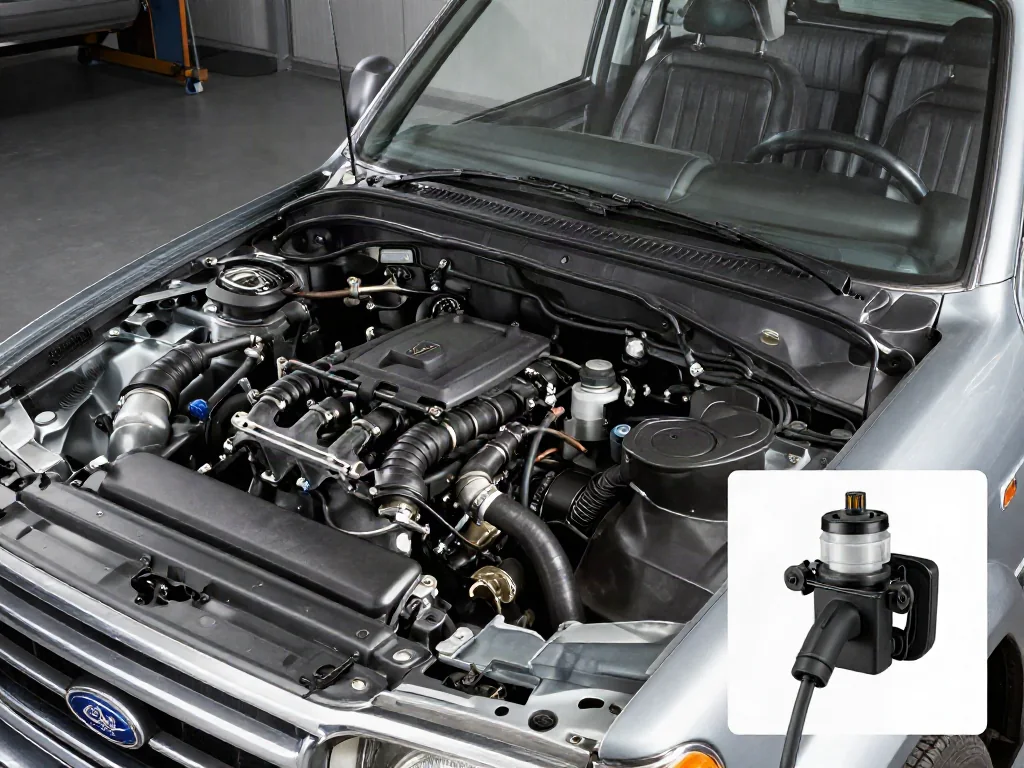
A 2002 Ford Ranger PCV valve lives in a positive crankcase ventilation system that changes with engine choice, and misidentifying a 2.3L or 4.0L leads to needless work. Before turning a wrench, check the calibration label and engine castings, since the valve may hide on the valve cover or behind an oil separator. Correct location and replacement stops vacuum leaks, oil consumption, and idle complaints without wasting parts.
Confirm the Ranger’s Model Year and Engine Before Locating the Valve
The 2002 model year split between the 2.3L Duratec four-cylinder and the 4.0L SOHC V6, and each uses a different PCV layout. The underhood emissions control tag lists engine family and displacement, while the eighth digit of the VIN cross-checks the installed powerplant. Without that confirmation, a replacement valve or hose for the wrong engine may not fit the grommet or match intake vacuum routing.
Relying on displacement alone is risky because replacement engines and prior repairs can alter hoses and retainers. A service diagram for the exact build date and calibration shows whether the valve pushes into a cam cover, screws into an oil separator, or connects mid-hose. If the engine bay no longer resembles the original routing, treat the diagram as a starting point rather than proof.
Locating the PCV Valve on a Ranger 2.3L
On the 2002 Ranger 2.3L Duratec, the PCV valve sits in the top of the engine, pushed into a rubber grommet on the front of the cam cover. A short formed hose connects it to the intake manifold, and the valve is visible from above without removing covers. This is the positive crankcase ventilation outlet; the fresh-air breather hose attaches separately at the rear and should not be mistaken for the PCV side.
An oil separator is integrated into the cam cover on some 2.3L versions, and the valve may locate above or beside it. If the hose hides the valve behind the intake runner or wiring, avoid blind reaching because the plastic body and brittle vacuum line break easily. When the connection cannot be seen clearly from above, a technician can inspect it with a mirror or partial component removal.
Locating the PCV Valve on a Ranger 4.0L
For the 2002 Ranger 4.0L SOHC, the PCV valve is at the left rear of the engine as viewed from the driver’s seat. It pushes into a grommet in the passenger-side valve cover, near the firewall. The hose runs forward to the upper intake, and the valve may be hidden below the cowl panel or heater hoses. A mirror and light often reveal it, but do not assume earlier OHV V6 or later designs match this arrangement.
The 4.0L layout confuses because the breather line and oil fill cap occupy the opposite valve cover. Follow the single vacuum hose from the intake plenum to a valve body inserted in the cover, not a T-fitting or separator. On many examples, the ignition coil pack brackets or EGR hardware obscure access enough that a technician must evaluate whether moving components is safer than reaching through.
Inspect the Valve Connection, Hoses, and Seals
Inspect the valve and its connection only with the engine cool and the key off. Squeeze accessible hoses to find splits or soft, oil-swollen rubber, and gently twist the valve to check for a loose grommet. A cracked hose or a missing clamp can create a vacuum leak even when the PCV valve itself still flows, so visible damage here is worth addressing but does not prove the valve failed.
Rough idle, a whistling sound, oil leaks, or rising oil consumption may justify inspection, but those symptoms also come from vacuum leaks, worn rings, or other breather faults. Shaking the valve to hear a rattle confirms only that the internal plunger is free, not that it meters flow correctly. Persistent symptoms after replacing damaged hoses call for vacuum or crankcase-pressure testing rather than more part swapping.
Plan Replacement and Check the Finished Connection
Match the replacement valve, grommet, and hoses to the engine calibration and the existing arrangement, not just to the vehicle name. A valve for the other Ranger engine may have the same thread or body diameter but wrong flow calibration or hose nipple angle. Compare the old part carefully and check that all seals are fresh; reusing oil-swelled rubber can leave a vacuum leak at the cover.
Retention varies even within the same year: some valves pull out, while others screw into a separator or use a clamp that releases differently. Follow the exact service procedure for that build, and avoid twisting a push-in valve against its grommet. After installation, route every hose as found, start the engine only if connections are secure, and seek professional diagnostic help if a warning light or rough idle continues.