Ford Ranger Parking Brake Cable: Choosing a Compatible Replacement
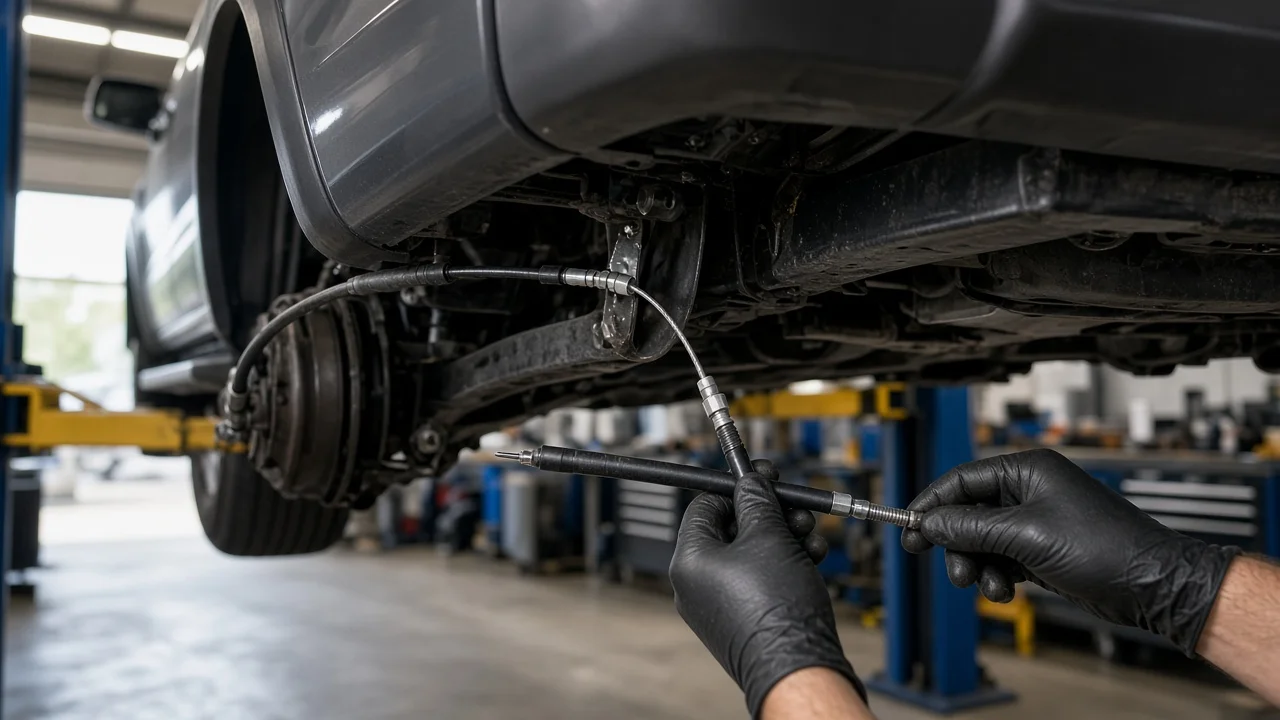
A stretched, seized or snapped parking brake cable leaves a Ford Ranger unable to hold reliably on a slope. A sticking cable can also keep the rear brakes dragging. Replacing the cable is usually straightforward, but the part has to match your truck exactly. This guide explains how to identify the right cable, which features matter, what a new cable will not fix and how to compare options before buying.
Define the job the replacement cable must do
Start by working out which cable has failed. On most cable-operated systems the parking brake is not a single wire. A front cable runs from the pedal or lever to an equalizer under the truck, and one or two rear cables run from there to the rear brakes. Some layouts add an intermediate section. Symptoms help narrow it down. If the pedal travels much farther than it used to, the cable may have stretched or may need adjustment. If the pedal will not release fully, or a rear wheel drags and runs hot, a cable has often corroded inside its sheath. A broken cable usually produces no holding force at all on one or both sides.
Consider how the truck is used. Towing, carrying loads, parking on grades and driving on salted winter roads all put more demand on the parking brake and its cable seals than parking on flat ground. Also decide whether you will do the work yourself. Replacement typically means raising the rear of the truck, releasing cable tension, disconnecting the ends at the equalizer and at each brake, and unclipping the cable from frame brackets. Access, tools and rusted fasteners are real constraints on this job.
Check compatibility before you order
Vehicle fitment is the deciding factor. Ford has sold several distinct Ranger generations, and the North American model built through 2011 is a different design from the later global Ranger. Model year alone is therefore not enough. Cable length and routing can change with cab style, bed length, wheelbase and two- or four-wheel drive. A cable that is a few inches off will not adjust correctly or will chafe against the frame. Match the listing to your exact year, cab, bed and drivetrain. Where a seller offers a VIN lookup or a cross-reference to the part number on the original cable, use it.
Next, confirm the brake hardware at the far end of the cable. Depending on generation and configuration, a rear cable may attach to an actuating lever inside a drum brake, to a small parking brake drum inside a rear rotor, or to a lever on a rear caliper. Each of these uses different end fittings. Check the shape of the end at the equalizer, the type of retaining clip or barrel at the backing plate or caliper bracket, and whether the sheath uses snap-in fittings or bolted brackets. Finally, make sure your truck uses a cable-operated parking brake at all. Some newer vehicles use electrically actuated systems, which need different parts and procedures.
Features that affect the choice
Original-equipment and aftermarket cables can both work if they are made to the correct dimensions. The differences are mostly construction details you can verify. Look for an inner cable with a coating or liner that reduces friction inside the sheath. Look for a sealed or booted end where the cable enters the housing, which keeps water and grit out. The end fittings should look identical to the old part. A cable that arrives with the correct brackets, grommets and clips already fitted saves time and avoids reusing corroded hardware.
Treat labels such as heavy duty, premium or OE quality as claims rather than evidence. More useful signals are a published fitment list that covers your exact configuration, a part number cross-reference, clear photos of both ends and a stated return or warranty policy. Some owners replace the front and rear cables together, or both rear cables at once, because the remaining cables are the same age and have had the same exposure. That makes sense when the old cables show rust or stiffness, but it is not a universal requirement.
Limitations and ownership costs
A new cable restores the mechanical link and nothing more. If the parking brake still holds poorly after replacement, the cause is usually at the brake itself. Common culprits are worn or oil-contaminated friction material, a seized actuating lever or self-adjuster, or shoes that were never adjusted to the drum. The service information lists wear limits for rear brake pads and brake rotors on disc-equipped trucks, and for shoes and drums on drum-equipped trucks. Measure these parts rather than assuming they are fine. The parking brake cable is separate from the hydraulic system, so replacing the cable alone does not normally involve brake fluid or bleeding. A leak at a wheel cylinder or caliper found during the job is a separate repair, and it must be fixed before the truck is driven.
Plan for adjustment. Most systems require the cable tension or the rear shoes to be set to the service manual specification after installation. Over-tightening can cause dragging, heat and premature wear. Budget for extra parts such as clips, hardware kits or penetrating oil for rusted fasteners. Using the parking brake regularly helps keep the cable moving freely. Inspecting the boots and sheaths during tire rotations catches corrosion early. If the service brakes feel soft, pull to one side or grind, stop using the truck and have the braking system inspected professionally.
Build a practical shortlist
Narrow the options with a short checklist rather than a ranking. First, confirm which cable position you need: front, intermediate, left rear or right rear. Second, verify fitment against year, cab style, bed length, wheelbase and drivetrain, plus the VIN or original part number where possible. Third, compare the end fittings and sheath mounts with your old cable or with clear photos of it. Fourth, note what is included in the box, such as brackets, clips and grommets.
Then compare construction and support. Favor listings that show both ends clearly, describe a coated inner cable and sealed ends, and state a return or warranty policy, because a wrong cable is often discovered only after the old one is out. Make sure you have the adjustment specification and procedure for your truck before starting. Keep two or three candidates that pass every check, and choose between them on availability and how complete the kit is. Hold on to the old cable until the new one is installed, adjusted and holding the truck securely on an incline.