Ford Ranger Locking Hub Fitment Guide
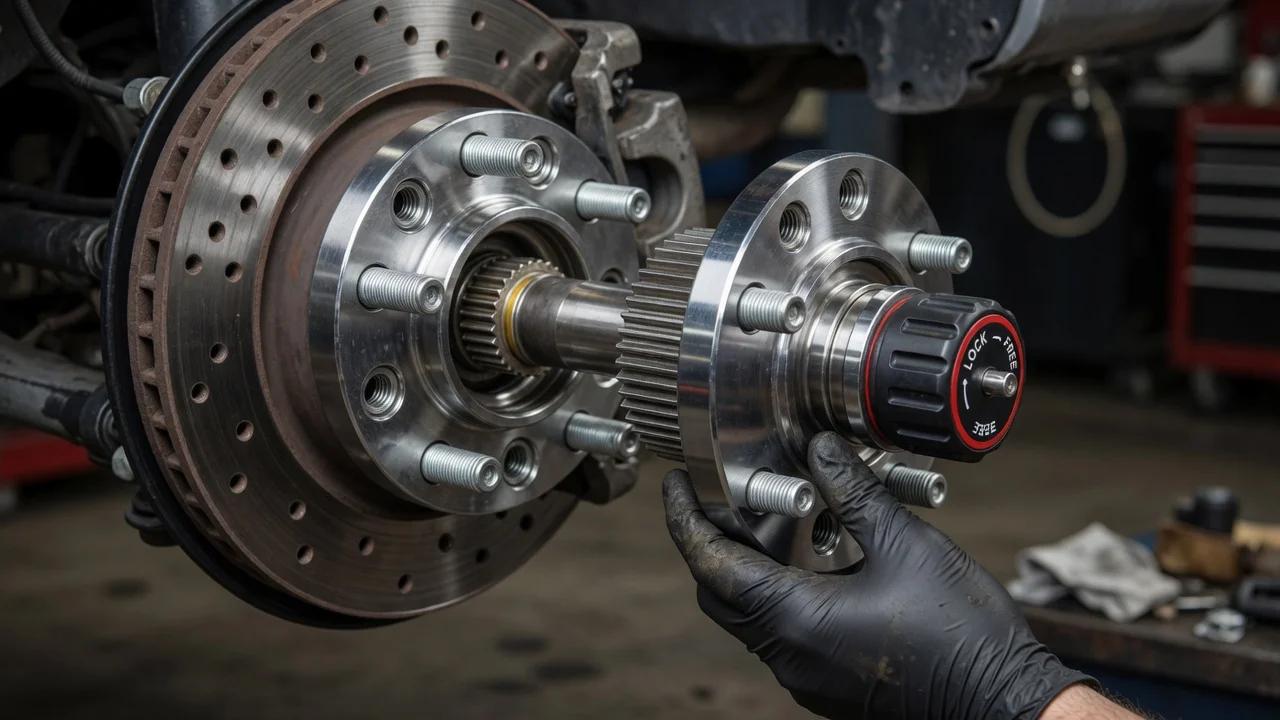
Finding Ford Ranger locking hubs that actually fit depends less on the name on the box and more on matching the hub to the front axle your truck has. Rangers have been built with manual, automatic and vacuum-operated hub designs, and not every 4x4 configuration uses a hub that can simply be swapped for an aftermarket locking unit. This guide explains how to confirm fitment before you buy and what to check during installation.
Short answer: fitment depends on your Ranger's front axle setup
Locking hubs for a Ford Ranger are not one-size-fits-all. The correct hub depends on the model year, the drivetrain, the type of transfer case control, and the hub design the truck left the factory with or received during later repairs. A hub that fits one Ranger 4x4 can have the wrong spline count, body diameter or mounting arrangement for another. The reliable approach is to identify the existing hub and confirm the replacement against the vehicle's VIN or build information rather than choosing by model name alone. If the truck has been modified, for example converted from automatic or vacuum hubs to manual units, the parts currently installed may not match the original catalog listing.
On a two-wheel-drive Ranger the question does not arise, because there is no driven front axle for a hub to engage. Locking hubs apply only to 4x4 versions, so confirm the drivetrain before shopping.
How locking hubs work on a Ranger 4x4
In two-wheel drive the front wheels only need to roll, so a locking hub lets each front wheel turn on its bearings while the front axle shafts stay disconnected. That reduces drag and wear on front driveline parts during ordinary road driving. When four-wheel drive is needed, the hub mechanically connects the splined end of the axle shaft to the wheel hub so torque can reach the front tires.
Rangers have used several ways of making that connection. Manual hubs have a dial at the wheel center that the driver turns between lock and free positions before engaging 4WD. Automatic hubs engage on their own when the front axle begins delivering torque and typically release after shifting back to 2WD and moving in reverse a short distance, as described in the owner's manual for the specific truck. Vacuum-operated hub locks use a vacuum signal routed through lines and seals at the spindle; when that system leaks, the hubs may fail to engage or may not stay engaged.
What changes which hub fits
Vehicle configuration comes first. Model year and generation determine the front axle and spindle design. The 4WD control is another clue: on many Rangers, a floor-lever transfer case was paired with manual hubs, while a dashboard switch indicated automatic or vacuum-actuated engagement. Treat that as a starting point, not proof. The physical details then decide fitment: axle shaft spline count, the hub body's mounting pattern and outside diameter, and whether the kit includes the inner drive components or relies on parts already on the truck.
Previous repairs can change the answer. Service history may show that hubs, spindles or wheel bearings were replaced with aftermarket parts, or that a vacuum system was converted to manual hubs. Wheel choice matters as well: manual hubs protrude from the hub face, and some wheels have center openings that may not clear a manual hub body or cap. Operating conditions also shape which hub type makes sense. An owner who regularly drives through water, mud or snow may prefer the direct control of manual hubs, while one who rarely leaves pavement may value the convenience of the factory design.
What a Ranger owner can do before buying and installing
Start with an inspection of what is on the truck now. A dial marked with lock and free positions indicates manual hubs; a smooth cap usually means automatic or vacuum engagement. Note any part numbers stamped on the hub or visible once it is removed, and record the VIN, model year, engine, cab style and transfer case type. A parts counter or the hub manufacturer's application guide can match the VIN to the correct part, and comparing the old hub with the new one on the bench confirms spline count and mounting before anything is tightened.
During installation, follow the manufacturer specifications for both the truck and the hub kit, especially fastener torque, wheel bearing adjustment and any required retaining rings or spacers. Clean and inspect the spindle, bearings and seals while they are accessible, since worn bearings or damaged seals will shorten the life of a new hub. Afterward, set both manual hubs to the same position, then test engagement at low speed on a loose surface where slight steering bind is easy to notice. Grinding, clicking or a hub that will not stay locked means the work needs another look before you rely on 4WD.
There is no universal interval for hub service. Use the maintenance schedule in the owner's manual for front bearing and hub checks, and inspect sooner if the truck often crosses water or works in heavy mud. Many manufacturers advise engaging four-wheel drive periodically to keep front driveline components lubricated; check whether your manual includes that guidance.
Limitations and when to get professional help
Catalog fitment listings are a guide, not a guarantee. Ranger production spans multiple generations and market-specific versions, and listings sometimes group trucks that differ in axle or hub hardware. If the VIN lookup, the stamped part number and the physical comparison disagree, resolve the conflict before ordering.
Some jobs are better left to a qualified technician: diagnosing vacuum hub faults, setting bearing adjustment without the correct tools, repairing damaged spindles or axle shaft splines, and converting from vacuum or automatic hubs to manual units, which can involve more parts than the hub itself. A shop can also check related components such as the front differential, CV joints or U-joints, and transfer case operation, because a hub that seems faulty is sometimes the symptom rather than the cause.