Ford Ranger Glow Plug Control Module Selection
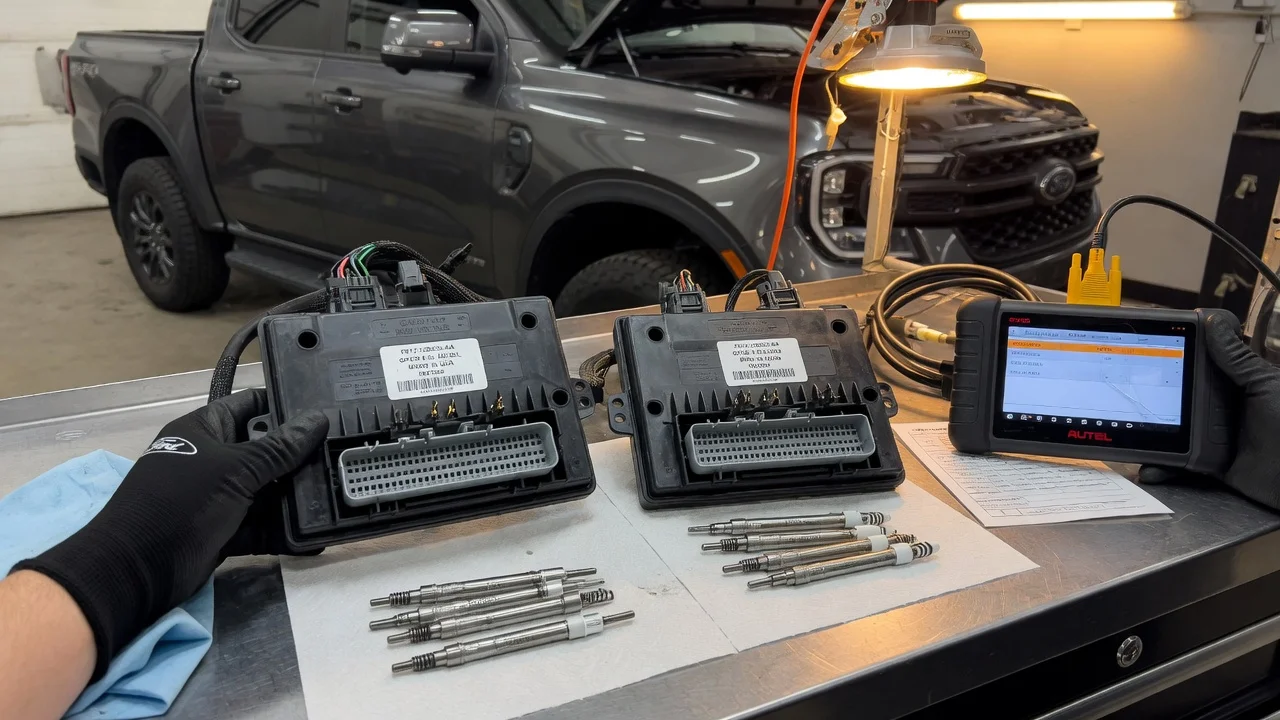
A glow plug control module decides when a diesel Ford Ranger's glow plugs switch on, and for how long, before and after a cold start. A failed module can cause long cranking, rough running and white smoke in the first minutes, and it often lights the coil warning lamp. Picking a replacement comes down to three things: confirm the module is really at fault, match it to the engine and wiring, and judge features on evidence rather than labels.
Define the job the module must do
Only diesel Rangers have glow plugs. US-market Rangers from 2019 onward use gasoline engines, so owners of those trucks do not need this part. Diesel Rangers are mostly older models or trucks sold in other markets. Depending on generation and market, they have used four-cylinder, five-cylinder and V6 diesel engines. Before shopping, write down the model year, engine and market version. Also note how the truck is used. A truck that cold-starts in freezing weather every morning depends on the module much more than one kept in a garage in a mild climate.
Confirm the diagnosis before buying. A scan tool that reads powertrain codes is the starting point. Common glow-related codes include P0380 (glow plug circuit), P0670 (glow plug control module control circuit), P0671 to P0678 (individual cylinder glow plug circuits) and P0683 (communication between the module and the engine computer). A cylinder-specific code usually points to a plug or its wire, not the module. Check each plug's resistance and the voltage at the plug terminals during the glow cycle, and compare the results with the service manual for your engine. If every plug tests good and the module still does not switch power, or it reports a fault on its own control or feedback circuit, the module becomes the likely culprit.
Rule out the fuel side as well, because hard starting is not always a glow problem. Air in the fuel, a clogged fuel filter, a weak lift fuel pump, low rail fuel pressure or an injector with excessive return flow can all cause long cranking. A scan tool showing actual versus desired rail pressure during cranking separates these causes quickly. Common rail systems run at very high pressure. Never loosen injector lines or rail fittings with the engine running, and do not open them just after shutdown. Follow the service procedure for letting pressure fall, and do any leak check visually with the engine off. Fuel additives are not a proven repair for a starting fault.
Check compatibility
The most reliable match is the part number printed on the existing module, cross-checked against the VIN and build date. Ford supersedes numbers over time, so a newer number may replace yours legitimately. A listing that only says "fits Ranger diesel" is not enough. Engine configuration matters too: the module needs one output channel per cylinder, so a five-cylinder engine needs a five-channel unit. A module built for another engine family in the same model year may look similar but will not work.
Then compare the interfaces. Check the connector shape, pin count and locking tab, the mounting bracket and the location in the engine bay. Also check the control type. Some modules are essentially relays switched by the engine computer. Others are smart units that report each plug's status back over a feedback or communication line. Fitting a simpler unit where the truck expects feedback can trigger communication or circuit codes and lose individual plug diagnostics. Most modules are plug-in replacements, but ask the seller whether any configuration is needed for your version.
Features that affect the choice
Original-equipment and reputable aftermarket modules differ mainly in diagnostic depth, internal current capacity and how closely their timing matches the factory strategy. The module's timing is matched to the type of plug fitted. Ceramic and metal glow plugs heat at different rates and tolerate different voltages, so a module mismatched to the installed plugs can shorten plug life or warm them too slowly. Afterglow, where the plugs stay powered briefly after start-up to smooth idle and reduce smoke, should work the same way as the original.
Physical build matters on a truck that sees water crossings, mud and road salt. Look for a sealed housing, a connector with intact seals and a sturdy mounting. Treat labels such as heavy duty, upgraded or fast start as marketing unless the listing backs them with a specification. Useful evidence includes an exact cross-reference to the factory number, a stated cylinder count, clear photos of the connector and pins, and written warranty terms.
Limitations and ownership costs
A new module cannot fix a burned-out or shorted glow plug, a chafed harness, a corroded ground, a blown fuse or fusible link, a weak battery, low compression or a fuel delivery fault. A shorted plug can also damage a new module. That is why the plugs and wiring should be tested before the module is replaced, not after. If the truck still starts poorly once the glow circuit tests good, return to rail pressure, the fuel filter and injector return checks.
Fitting the module itself is usually simple. Disconnect the battery, clean and inspect the connector and ground, mount the unit securely, then clear codes and confirm operation on a true cold start. The bigger cost risk is the plugs. Plugs that have not been removed for years can seize in the cylinder head, and a snapped plug may mean extraction work or head removal. If plugs need replacing, budget for that risk, use penetrating oil and patience, and torque new plugs to specification. The module has no scheduled maintenance. Keeping the connector dry and the battery healthy is the main way to extend its life.
Build a practical shortlist
Keep only candidates that pass every check. The part number must match or officially supersede the original for your VIN and engine. The channel count must equal the number of cylinders. The connector, pin count and mounting must be identical. The control type must be the same, including any feedback or communication line. The module must suit the glow plug type installed. The seller must give a clear return policy and warranty, and must provide a cross-reference rather than a generic fitment claim. Rank whatever remains by fit first, diagnostic capability second and price last.
After installation, confirm the result on the truck. Codes should stay clear after a cold start, plug voltage should appear for the expected glow period, and cranking time should return to normal. If the symptoms stay but the glow circuit now tests correctly, the remaining cause is most likely on the fuel or compression side, not a second faulty module.