Ford Ranger 2.5 Diesel Glow Plug Selection
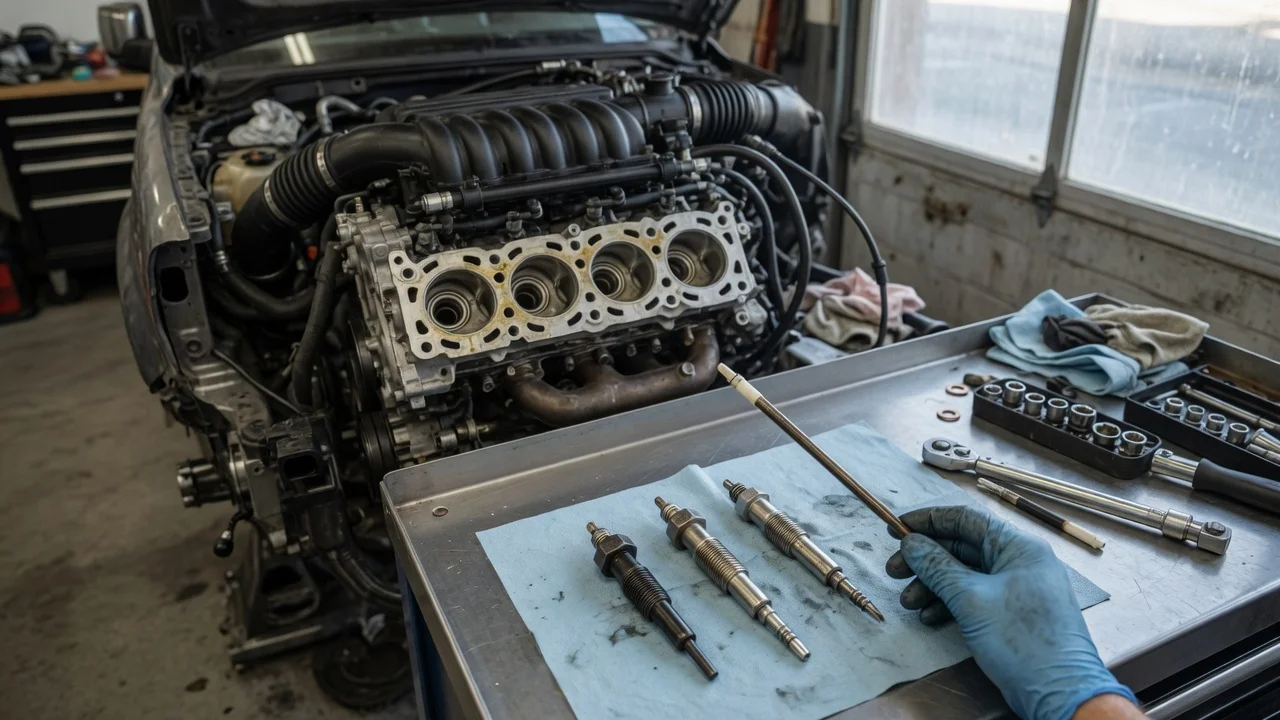
Short Answer
The correct glow plug for a Ford Ranger 2.5 diesel depends mainly on the engine code, model year, and whether the engine uses a common-rail or earlier indirect-injection system. Glow plugs are not universal: a plug that fits one 2.5 diesel may have the wrong voltage, thread, heating time, or control-module compatibility in another version. Confirm the engine specification before ordering.
Why Glow Plug Selection Is Not One-Size-Fits-All
A glow plug heats the air inside the combustion chamber or pre-chamber before and during cold starting. Diesel engines rely on compression heat for ignition, but when an engine is cold, extra heat from the glow plugs helps the fuel ignite reliably. The operating voltage, warm-up speed, post-glow period, and physical dimensions must match what the engine control system expects.
Worn glow plugs can cause hard starting in cold weather, rough idle immediately after startup, white smoke from unburned fuel, or a longer cranking time before the engine fires. In some systems, a failed glow plug can also record a fault or make the glow-plug warning light behave unexpectedly.
Key Compatibility Factors
Engine code and generation: the 2.5 diesel was used across different Ranger generations and markets, and the exact engine variant can affect the specified plug. System voltage: most light-duty glow plugs are designed for the vehicle's nominal voltage, but actual controlled voltage can vary. The plug must match the control strategy. Thread size and reach: the plug must thread fully without bottoming out or sitting too deep. Heating characteristic: fast-heating and self-regulating plugs behave differently and are not interchangeable just because the thread fits. Control-module type: some vehicles use pulse-width-modulated glow-plug control, which can require plugs with specific electrical properties.
How to Identify the Right Plug
The most reliable starting point is the vehicle's build information. Engine code, production date, and market specification can narrow the selection more effectively than the badge or displacement alone. Cross-reference this with the parts catalogue entry for that engine rather than matching only on the 2.5 diesel description.
If the original plugs are still fitted, inspect the removed plug for a marking or compare its physical dimensions. This is useful when the vehicle has had engine work or when regional market listings disagree. However, a physical match does not by itself confirm the correct electrical heating profile, especially if the old plug was already an incorrect replacement.
Replacement Guidance
Glow plugs are usually replaced as a set, even if only one has failed. Uneven heating across cylinders can make cold starting uneven. Before fitting new plugs, check that the sealing surface is clean and follow the specified tightening torque. A glow plug is a relatively low-torque component, and overtightening can damage the head or make future removal difficult.
After replacement, observe cold-start behavior. The engine should catch with less cranking, and the idle should settle normally without excessive smoke. If the symptoms do not improve, the cause may be elsewhere, such as the glow-plug relay, control module, battery condition, or a fuel-delivery problem.
Unresolved Information
Specific thread dimensions, voltage, tightening torque, and part numbers are not stated here because they vary by engine application and were not supplied with this task. A correct selection depends on the precise vehicle specification, which should be confirmed from an accurate build record or a parts catalogue matched to the engine code. Generic market listings can help, but they do not replace confirmation against the actual engine.