Ford Parking Brake Cable Connectors: Fitment and Selection
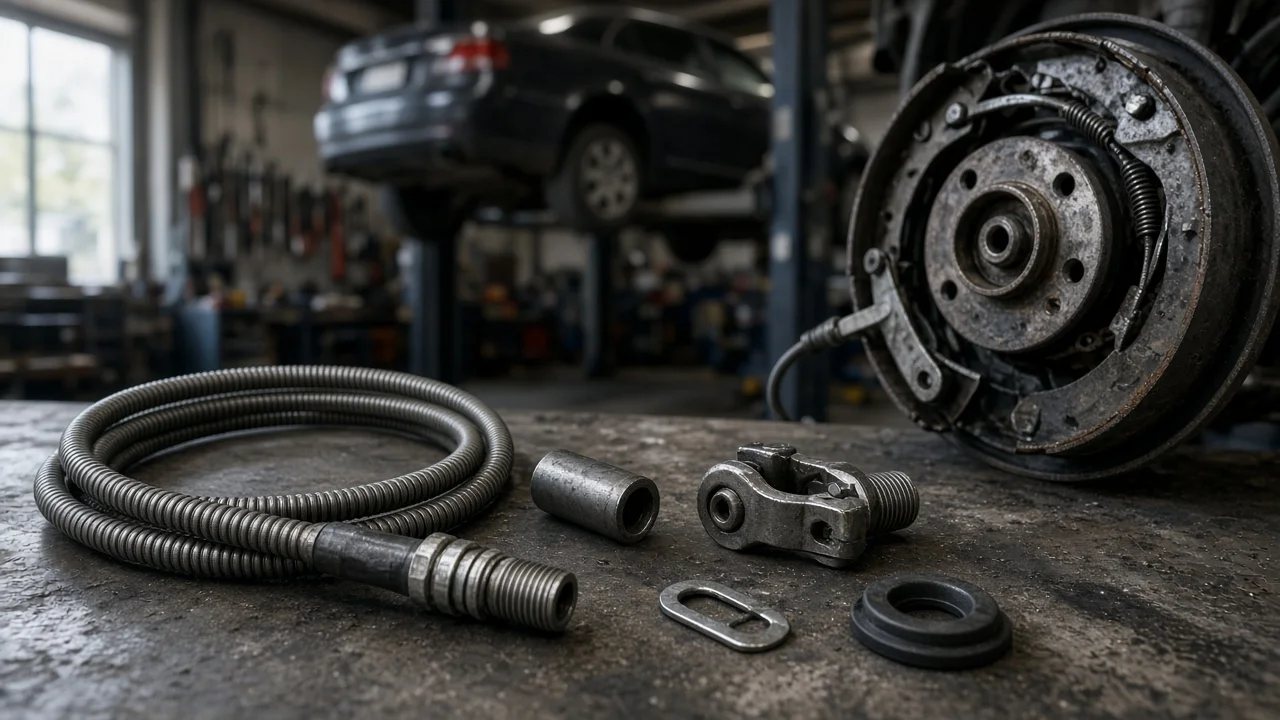
A parking brake cable connector is a small part with an important job. It joins cable sections or links a cable to the equalizer so that pedal or lever force reaches both rear brakes evenly. On Ford trucks, SUVs and cars, the correct connector depends on the model, year, drivetrain and rear brake design. This guide explains how to confirm fitment, judge features honestly and recognize when a new connector will not solve the underlying problem.
Define the job the product must do
Start by identifying which connector you actually need, because the term covers several different parts. A cable-to-cable coupler joins the front cable from the pedal or lever to an intermediate or rear cable. An equalizer splits the pull between the left and right rear cables so both sides apply with similar force. Repair or splice connectors are meant to rejoin a cable at a damaged end fitting. Ford layouts vary: some vehicles run a single front cable to an equalizer, while others add an intermediate section, and long-wheelbase pickups can have extra lengths of cable and additional joints along the frame.
Next, be clear about why the part is being replaced. Common reasons include a coupler seized by corrosion, a broken barrel or ball end, a missing retaining clip, a worn equalizer, or a new rear cable supplied without connecting hardware. Practical constraints matter too: how easily you can reach the joint under the vehicle, how much rust is present, and whether the existing cables are worth reusing. If the parking brake no longer holds the vehicle, the warning light stays on, or a rear wheel drags, do not rely on the system until the fault has been diagnosed; buying a connector before diagnosis often means fixing the wrong thing.
Check compatibility
Vehicle fitment should be confirmed with a VIN-based parts lookup or a catalog filtered by model, year, cab and bed configuration, wheelbase, two- or four-wheel drive and rear brake type. These details change cable length, routing and end fittings, so a part listed only as fitting a model name is not enough. Compare the interfaces on the old part with the replacement: the shape of the cable end (barrel, ball or eyelet), the cable and conduit diameter, the style of conduit end retainer, and how the connector seats in the equalizer or tension mechanism. Laying the old and new parts side by side before installation is the most reliable check available at home.
A number of recent Ford models use an electronic parking brake, in which motors at the rear calipers apply the brake instead of a pedal-driven cable. On those vehicles there is no conventional cable connector to buy; the relevant connector is an electrical harness plug, and servicing the rear brakes, including replacing brake pads, typically requires putting the system into a service mode with a suitable scan tool or the procedure in the vehicle-specific service information. Cable-operated systems have their own precautions: some pedal assemblies use a self-adjusting tension spring that must be locked or released correctly before any cable is disconnected.
Features that affect the choice
Corrosion resistance is the feature that most affects service life, because parking brake connectors sit under the vehicle in water, salt and road debris. Look for a stated material and finish, such as plated or coated steel, rather than vague labels. Words like heavy-duty, premium or upgraded say little on their own. Useful evidence includes a published fitment list by year and configuration, dimensions that match the original part, an explicit statement of which clips and retainers are included, and installation notes that reflect the actual Ford layout.
The bigger trade-off is between a vehicle-specific part and a universal repair connector. Original-equipment and direct-fit aftermarket parts are designed for the factory cable ends and routing. Universal splice connectors that clamp onto bare cable strands with set screws depend entirely on correct installation, can loosen under repeated load and are widely treated by technicians as a stopgap rather than a permanent repair. Check whether the vehicle's service information allows a splice at all. If the cable strands are frayed, kinked or rusted inside the conduit, replacing the complete cable assembly, which often comes with the correct end fitting already attached, is usually the sounder choice.
Limitations and ownership costs
A connector only transmits force; it cannot compensate for problems elsewhere in the system. It will not cure a stretched or seized cable, worn parking brake shoes, glazed or contaminated friction material, or a drum surface worn beyond its limit. On many rear-disc Fords the parking brake uses small shoes inside the hat of the brake rotors, so check shoe lining thickness and the inner drum diameter against vehicle-specific wear limits. Grease or brake fluid on the shoes from a leaking seal or caliper reduces holding power, and the source of the leak must be fixed first. Where the parking brake mechanism is built into the rear caliper, a seized caliper lever is another fault a connector cannot address.
Setup takes more than clipping the connector in place. The usual sequence is to adjust the rear shoes first and then set cable tension according to the service procedure for that vehicle. Too little tension leaves weak holding power; too much causes dragging, heat and premature wear of the shoes or brake pads. Keep lubricants and anti-seize compounds away from friction surfaces. Ownership costs can include new clips and retainers, penetrating oil, replacement cables if the old ones are seized, and extra labor on models where heat shields or other components must be removed to reach the equalizer. In rusty conditions a simple swap can become a full cable job.
After installation, confirm that the parking brake holds as described in the service information and that both rear wheels turn freely once it is released. If holding power is still poor, a warning light remains on, or anything about the repair is uncertain, stop using the vehicle where the parking brake is needed and have the system inspected by a qualified brake technician.
Build a practical shortlist
Narrow the options with a short checklist rather than a ranking. Confirm the part against the VIN or full vehicle configuration, including drivetrain, wheelbase and rear brake type. Make sure the vehicle uses a cable-operated parking brake and not an electronic system. Identify whether you need a coupler, an equalizer or a complete cable with an integrated end. Match the end fittings, conduit retainers and mounting points to the original part. Check that clips and retainers are included or order them separately. Prefer a stated material and corrosion finish over marketing terms. Decide honestly whether the existing cables are sound enough to reuse, and confirm that you have the adjustment procedure for your vehicle before starting.
Before disassembly, photograph the cable routing and the way each end seats, and keep the old parts until the new ones are installed and adjusted. Choose a seller with a clear return policy for parts that turn out not to fit. A correctly matched connector restores even, reliable application of the parking brake, but only when the cables, shoes and adjustment are also in good condition.