Ford NV271 Transfer Case Linkage Identification
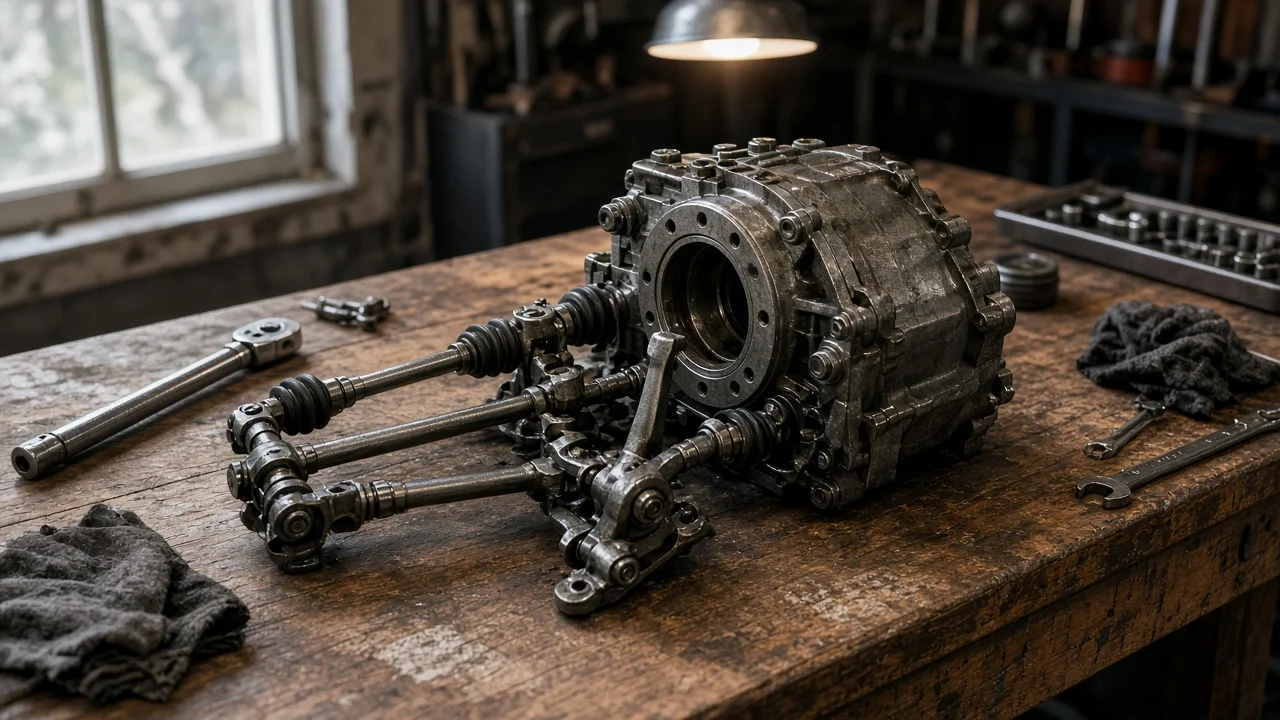
If your Ford has a floor-mounted lever for four-wheel drive, there is a good chance it uses the New Venture NV271 manual-shift transfer case. When the lever feels sloppy, binds or will not reach a position, the shift linkage is often the first thing to examine. This guide explains how to confirm what you have, how the linkage works, and which details decide the correct replacement parts.
Identifying the NV271 linkage: the short answer
The NV271 is the manually shifted, part-time version of this transfer case family. Its linkage is the mechanical connection between the shifter in the cab and the selector lever on the side of the transfer case. To identify it correctly, first confirm the transfer case model from the identification tag on the case, then match the linkage to your exact vehicle configuration: model year, body and chassis type, and transmission. The closely related NV273 is an electronic-shift unit controlled by a dash switch and a shift motor, so it has no floor lever linkage, and parts for one do not substitute for the other.
Appearance alone is not a reliable way to identify linkage parts. Rods, brackets and shifter assemblies from different builds can look nearly identical yet differ in length, bend, mounting points or bushing size. The dependable method is to combine the tag information with the VIN and look the parts up in a catalog that uses Ford build data.
How the shift linkage works
The shift lever in the cab pivots on a bracket mounted below the floor. When you move the lever, a rod or arm carries that motion to a lever attached to the selector shaft on the transfer case. Inside the case, the shift mechanism moves to select two-wheel drive high, four-wheel drive high, neutral or four-wheel drive low. Pivot points in the linkage use bushings and retaining clips so the parts can rotate without metal-to-metal wear.
Because the system is entirely mechanical, any free play or stiffness along the path shows up at the lever. Worn bushings create a vague, loose feel and can prevent the internal mechanism from moving fully into a position. A bent rod or seized pivot can make the lever hard to move or stop it short of a detent. The internal detents define each position, so the linkage must allow the selector to travel completely into each one.
What changes the answer
Several factors affect which linkage fits. Transmission type matters because shifter mounting and rod routing can differ between manual and automatic trucks and between transmission families. Model year changes can alter brackets and shifter assemblies even when the transfer case model stays the same. Pickup and chassis cab builds may also differ. Treat these as reasons to verify fitment rather than assuming any NV271 linkage will bolt on.
The vehicle's history can change the answer as well. A transfer case or transmission replacement, a drivetrain swap or a suspension lift may leave the truck with components that no longer match its original build data. Check the service history and the actual tag rather than relying only on the VIN. Operating conditions also matter: off-road use, plowing, mud and road salt accelerate corrosion and wear at the pivots, which can turn a simple bushing replacement into a larger linkage repair.
What the owner can do
Start by recording identification details. Locate the tag on the transfer case, clean it gently without scraping off the stamping, and write down the model designation and any assembly or part numbers shown. Note your VIN and the transmission type. If records show the transfer case was replaced, mention that when ordering parts, because the replacement unit may differ from the original.
Next, perform a visual inspection with the engine off, the parking brake set and the vehicle safely supported if you need to get underneath. Look at each rod end, bushing and clip for cracks, missing pieces or excessive play. Check the bracket fasteners, look for a bent rod and note any heavy corrosion. Have a helper move the lever slowly through each position while you watch whether the lever on the transfer case moves smoothly and fully. Never force the lever if it resists.
This check helps separate linkage faults from other problems. If the linkage moves freely and the case lever reaches every position, yet four-wheel drive still will not engage or the case pops out of gear, the cause may be internal, or it may involve the front hubs or front axle. When ordering linkage parts, give the supplier your VIN and tag data, and compare the old part side by side with the new one before installation. Lubricate pivot points only as described in Ford service information.
Limitations and next step
This article cannot supply part numbers, adjustment procedures or torque values, because those depend on the exact build and must come from Ford service information or manufacturer specifications for your vehicle. If the tag is missing or unreadable, a Ford dealer parts department or a drivetrain specialist can usually help identify the unit from the VIN and the physical case. Follow the maintenance schedule for your truck for transfer case fluid checks rather than any general interval.
Seek professional help if you hear grinding during shifts, if the case jumps out of gear under load, if fluid leaks around the selector shaft, or if symptoms continue after linkage repairs. These signs can point to internal wear that a linkage replacement will not fix. Also remember that a part-time transfer case should not be left in four-wheel drive on dry pavement, since driveline binding can stress components and make shifting out of four-wheel drive difficult.