Ford Mondeo Mk4 Glow Plug Relay Location
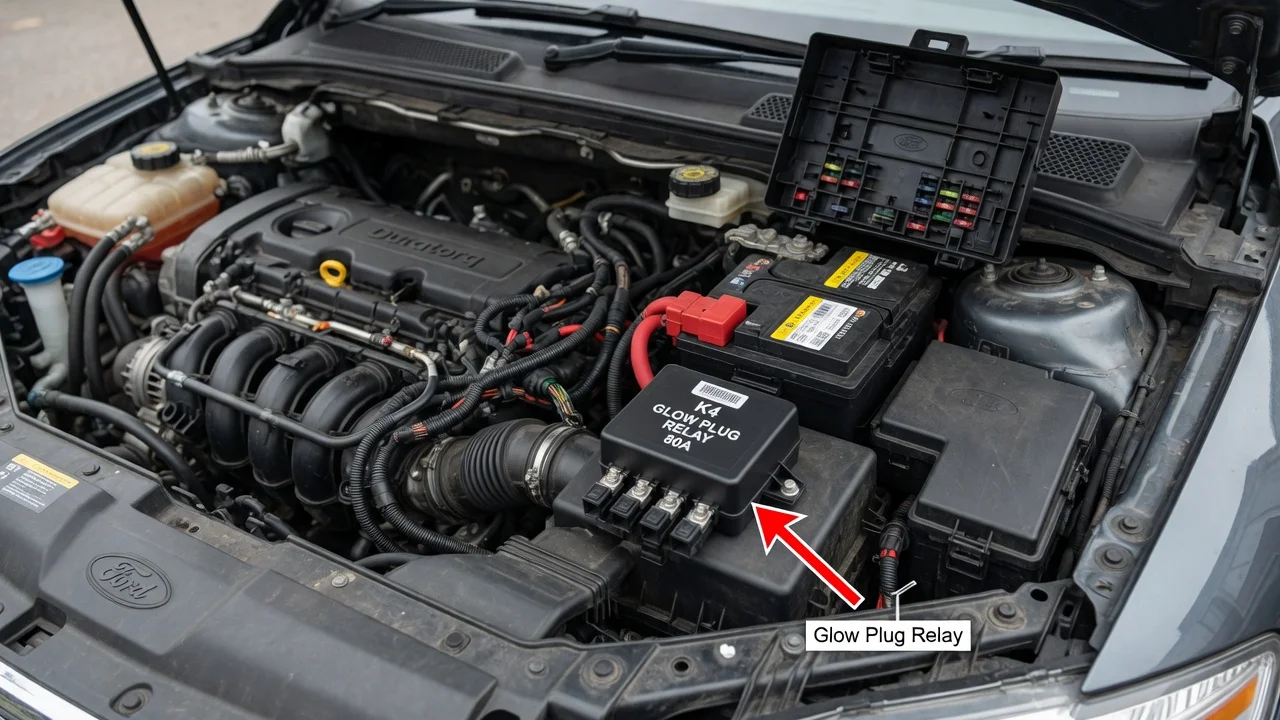
On a diesel Ford Mondeo Mk4, the part most people call the glow plug relay is really a glow plug control module that switches power to the glow plugs. Finding it is usually the first step when the engine is slow to fire on cold mornings. This guide explains where to start looking, why the location is not identical on every car, and how to tell a preheating fault from a fuel supply problem without taking risks with a high-pressure system.
Where the glow plug relay is on a Mondeo Mk4
Only diesel Mondeo Mk4 models have one. Gasoline versions use spark plugs and have no preheating circuit at all. On the TDCi diesels, the glow plug module is mounted in the engine bay rather than inside the cabin. Owners most often report finding it toward the front corner near the battery, usually low down and partly hidden by the battery tray, air intake ducting or wiring looms. That is the sensible place to begin, but the position is not guaranteed for every car, because mounting points differ between engine families and production years.
The dependable way to confirm it is to follow the wiring. The glow plugs sit in the cylinder head, one per cylinder, and a harness links them. That harness leaves the head and runs to a small sealed module with a multi-pin connector. The module also receives a thick power feed protected by a high-current fuse, which makes it easy to tell apart from the ordinary relays in the fuse box. If the harness you follow ends at a component with a heavy supply cable and a smaller signal connector, you have found the right part.
How the preheating system works
When you turn the ignition on in cold conditions, the engine control module decides how long the glow plugs need to heat. It bases that decision mainly on coolant temperature, and the glow plug warning light on the dashboard shows the preheat phase. The glow plug module then switches battery current to the plugs. Their tips heat up inside each combustion chamber and help the compressed air ignite the diesel sprayed in by each injector.
Many modern common-rail diesels also keep the plugs energized for a period after the engine starts. This post-heating smooths the first minutes of running, reduces knocking and cuts white smoke while the engine warms. The module carries a large current and works hardest in cold, damp weather. As a result, corroded connectors and failure of the module itself are both common reasons the system stops working. The engine control module can monitor the circuit and store fault codes when a plug or the module does not respond as expected.
What changes the location and the diagnosis
Engine configuration matters most. The Mk4 was sold with several TDCi engines, including 1.8, 2.0 and 2.2 liter versions. These do not all share the same layout under the hood, so a photo or description from one variant can mislead you on another. Facelifted cars, left-hand and right-hand drive versions, and different market specifications can also move nearby components such as the battery, intake ducting and fuse boxes.
Operating conditions change what a fault looks like. In mild weather, a car with dead glow plugs or a failed module may start almost normally, while the same car struggles badly near freezing. A diesel that is hard to start both cold and fully warm points away from preheating and toward fuel delivery. Possible causes include a restricted fuel filter, air entering the supply side, a weak low-pressure fuel pump or injectors returning too much fuel. The high-pressure side of a common-rail system runs at far higher pressure than a traditional gasoline fuel system. That is why fuel diagnosis is handled differently from the electrical checks below.
What you can check yourself
Start with observation. Note whether the glow plug light comes on and goes out normally, and whether it flashes while driving. Compare how long the engine cranks when cold with how long it cranks when warm, and watch for heavy white smoke or rough running in the first minute. A scan tool that reads Ford diesel data can show stored glow plug circuit codes. Many tools can also show live values such as rail fuel pressure during cranking, which helps separate an electrical fault from a fuel delivery problem.
For the electrical side, switch the ignition off and disconnect the battery before touching the module, its fuse or the glow plug terminals, because this circuit carries heavy current. Inspect the module connector and the harness plug on the cylinder head for green corrosion, loose pins or heat damage. Then check the high-current fuse that feeds the module. With a multimeter, you can test each glow plug's resistance to ground. A plug that reads open, or very different from the others, has usually failed. Compare your readings against the specification for your engine rather than a general figure.
If the evidence points to fuel, stick to safe checks. With the engine off and cool, look for diesel wetness around the filter housing, pipes and injectors as a basic leak check. Confirm the fuel filter service history, and listen for the supply pump priming if your version uses one. Do not loosen high-pressure pipes or injector unions to bleed the system or relieve pressure, and never feel for a leak with your hand while the engine runs. Fuel additives may help keep a healthy system clean, but they are not a repair for a failed glow plug, a faulty module or a worn injector.
Limitations and when to get help
No general guide can promise the exact mounting point on your Mondeo, because it depends on the engine code, build date and market. Before buying parts, identify your engine from the vehicle documentation or the vehicle identification number. Then use the matching parts listing and wiring diagram, and do not assume that modules from different engines are interchangeable.
Professional help is worthwhile in two situations. First, glow plugs that have been in the cylinder head for many years can seize. A plug that snaps during removal may require the head to be drilled or removed, which is a workshop job. Second, any repair that requires opening the high-pressure fuel system belongs with a technician who has the right tools and follows the manufacturer procedure. If your checks show the module, fuse and plugs are healthy and starting is still poor, a diesel specialist can measure fuel pressure, injector return flow and compression to find the real cause.