Ford Model A Rear Axle Shafts: Checking Replacement Fitment
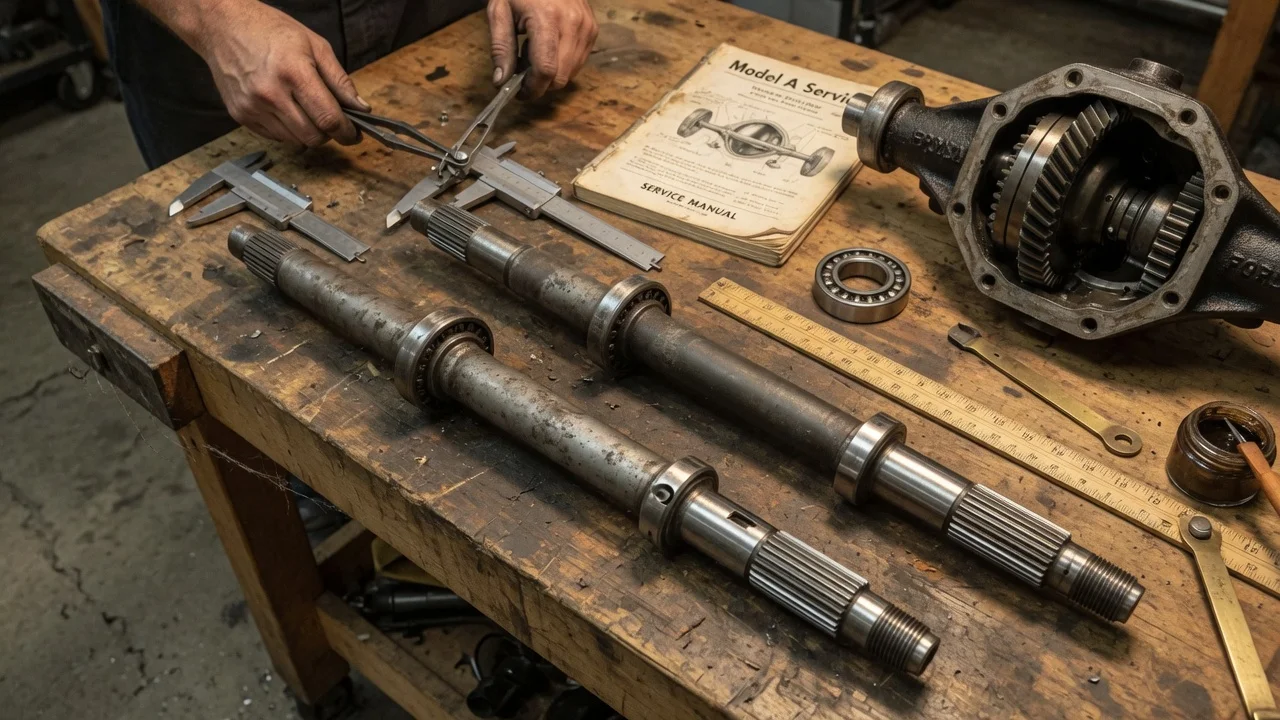
A rear axle shaft on a Ford Model A carries the full drive load from the differential to the wheel hub, so a replacement that almost fits is not good enough. Before you order or install a Model A rear axle shaft, confirm what is actually wrong, which shaft the car needs and how the hub, key and splines mate with it. This guide covers the symptoms, likely causes and checks that decide whether a new shaft is the right repair.
Establish the symptoms
Start by writing down exactly when the problem appears. A clunk on take-off, when you lift off the throttle or when backing up points to a different area than a steady rumble that rises with road speed. Note whether a click repeats once per wheel revolution, whether one rear wheel feels loose or wobbles, and whether grease is reaching the brake drum or shoes. If the engine runs and the car is in gear but the car will not move, record that too, because it changes the urgency completely. Also note recent changes: a hub that was pulled, a new key or nut, bearing or seal work, brake adjustment or a shaft already replaced on one side.
Next, pin down the vehicle configuration. Record the year, whether it is a passenger car or a Model AA truck, and whether the rear axle assembly is original to the car or came from another vehicle. Model AA trucks use a different rear axle, so parts should not be assumed to interchange with the passenger car. Decades of repairs mean mixed components are common, and any service history, receipts or notes from previous owners help explain what is actually installed.
Distinguish plausible causes
The Model A rear wheel hub is held on a tapered outer end of the axle shaft by a key and a nut. When the hub is not drawn tight on the taper, the key takes the drive load, and the hub can begin to shift on the shaft. That usually produces a clunk whenever torque reverses, such as take-off, coasting and reversing. Visible movement between hub and shaft, a damaged key or a widened keyway support this cause. A noise that continues with the wheel off the ground and no load on the drivetrain weakens it.
Other causes compete with a shaft or hub fit problem. A worn wheel bearing tends to give a rumble or growl that grows with speed rather than a clunk on load change, and a failed seal shows up as grease on the brakes. Noise from the differential is usually centred in the housing and affects both sides rather than following one wheel. A broken shaft is more dramatic: with an open differential, drive goes to the broken side, so the car often will not move at all. The area near the keyway at the tapered end is a known weak point where cracks can start.
If the trouble began right after a replacement shaft was installed, consider fitment itself. A shaft whose taper does not match the hub, a key that sits too high and holds the hub off the taper, a nut that runs out of thread before the hub is drawn tight, or splines that do not engage the differential side gear correctly can all imitate a worn part.
Checks in a useful order
Begin with observations that need no disassembly. Park on level ground, chock the front wheels and look for grease on the backing plate, drum and tire sidewall. Remove the hub cap and check that the hub nut and its cotter pin are present and undisturbed. With the rear of the car supported on proper stands, never on a jack alone, rock the wheel at top and bottom and watch where the movement happens: between hub and shaft, between shaft and housing, or in the bearing area. Rotate the wheel slowly and listen for roughness or a repeating catch.
Deeper checks require tools and reference data. The hub should be removed with a suitable hub puller; striking the shaft end damages the threads and can harm the shaft. With the hub off, inspect the taper for fretting or polished bands, the keyway edges for rolling or cracks, the key for shear marks, the threads, and the splines once the shaft is out. Lay the old and new shafts side by side and compare overall length, taper, keyway position, thread and spline form. Seat the hub on the new taper without the key first, then with it, to confirm the key does not hold the hub off its seat; marking compound on the taper shows whether contact is even. Hub nut torque, runout limits and bearing setup should come from the manufacturer specifications in a period service manual, not guesswork. If you lack a puller, measuring tools or experience with early Ford drivetrains, a qualified technician should handle this stage.
Interpret the findings
Each result establishes something specific. Movement between hub and shaft proves a fit problem at the taper, but not on its own that the shaft is at fault, because a worn hub taper or keyway produces the same symptom. A cracked shaft, a deformed keyway or damaged threads on the shaft justify replacing it. A replacement that differs from the original in length, taper, keyway position or spline engagement is not a fit for that car, and it should not be forced into service. Bearing roughness with a sound taper and key points to the bearing rather than the shaft, although the bearing surface on the shaft still deserves inspection.
Before buying parts, confirm the hub is serviceable. Fitting a new shaft to a hub whose taper or keyway is worn can repeat the original failure. Also confirm the new shaft engages the differential side gear properly and that the opposite shaft has been inspected, since both sides have seen the same operating conditions and history.
Urgency and next action
Stop driving the car if the hub moves on the shaft, the key is sheared, the shaft shows a crack, the wheel wobbles, the clunk is getting worse or grease is reaching the brakes. A failure at the tapered end can let a wheel separate from the car, and contaminated mechanical brakes lose stopping power. There is no safe remaining mileage to rely on once these signs appear; move the car by trailer or tow.
For the repair, gather the year, whether it is a car or AA truck, whether the axle is original or swapped, which side is affected, measurements and photos of the old shaft's taper, keyway, threads and splines, the condition of the hub, and notes on recent work. Describe how the car is used, such as touring distances or hilly roads. After installation, set an inspection plan for the hub nut and keyed fit based on the service manual and your mechanic's advice rather than a universal maintenance schedule.