Ford Maverick Hybrid Battery: Location, Life, and Replacement
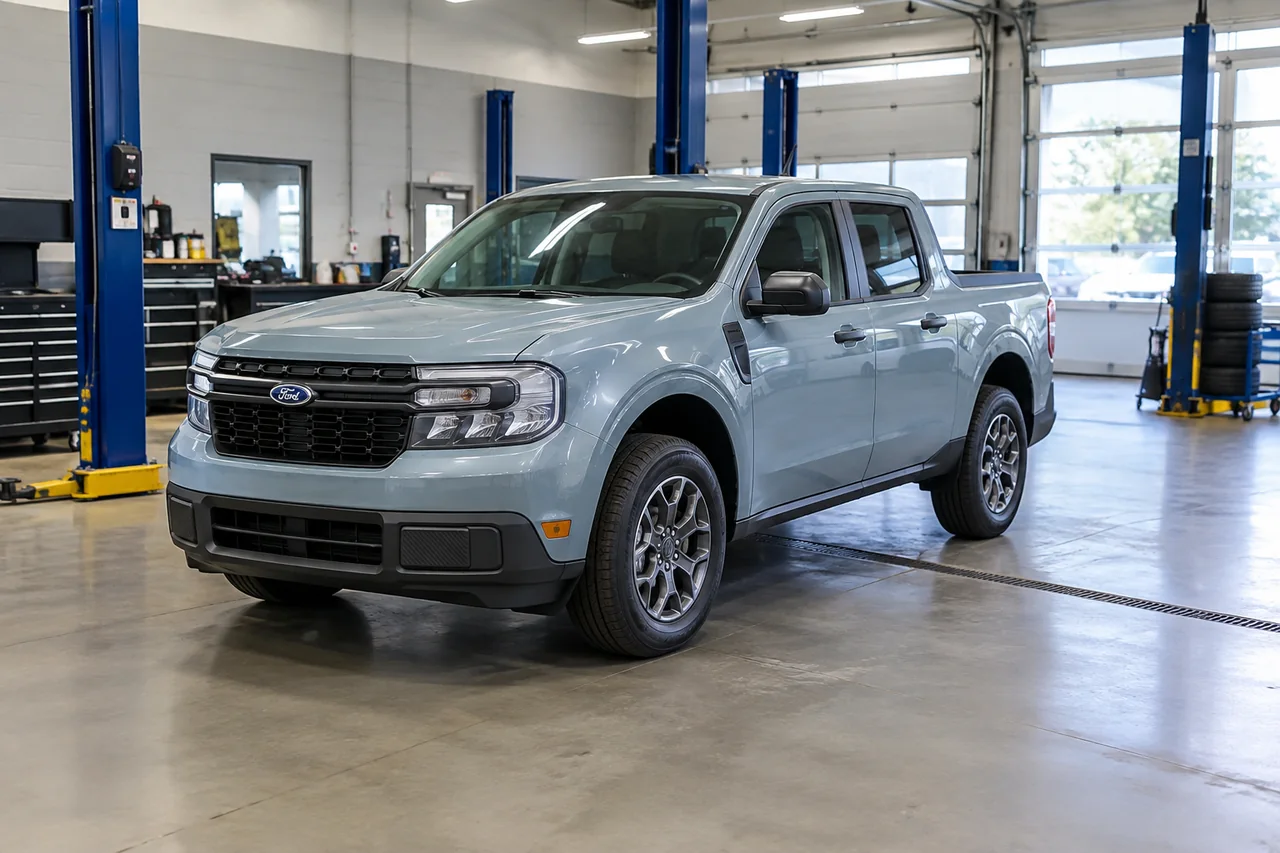
The Ford Maverick hybrid battery is the high-voltage pack that stores energy for electric assist and regenerative braking, separate from the 12-volt battery that supports electronics and startup. Questions about Ford Maverick hybrid battery replacement, hybrid battery location, expected life, and replacement cost start with that split. Battery warranty coverage and a written estimate then show whether the traction pack or another hybrid system fault actually needs service.
Which Battery Powers the Maverick Hybrid System?
Electric propulsion in this truck depends on the high-voltage traction battery. It stores energy so the hybrid system can assist the gasoline engine, move the truck at low speeds in electric mode when conditions allow, and accept recovered braking energy during deceleration. That recovered energy is not extra fuel; it is kinetic energy converted and stored for later use. Because the traction pack operates at high voltage, it is managed by dedicated control, cooling, and safety systems that a conventional 12-volt battery does not provide.
The 12-volt battery powers vehicle electronics, lighting, modules, and the logic that enables hybrid system startup. Without a healthy 12-volt supply, the truck may not reach a ready-to-drive state even if the traction pack still holds charge. Service estimates and hybrid system warnings often name a battery without specifying which one. Confirm whether the concern is the high-voltage traction battery or the 12-volt battery before treating Ford Maverick hybrid battery replacement as the next step. Mixing those systems leads to the wrong part, the wrong labor path, and an incomplete diagnosis.
Where the Hybrid and 12-Volt Batteries Are Located
Ford Maverick hybrid battery location is model-year specific, so the installed position of the high-voltage traction battery and the 12-volt battery should be confirmed in the owner's documentation for that truck, not assumed from another hybrid or another Maverick. The battery itself is not always at the same point used for jump-starting or remote service access. A labeled jump post, fuse box, or under-hood terminal can look like the battery while the actual 12-volt unit sits elsewhere. Use the diagrams that match the VIN and model year before concluding where either pack is mounted.
The owner's manual and in-vehicle information screens show hybrid battery location without requiring seats, trim, shields, or battery covers to be removed. Those diagrams identify which component a technician will service; they are not permission to open the enclosure. The high-voltage enclosure and orange wiring are isolation hardware and must be left untouched. Finding where the Ford Maverick hybrid battery sits does not establish safe owner access. If a diagram is unclear, ask a qualified shop to identify the pack on the vehicle.
Expected Battery Life and What It Depends On
Expected life of a Ford Maverick hybrid battery cannot be read from the odometer or the model year alone. Pack condition depends on temperature exposure, charge and discharge history, how often the truck sits unused or works in extreme heat or cold, and how well battery thermal management has kept cells in a stable range. Two trucks with similar mileage can show different remaining capacity because their operating histories differ. Age is one factor, not a schedule, and thermal management supports longevity without converting calendar time into a fixed replacement date.
Battery warranty coverage describes the conditions under which Ford may repair or replace a covered hybrid battery. A warranty term is not a replacement deadline, and a pack that remains within performance limits does not need replacement simply because coverage is approaching its end. A replacement decision should rest on documented symptoms plus a professional battery health assessment of the traction pack and related controls. Test results, freeze-frame data, and a written diagnosis interpret those findings. A stored fault is evidence to evaluate, not proof the high-voltage traction battery has failed, and manufacturer-dependent codes still require vehicle-specific confirmation.
Warning Signs That Need a Battery Assessment
Hybrid system warnings, messages about the high-voltage system, difficulty reaching the ready-to-drive state, and a sudden change in how the hybrid operates are reasons for a battery health assessment, not proof the traction pack has failed. A 12-volt problem, a control module issue, or a thermal-management fault can produce similar alerts. Fuel economy drops and reduced electric operation also have multiple causes, including weather, short trips, cargo, tire pressure, and driving conditions. Treat those changes as clues. Record them, then have the hybrid system and both batteries evaluated before authorizing a traction pack replacement.
Safe observations to capture include the exact dashboard wording, when symptoms occur, ambient conditions, recent driving, and whether the vehicle starts and reaches ready normally. Do not inspect a damaged or leaking battery enclosure or open high-voltage covers. Follow urgent dashboard instructions immediately. If the truck will not stay ready, if a collision has disturbed the pack, or if leakage appears around the hybrid battery location, stop driving and arrange professional assistance.
What to Expect During Hybrid Battery Replacement
Do not authorize a pack swap until a qualified technician diagnoses the high-voltage traction battery and the associated electrical and thermal management systems. Isolation faults, cooling problems, contactors, and control software can mimic pack failure. After a confirmed diagnosis, the shop selects a vehicle-specific assembly, performs professional installation with high-voltage safety procedures, and completes the post-service checks the repair requires, such as communication verification and a road test of hybrid operation. That sequence avoids replacing a healthy pack and confirms the new or remanufactured assembly restored electric propulsion and energy recovery.
Replacement eligibility and part fitment must be confirmed with the VIN and model year, because hybrid battery hardware, software, and mounting can differ across Maverick Hybrid production. Ask about parts availability, expected downtime, whether the replacement is new, remanufactured, or otherwise sourced, and what parts and labor warranty terms apply to the completed repair. Those answers vary by shop and date; stock and turnaround cannot be promised in advance. A written estimate should state the diagnosed concern, the assembly being installed, and the checks that follow, so authorization is based on a defined repair rather than a generic battery swap.
Replacement Cost, Warranty Coverage, and the Written Estimate
Ford Maverick hybrid battery replacement cost is not a single catalog number. A complete written estimate should separate the battery assembly, diagnosis time, replacement labor, any required programming or setup, taxes, and a battery core charge if the old pack must be returned. Model year, confirmed repair scope, whether related cooling or electrical work is included, replacement battery sourcing, and local labor rates all change the total. An advertised pack price that omits diagnosis, labor, programming, and core terms is not the out-of-pocket figure. Ask the shop to show each line so the comparison is between equivalent repairs.
Check battery warranty coverage with the VIN, in-service date, current mileage, the applicable warranty booklet, and the written diagnosis that names the failed or degraded component. Coverage can apply to the high-voltage traction battery under hybrid-specific terms while leaving the 12-volt battery on a different policy. Before approval, obtain the total out-of-pocket amount, a clear coverage decision, core return conditions, and the warranty on the completed repair including parts and replacement labor. Those details keep Ford Maverick hybrid battery replacement from becoming an open authorization if extra programming, cooling work, or a different assembly is later required.