Ford Ignition Coil Problems: F-150 and Other Ford Models
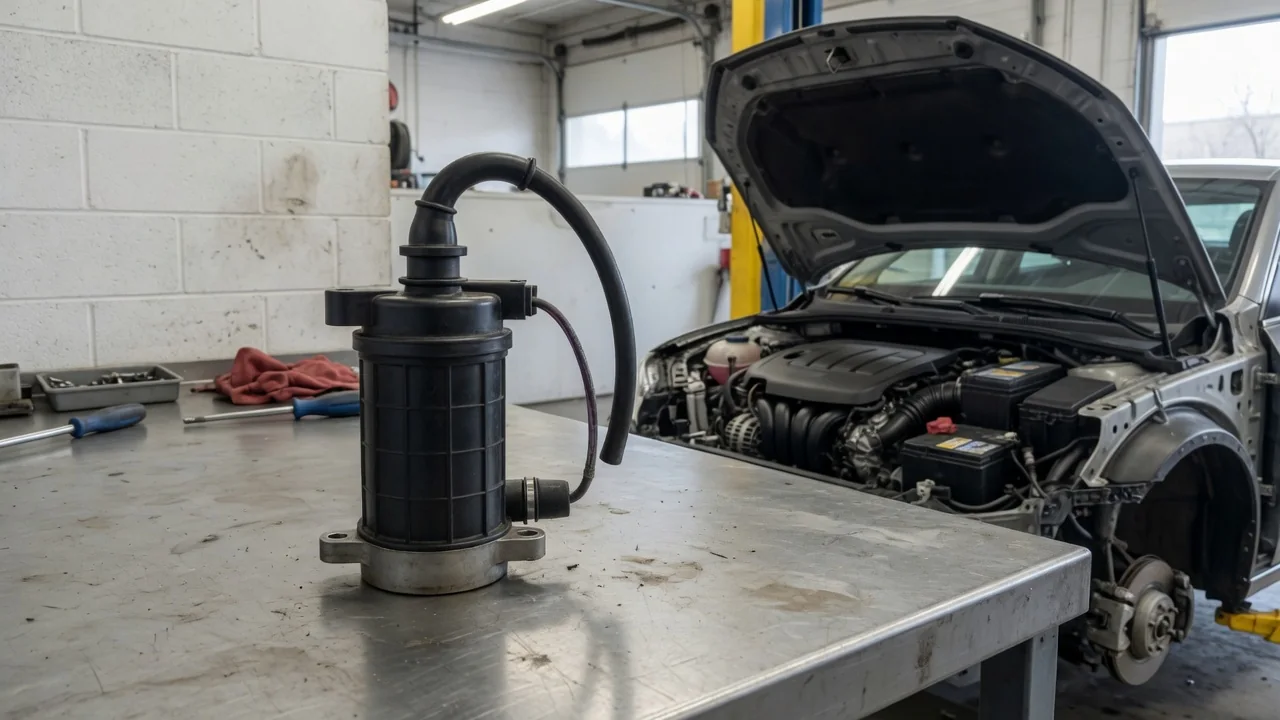
An ignition coil for a Ford F-150 raises voltage so the spark plug can fire the mixture. Coil-on-plug ignition places a coil at each cylinder on many F-150 engines and other Ford trucks and cars. Fitment depends on year, engine identification, and configuration, not the model name alone. Cylinder misfire, a warning light, or rough running can involve a coil, coil boot, wiring, or another system, so diagnosis comes before parts.
Identify the Ignition Coil Setup on Your Ford F-150
A Ford F-150 ignition coil is a transformer that steps battery voltage up to the high voltage the spark plug needs. Coil-on-plug ignition means each cylinder has its own coil sitting on the plug, with a coil boot sealing the spark plug well and an electrical connector feeding power, control, and ground. That layout is widely used, but it is not the only Ford ignition arrangement, so confirm the physical setup on your truck before discussing coil count or location.
The F-150 name by itself cannot establish coil fitment or ignition-system layout. Model year, engine identification, and VIN-based application data come first, because the same badge has covered different engines and coil packages. Once the application is known, inspect the coil body, the boot, and the connector as three separate areas. Oil or moisture in the spark plug well, a cracked boot, or a loose connector can cause a cylinder misfire without the coil itself having failed.
Check Fitment for 2004–2007 F-150 Ignition Coils
Searches for a 2004 Ford F-150 ignition coil, a 2005, 2006, or 2007 Ford F-150 ignition coil all need the same facts: calendar year, exact engine, vehicle configuration, and a verified part application. For a 2004 truck especially, confirm the specific configuration before assigning an ignition layout or a replacement part, because mid-cycle engine and platform details can differ. An ignition coil for a 2006 Ford F-150 is not interchangeable with a 2007 unit by year label alone.
Adjacent model years and similar-looking coils do not establish compatibility. Housing shape, connector keying, and mounting can look alike while the electrical characteristics and application notes differ. Engine-specific service information is required for cylinder numbering, coil access, and installation specifications on that engine. Without that match, a coil that physically seats can still be the wrong circuit partner for the control module. Confirm the engine identification on the vehicle before ordering an ignition coil on a Ford F-150 from this era.
Recognize Misfire Symptoms and Know When to Stop Driving
A rough idle, hesitation, shaking, reduced power, and a check-engine light can all appear with an ignition fault on an F-150 or another Ford, but those symptoms do not identify a bad coil by themselves. Spark plugs, the wiring harness, fuel delivery, and mechanical problems can produce the same cylinder misfire feel. Professional diagnostic testing should establish the cause rather than swapping coils first. Record when the stumble happens, cold start, cruise, or load, and note any stored codes for the technician.
Manufacturer-dependent codes need vehicle-specific verification before anyone interprets them as a failed Ford ignition coil. A flashing check-engine light or severe shaking is a reason to stop safely and arrange assistance, because continued misfire can overheat and damage the catalytic converter. Limit owner observations to accessible areas with the engine off and cool. Do not disconnect coils on a running engine, improvise spark tests, or probe ignition circuits; those steps belong to a shop with the correct procedure and equipment.
Locate the Correct Application for Escape, Explorer, Expedition, Fusion, Focus, and Ranger
A Ford Escape ignition coil, Ford Explorer ignition coil, Ford Expedition ignition coil, Ford Fusion ignition coil, Ford Focus ignition coil, or Ford Ranger ignition coil is still an application question, not a model-wide part. Identify year and engine on each vehicle before assuming coil count, location, or connector style. The Escape, Explorer, Expedition, Fusion, Focus, and Ranger lines have used more than one ignition architecture across their production, so no single layout covers an entire nameplate.
Some of those applications use coil packs and plug wires rather than coil-on-plug ignition, so check the parts listing against the actual vehicle. A verified engine-specific layout is required before labeling coils, cylinders, or banks. Access and surrounding components then affect diagnosis and repair scope, because a buried coil takes more labor than one on an open valve cover. That access difference is not a claim about which model fails more often.
Read Ford Coil Layouts and Wiring Diagrams Correctly
A Ford ignition coil wiring diagram is not the same document as a physical coil-location illustration or a cylinder-numbering diagram. The location drawing shows where each coil sits. Cylinder numbering identifies which coil corresponds to which cylinder for misfire reporting. The electrical wiring diagram shows power supply, control circuits, connector identifiers, and grounds for that engine. Using the wrong sheet leads to labeling the wrong cylinder or tracing the wrong branch of the harness.
Wiring information must match the vehicle's year, engine, and applicable configuration; a generic ignition coil wiring diagram for Ford will not pin out every F-150 or passenger-car circuit. Universal pinouts and wire colors are not reliable across engines. An ignition-circuit code can involve the wiring harness, an electrical connector, or control electronics and does not prove an internal coil failure. Circuit probing and electrical measurements belong to qualified technicians using the correct service procedure and equipment.
What Ford Ignition Coil Replacement Should Include
Ford ignition coil replacement should start with confirming the fault, then verifying the replacement part against the identified engine. Assess access, install to vehicle-specific requirements, and verify operation afterward. Changing an ignition coil on a Ford F-150, an Escape ignition coil replacement, or Ford Explorer ignition coil replacement all follow that outline, but labor depends on the exact engine, not the model name. F-150 ignition coil replacement is not a single labor figure across every engine layout.
Before completing the repair, the technician should assess the spark plug, coil boot, electrical connector, and any oil or moisture in the spark plug well. A new coil on a contaminated well or damaged boot can fail again quickly. Whether to replace one coil or additional coils should follow diagnostic findings and the condition of the remaining units, not a universal interval. After installation, confirm that the original symptoms and diagnostic results are gone; clearing a warning light alone does not confirm a successful repair.
What Affects an F-150 Ignition Coil Replacement Estimate
A useful Ford F-150 ignition coil replacement cost discussion starts with estimate structure, not a single price. Break the repair estimate into diagnostic labor, coil and boot charges where they apply, installation labor, taxes, and any separately justified work. Engine configuration, coil access, local labor rate, and the number of confirmed faulty coils all move the total. Ask which cylinder or circuit was implicated and what testing supports the proposed replacement.
Spark plugs, damaged connectors, or contamination-related repairs may add cost only when inspection supports that work. Do not treat those items as automatic add-ons to every ignition coil for Ford F-150 service. Precise current prices are not useful without vehicle details and an agreed repair scope, because parts and labor vary by engine, region, and how many coils are actually replaced. A written estimate that names the application and the tested circuit is the practical way to compare shops.