Ford Glow Plug Relay Selection: Fitment, Features and Costs
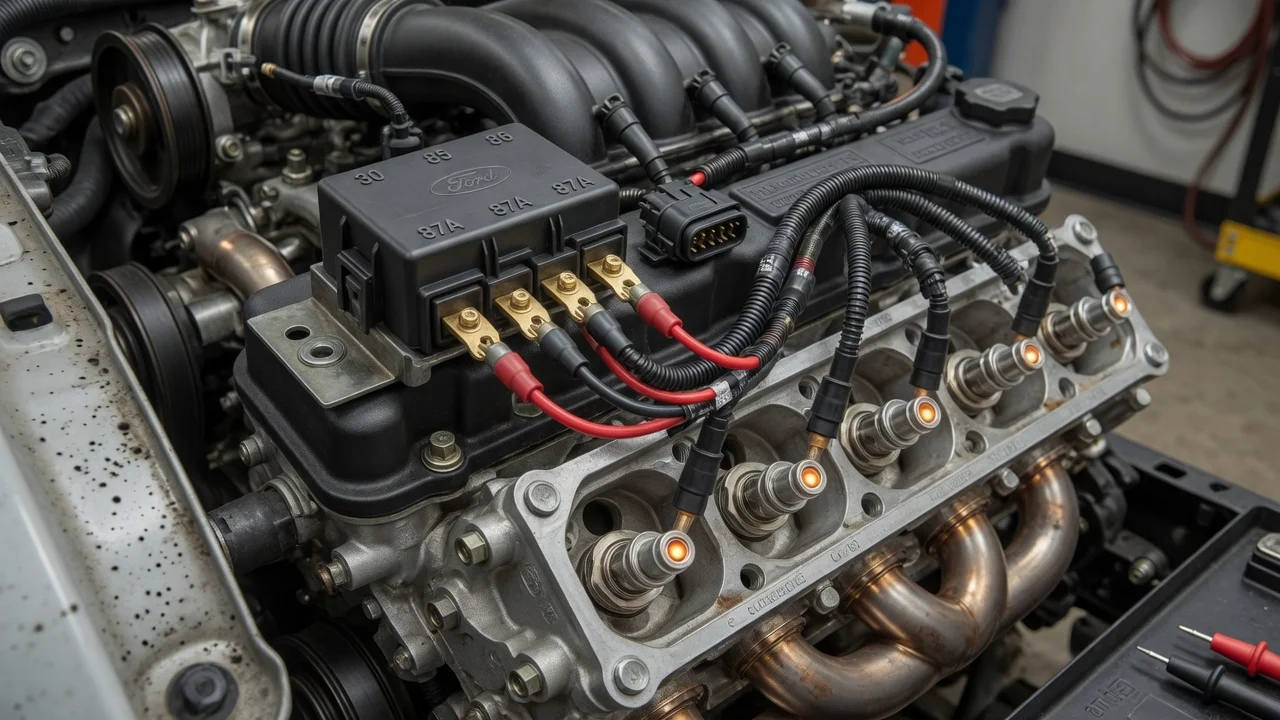
A failing Ford glow plug relay usually shows up as long cranking on cold mornings, white smoke at startup, or a wait-to-start light that seems to work while the engine still refuses to fire. Choosing a replacement mostly comes down to two things: matching the right part to your diesel engine and confirming that the relay is actually at fault. This guide covers fitment, the features worth paying for, and what a new relay cannot fix.
Define the job the product must do
A glow plug relay is a heavy-duty electrical switch. When the powertrain control module decides the cylinders are too cold for reliable compression ignition, it energizes the relay. The relay then sends battery current to the glow plugs, which heat the combustion chambers. On electronically controlled engines, the relay does not decide how long the plugs glow. It only carries the current the control logic commands. This matters when you shop, because a relay cannot correct a faulty temperature input or an upstream wiring problem.
This part applies only to diesel engines. Gasoline Ford trucks and cars ignite fuel with spark plugs and have no glow plug circuit, so a listing that includes a gas engine is a fitment error. Start by noting the model year, engine displacement and how the vehicle is used. A truck that cold starts daily in a northern winter puts far more cycles on the relay than one in a mild climate, and so does a truck whose block heater is rarely plugged in. Heavy use justifies a sturdier part.
Confirm the relay is the fault before buying
Hard cold starts on a Ford diesel have several possible causes, and the relay is cheap enough that many owners replace it on a guess. A better approach is to check whether battery voltage reaches the glow plug feed when the relay is commanded on. If the relay clicks but there is no voltage at its output terminal, the internal contacts are likely burned. If voltage reaches the plugs but the engine still starts slowly, look elsewhere. Possible causes include failed glow plugs, a bad harness connection, and weak batteries that sag under the combined load of the plugs and starter. A scan tool that reads engine oil or coolant temperature also helps. A sensor that reports a warm engine on a cold morning can stop the relay from ever being commanded.
Rule out the fuel side as well. Several fuel problems can mimic a glow plug fault: a clogged fuel filter, low fuel pressure from a weak lift or fuel pump, air drawn in through a loose fitting, or a sticking injector. Gelled fuel in very cold weather is another common culprit. A visual leak check around the filter housing and supply lines is safe and useful. Opening high-pressure lines is not a driveway test, because diesel injection systems can hold dangerous pressure. Leave that work to someone following the factory procedure. Cold-flow additives can help prevent gelling, but they do not repair a failed relay, a worn injector or a pump that cannot hold pressure.
Check compatibility
Ford diesel generations control glow plugs differently, so the first fitment question is whether your engine uses a relay at all. The 7.3L Power Stroke, used in F-Series and Super Duty trucks and Econoline vans, has a PCM-controlled glow plug relay. The later 6.0L, 6.4L and 6.7L Power Stroke engines replaced the simple relay with an electronic glow plug control module, which monitors individual plug circuits and can set codes for each one. Older indirect injection 6.9L and 7.3L engines used a separate controller arrangement. A 7.3L relay will not work in a 6.0L truck, or the reverse, no matter how similar the listings look.
Once you have confirmed the engine, compare the terminal layout, mounting bracket and connector style against the original. A single listing may cover several production revisions. The Ford part number on the old unit, or the number listed for your VIN, is more reliable than a year range alone. Check the current rating too. Engine configuration sets the load: a V8 diesel feeds eight plugs at once, and the relay must carry that combined current without overheating. A relay sized for a smaller engine is not an acceptable substitute, and neither is a generic automotive relay.
Features that affect the choice
The differences between relays that actually matter are internal, so they are hard to judge from a product photo. Contact material and size determine how well the unit handles high current and the repeated cycling of a winter season. Terminal studs should be solid, with nuts that seat squarely, because a loose high-current connection builds heat and can damage a new part quickly. A sealed housing resists moisture and road salt. That matters for a relay mounted on the engine, where it is exposed to heat and spray.
Treat marketing labels with caution. Words such as heavy duty, premium or upgraded mean little without a stated current rating, an OE part number cross-reference and a clear warranty. An original equipment Motorcraft part removes most fitment uncertainty. Reputable aftermarket brands are a reasonable choice when they publish the OE number they replace. Cheap unbranded relays carry the most risk. If one fails, you are back to the same hard-start problem and doing the job twice. Replacing a corroded positive feed cable or ground strap at the same time is often a better use of money than paying more for a label.
Limitations and ownership costs
On a 7.3L, relay replacement is usually a short bolt-on job, but a few precautions prevent trouble. Disconnect both battery negative cables before touching the relay studs, because the feed is live and these trucks carry two batteries. Clean the terminal eyelets and tighten the nuts carefully to avoid snapping a stud. Afterward, turn the key on with the engine cold and use a test light or meter to confirm that the plugs receive voltage. The relay has no consumables or scheduled maintenance, but it is worth checking its connections for corrosion from time to time.
Know what the part cannot do. A new relay will not revive burned-out glow plugs, repair damaged plug wiring, correct a faulty temperature sensor or make up for weak batteries. Budget for testing the plugs themselves. On older trucks, a relay failure is sometimes the first sign that the whole glow system is aging, and other components may be close behind.
Build a practical shortlist
Use a short checklist to narrow the options rather than relying on a ranking. Confirm the vehicle is a diesel and that its engine uses a relay rather than a glow plug control module. Match the Ford part number, or a verified cross-reference, to your VIN. Compare the mounting, terminals and connector with the original. Look for a stated current rating suited to an eight-plug load, a sealed housing and a written warranty with a realistic claim process.
Buy once your testing shows that the relay is not passing voltage to the plugs when commanded. With that evidence, an OE relay or a well-documented aftermarket one is a straightforward, low-cost repair. Without it, the purchase is a guess that may leave the real fault in place.