Ford Focus Transmission Fluid: Matching the Fluid to Your Gearbox
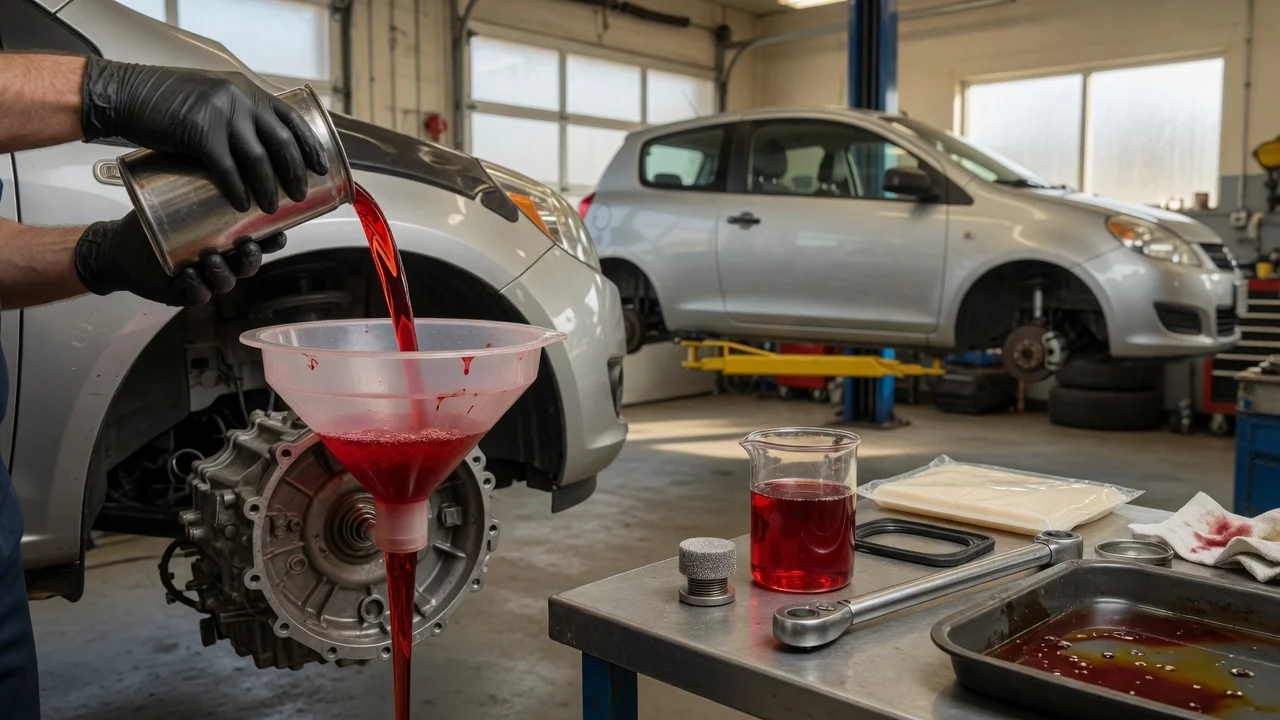
The short answer
No single transmission fluid suits every Ford Focus. The correct fluid depends on which gearbox your car has, and the Focus has used several very different designs across its generations and markets: conventional manual gearboxes, a conventional automatic with a torque converter, a dual-clutch automatic sold as PowerShift, and other automatics in later or non-US models. Each type calls for its own fluid family, and using the wrong one can cause poor shifting, clutch problems or internal wear.
The reliable way to choose is to identify your exact transmission and then buy a fluid that states it meets the Ford specification listed for that transmission in your owner's manual or service information. The fluid name on the bottle matters less than the Ford specification code it claims to meet.
Why the gearbox type changes the answer
Transmission fluid is not one product. Automatic transmission fluid (ATF) is engineered for torque converters, hydraulic controls and wet clutch packs. Manual transmission fluid is formulated for gear synchronizers, the brass or carbon rings that match gear speeds during a shift. A dual-clutch transmission (DCT) like PowerShift works more like an automated manual, so it uses a dedicated dual-clutch fluid rather than ordinary ATF. Putting ATF in a gearbox designed for a different fluid, or the reverse, is a common and avoidable mistake.
Transmission type | How to recognize it | Fluid family to look for; Manual (5- or 6-speed) | Clutch pedal and gear lever | Manual transmission fluid meeting the Ford specification for that gearbox; Conventional automatic (older Focus models) | No clutch pedal; smooth torque-converter feel when pulling away | Mercon-family ATF of the grade Ford lists for that model year; PowerShift dual-clutch automatic | No clutch pedal; badged or documented as PowerShift; can feel like a manual shifting itself, sometimes with low-speed judder | Dedicated dual-clutch transmission fluid meeting Ford's specification, not standard ATF; Other automatics (later generations or non-US markets) | Varies by model year, engine and market | The fluid specified in the service information for that exact transmission
How to confirm which transmission you have
Check the owner's manual. The capacities and specifications section usually lists the transmission fluid by Ford specification code. Look at the vehicle certification label on the driver's door jamb. It includes a transmission code that a parts counter can decode. Give a Ford dealer parts department your VIN (vehicle identification number). They can identify the factory transmission and the matching fluid part. If the car has been imported, rebuilt or had its gearbox swapped, do not rely on the model year alone. Confirm the transmission actually fitted.
What to check on the bottle
Ford identifies approved fluids by specification codes, which typically begin with letters such as WSS or WSD followed by a longer alphanumeric string. Aftermarket brands may claim compatibility with a Ford specification. If you choose a non-Ford fluid, make sure the bottle names the exact specification your transmission requires, not just a similar one or a vague phrase like suitable for most Ford vehicles.
Universal or multi-vehicle fluids are worth extra caution for the PowerShift dual-clutch gearbox and for manual gearboxes, because both use fluids with specific friction behavior that a general-purpose product may not match.
Gaps this guide does not resolve
This article does not list Ford specification codes, fill capacities or service intervals for individual model years, because those details vary by generation, engine, gearbox and market, and no verified specification data was provided for it. Some Focus transmissions also have no dipstick and need a specific procedure to check or fill the fluid at the correct level and temperature. For these details, use the owner's manual, Ford service information or a dealer parts lookup by VIN before buying or adding fluid.