Ford Focus and Fiesta PowerShift Transmission Problems: Symptoms and Diagnosis
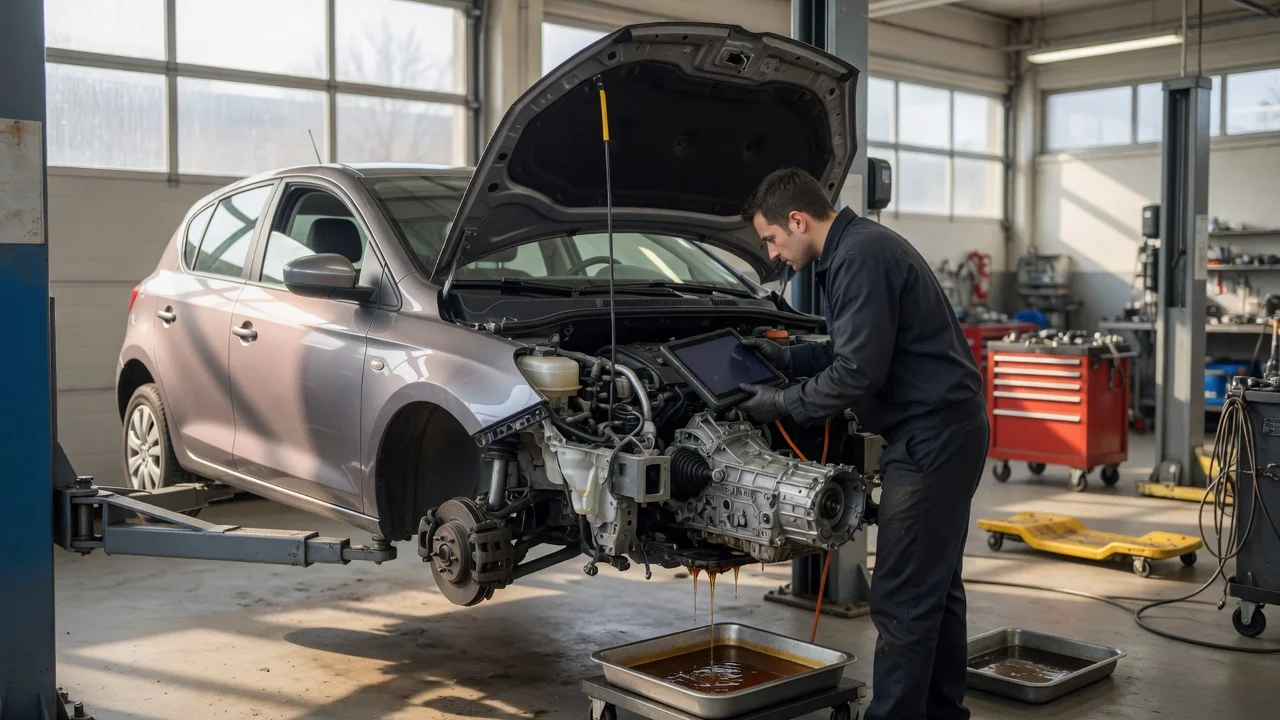
What the PowerShift complaints actually mean
On Ford Focus and Fiesta models fitted with the PowerShift dual-clutch automatic, the usual owner complaints are launch shudder, delayed or harsh engagement from a stop, flare or slip between gears, and intermittent loss of drive or a transmission warning. Those complaints describe the dry-clutch PowerShift unit, commonly called DPS6, which is an automated dual-clutch gearbox rather than a conventional torque-converter automatic. A 2013 Focus or Fiesta with the automatic belongs to the core group of vehicles that used this design in North America; the same years with a clutch pedal use a different gearbox and a different diagnostic path.
Scope depends on configuration. PowerShift problems of this type apply to dry-clutch DPS6 automatics used on North American Focus and Fiesta models of the early-to-mid 2010s, including 2013. Other markets, later torque-converter automatics, and wet-clutch dual-clutch units used on some other Ford models are separate systems. Without the build data, door-jamb code, or a confirmed DPS6 identification, treat “Focus transmission problems” as ambiguous until the gearbox type is known.
How the faults usually show up
Owners and technicians most often report a cluster of driveability symptoms rather than a single failure mode. The pattern is useful because it points at clutch apply quality, contamination, and control strategy before it points at a generic “bad transmission.”
Shudder, judder, or vibration on takeoff in first or reverse, often worse when the powertrain is hot; Hesitation, bang, or delayed engagement when selecting Drive or Reverse from Park or Neutral; Engine speed flare on upshifts, as if the clutch is slipping, especially 1–2 and 2–3; Harsh, busy, or hunting shifts in stop-and-go traffic; Loss of creep at idle, sudden drop into a limp or failsafe mode, or a “Transmission Fault” or malfunction message; Difficulty selecting a gear, grinding, or a vehicle that will not move despite an engaged selector
A warning lamp or a stored transmission control module (TCM) code is an observation, not a completed diagnosis. The same shudder can come from a worn dry clutch, oil on the clutch from an input-shaft seal, a clutch-actuator control problem, or a calibration that is commanding an aggressive apply. Engine misfire, worn engine or transmission mounts, and ABS or traction events can also shake the car on launch and be mistaken for gearbox shudder.
What can produce those symptoms
The DPS6 uses two dry clutches, one for odd gears and reverse and one for even gears, with electric clutch and shift actuators under TCM control. Gear oil lives in the gearbox; the clutches themselves are dry. That layout creates a small set of cause families that need to be separated before parts are replaced.
Clutch friction wear or glazing from heat and repeated launch slip, which degrades takeoff quality and can cause flare under load; Oil contamination of the dry clutch from leaking input-shaft seals, which produces shudder and slip that often worsen after the unit is hot; TCM software, clutch adaptive values, or apply strategy that commands a harsh, late, or unstable clutch apply; Clutch actuator, position sensor, or shift-fork faults that prevent one clutch or one gear set from applying correctly; Internal gearbox wear, damaged forks, or bearing noise, which is less common as a first finding than clutch and control issues but remains possible after prolonged slip or missed shifts; Shared powertrain issues: mounts, engine misfire, or a dragging parking pawl or selector fault that only look like a clutch problem from the driver’s seat
Checks that separate the causes
Work from the symptom and the operating conditions to a cause family. Confirm the car is a PowerShift automatic, then record when the complaint happens: cold or hot, first takeoff or after sitting in traffic, odd gears only or even gears only, with or without a message on the cluster. Odd-gear-only or even-gear-only trouble supports one clutch, one actuator, or one fork path. Trouble in every launch and every ratio supports a shared issue such as TCM power and ground, both clutches contaminated, adaptive strategy, or a mount or engine problem.
Observation or check What a useful result supports What it still leaves open; Build data or visual ID of DPS6 versus a manual gearbox Whether PowerShift diagnosis applies at all Condition of the clutch, TCM, or seals; Road test: shudder only on 1st/Reverse takeoff when hot Clutch apply or contamination on the odd-gear clutch path Wear versus oil on the clutch versus a harsh TCM apply; Road test: flare on 2–3 or 4–5 only, or only in even gears One clutch or one actuator path Mechanical clutch damage versus actuator position versus adaptation; Scan TCM and powertrain control module (PCM); save codes and freeze-frame (speed, gear, temperature, pedal) Which subsystem the control system flagged, and the conditions at the time Whether the flagged part is failed; a clutch or actuator code is not proof that the clutch pack or motor must be replaced; Inspect the bellhousing, clutch dust path, and input-shaft seal area for gear-oil wetness or burnt-oil smell on the dry clutch Contamination as a cause of shudder and slip Whether seals alone explain a code, or whether the clutch is also worn past useful friction; Compare TCM calibration and clutch adaptive or apply data with a capable scan tool, using the factory operating conditions for that test Out-of-range adaptation, a stale calibration, or an actuator that cannot reach the commanded position Root cause of the poor apply; adaptation can be the result of a worn or oily clutch; Check engine running quality, misfire counters, and powertrain mounts on the same takeoff A non-transmission source of shake or flare Clutch condition if the engine and mounts are sound; Battery, TCM power, ground, and network communication if the module will not talk or drop-outs are logged A control or communication problem rather than a failed clutch Internal TCM faults versus wiring versus a dead module
Interpret any reading against the test conditions the procedure requires: clutch temperature, selected gear, vehicle speed, and whether the clutch is launching, creeping, or shifting. A code set during a failed garage shift does not explain highway flare, and a one-trip electrical code does not establish that a clutch disc is worn. Replace or overhaul a component only after the check that belongs to that component has failed, or after contamination or wear is seen directly.
What this guide cannot settle on a specific car
Factory code definitions, clutch-apply specifications, adaptive limits, and the exact self-test sequence for a given TCM calibration were not supplied here, and they vary by model year and software level. A 2013 Focus and a 2013 Fiesta share the dry-clutch PowerShift architecture, but freeze-frame meaning and repair sequence still have to come from the procedure that matches that vehicle’s calibration. Until those criteria are applied, a stored clutch, fork, or actuator code remains a lead: it tells you which path to test, and it does not by itself identify the part that needs replacement.