Ford Focus Electric Range by Model Year: What Used Buyers Should Expect
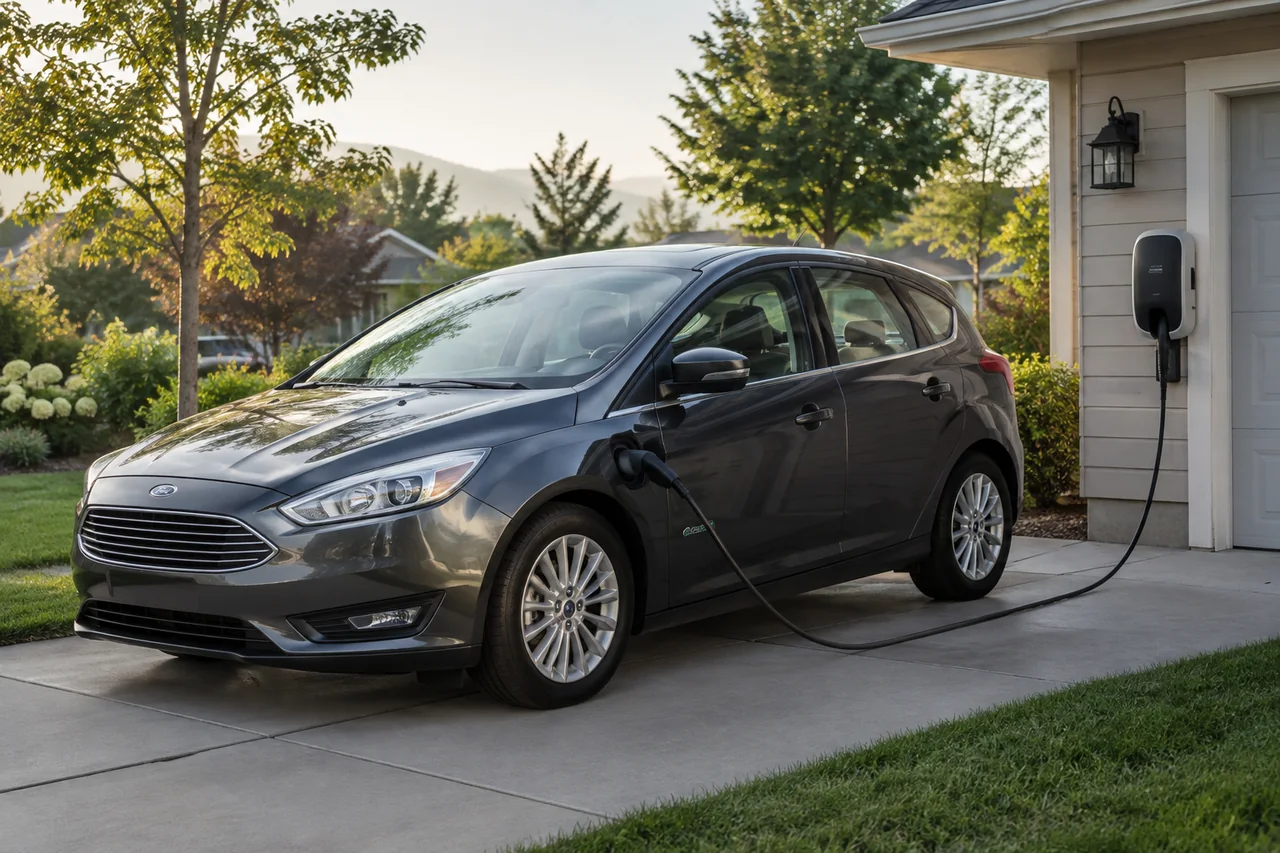
Used buyers comparing U.S.-market Ford Focus Electric cars from 2013 through 2018 should treat the original EPA-rated range as a new-vehicle baseline, not a promise of today's usable battery capacity. Model years 2013 through 2016 share one factory rating, while 2017 and 2018 were rated higher. Battery state of health, charging history, weather, and highway energy consumption all change how far a used Focus EV can actually travel.
What the Original Range Rating Tells a Used Buyer
The EPA-rated range is a laboratory estimate of how far a new Ford Focus Electric could travel on a full charge under a standardized test cycle. It describes the U.S.-market, fully electric Focus sold for model years 2013 through 2018, not a gasoline Focus or a hybrid. For a used buyer, that figure is a starting comparison between years, not a guarantee of current usable battery capacity. Two cars with the same original rating can deliver very different miles once calendar age, charging history, and battery state of health enter the picture.
Model year still matters because later Focus Electric cars were rated differently when new, yet weather, highway speed, and climate-control use can shrink or stretch a trip just as much as battery condition. Cold-weather range often falls because cabin heat and a cooler pack both raise energy use. The dashboard's estimated remaining range is a software projection based on recent driving, not a measured battery-health assessment. A professional state-of-health reading looks at usable battery capacity; the gauge simply forecasts miles from recent consumption and the remaining displayed charge.
2013 and 2014 Ford Focus Electric Rated Range
The original EPA-rated range for the 2013 Ford Focus Electric is 76 miles, and the 2014 Ford Focus EV range was rated the same 76 miles when the car was new. Those numbers are factory estimates for a full charge on the standardized test, not a prediction of what a used example will return after years of parking, charging, and commuting. They answer only what was published for those model years, not how much usable battery capacity remains in a particular VIN today.
Confirm you are looking at a Focus Electric, not a conventional Focus, by matching the model year on the title, any original window sticker, and the vehicle identification number to Ford records for that VIN. Build sheets and service files help prove the electric powertrain and the year sold as new. Do not subtract a fixed mileage for each year of age. Two 2014 cars can differ because of charging history, storage climate, and how often the pack sat at a high or low state of charge. Current range needs evidence from this car's condition and use.
2015 and 2016 Ford Focus Electric Rated Range
The 2015 Ford Focus EV range was originally EPA-rated at 76 miles, and the 2016 Ford Focus EV range carries the same 76-mile new-vehicle rating. That 2016 figure is the answer to what the car was certified to travel when new, not what a used 2016 Focus Electric will deliver on a full charge today. Rated range and current usable range are different questions. A 2016 Ford Focus EV with a healthy pack and mild weather may approach the original estimate, while another with reduced usable battery capacity will fall short even on a gentle route.
A seller's photograph of a full-charge dashboard cannot establish available battery capacity. The estimated remaining range on that screen reflects recent energy use and the displayed state of charge, not a laboratory measurement of usable battery capacity or battery state of health. Ask for records of battery-related repairs, any replacement documentation, and recent diagnostic findings from a scan that an EV-qualified technician can interpret. Charging history, if the owner kept it, helps show how the pack was treated. Treat warning messages and stored fault codes as evidence to interpret, not as proof that a specific part has failed.
2017 and 2018 Ford Focus Electric Rated Range
The 2017 Ford Focus EV range was originally EPA-rated at 115 miles, and the 2018 Ford Focus EV range was rated the same 115 miles when new. That step up from earlier years is a new-car certification difference, not proof that every later used example still holds more energy. The original rating does not establish the health of the battery currently installed. A 2017 or 2018 Focus Electric with reduced usable battery capacity can travel fewer miles than a well-kept earlier car, even though the factory EPA-rated range was higher.
If a seller claims the pack was replaced, require invoices, parts descriptions, and warranty paperwork rather than assuming the new battery matches original specifications or is compatible with that vehicle. Those details are manufacturer- and part-dependent and need vehicle-specific confirmation. Reaching a displayed 100 percent charge also does not mean the battery retains its original usable capacity. The control system can still report a full charge after the pack has lost energy, so the estimated remaining range at 100 percent may be lower than the 115-mile EPA-rated range published for 2017 and 2018.
How Battery Aging and Driving Conditions Affect Usable Miles
Usable battery capacity can decline with calendar age and with repeated charge and discharge cycles, but there is no reliable way to assign a single annual loss rate to every Focus Electric. Storage temperature, charging habits, and how often the pack sat full or empty all influence battery state of health. Temperature, cabin heating or cooling, highway speed, elevation change, and tire condition then decide how quickly that remaining energy is spent. Highway energy consumption rises with speed and headwind, while cold-weather range often drops because heat demand and a cooler pack both increase the energy needed per mile.
A single short-range reading cannot tell permanent capacity loss from a temporary operating condition. A cold morning, a long highway run, underinflated tires, or heavy climate-control use can cut estimated remaining range even when battery state of health is unchanged. Repeat the same route at a similar temperature, speed, and cabin setting, and record charge percentage and miles, to build a practical expectation for that car. Battery-health conclusions still need professional testing that measures usable battery capacity, not only the dashboard forecast. Treat any stored codes as clues for a technician, not as a parts list.
Checking Whether a Used Focus Electric Fits Your Routine
Ask for a seller-approved test drive and write down the starting and ending charge percentage, distance driven, weather, typical road speeds, and whether heating or air conditioning was on. That log is more useful than a single estimated remaining range snapshot because it ties miles to a known energy drop under known conditions. Do not extrapolate a full-charge total from a very short drive or a tiny change in percentage; small gauge movements are noisy. Never run the battery empty to measure range. A conservative projection from a moderate charge drop is safer than a depletion test.
When battery condition is uncertain, warning messages appear, or charging behavior is inconsistent, have an EV-qualified technician inspect the car and interpret diagnostics for that vehicle. Compare your daily route, home or workplace charging access, and seasonal needs against a practical charge reserve rather than the original EPA-rated range. Cold-weather range and highway energy consumption on your commute may leave less margin than a mild mixed-city day. There is no universal minimum range that fits every buyer. A 76-mile or 115-mile factory rating only helps if this car still delivers enough usable miles for your routine with a reserve left.