Ford Focus Brake Booster Vacuum Hose: Choosing the Correct Part
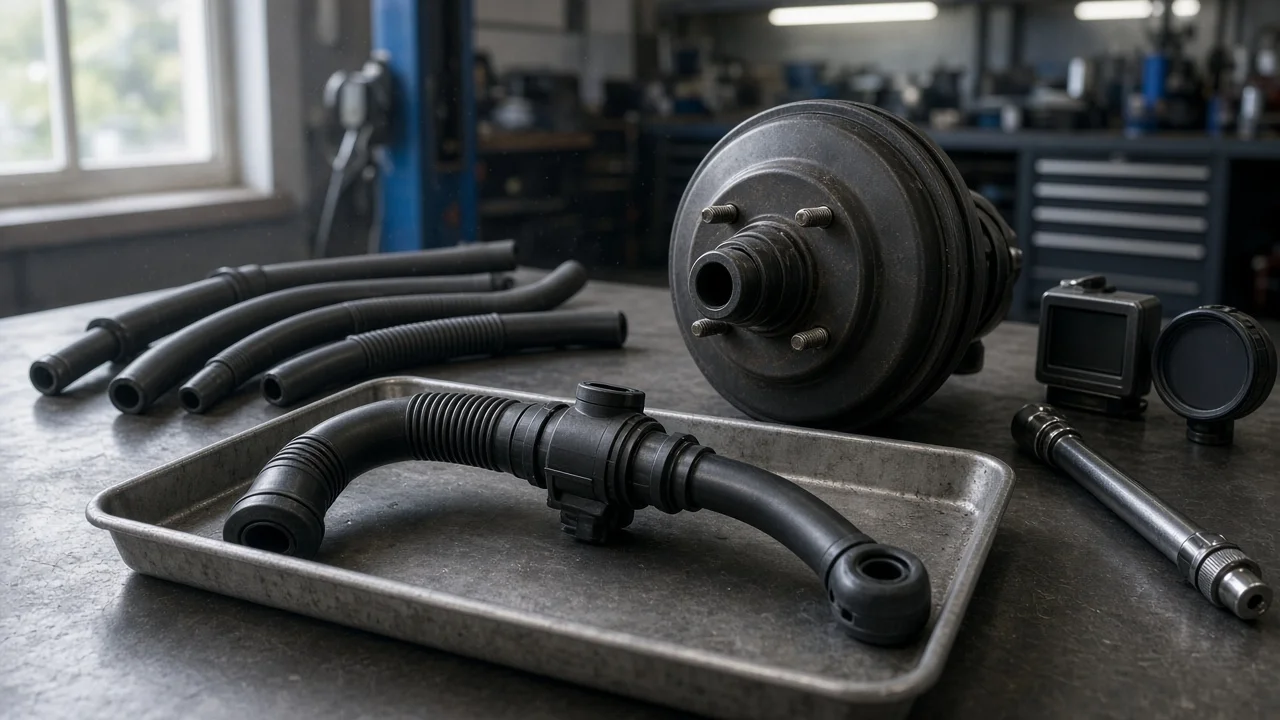
On a 2000 Ford Focus, the brake booster vacuum hose carries engine vacuum from the intake manifold to the power brake booster, which multiplies the effort your foot puts into the pedal. When that hose cracks, softens or loses its seal, the pedal turns hard and stopping takes more force. This guide covers how to choose the correct replacement for a first-generation Focus, including 2002 models, what to compare between listings and what the part cannot fix.
Define the job the hose must do
The hose has one task: keep a sealed vacuum path between the engine and the booster under all conditions, including heat, vibration and the pressure swings of a running engine. On many applications the assembly also includes or connects to a one-way check valve that holds vacuum in the booster after the engine stops or when manifold vacuum drops under heavy throttle. A failing hose usually shows up as a hard brake pedal, a hissing sound near the booster or intake, a rough or high idle, or lean-condition trouble codes, because the leak also lets unmetered air into the engine.
Confirm the diagnosis before buying. With the engine off, pump the pedal several times to use up stored vacuum, then hold light pressure and start the engine; the pedal should sink slightly as assist returns. If it does not, the hose, check valve or booster is suspect. A soft or spongy pedal points elsewhere, such as air in the brake fluid or a leaking caliper, and a new hose will not change it. If the pedal is hard or braking feels reduced, stop driving the car and arrange professional service rather than testing it on the road.
Check compatibility with your Focus
Model year alone is not enough to guarantee vehicle fitment. The first-generation Focus sold in North America was built with more than one 2.0-liter engine, and hose length, routing and end connections can differ between engines and with production changes over the model run. That is why a listing for a 2002 Ford Focus brake booster vacuum hose may not match a 2000 car even though both are first-generation models. Confirm your engine with the VIN, and note the build date shown on the label in the driver's door jamb.
Next, compare the interfaces. Look at how the hose attaches at the intake manifold and at the booster: plastic quick-connect fittings, push-on ends with clamps, or a rubber grommet that holds the check valve in the booster shell. Note whether your original hose has the check valve built in or as a separate piece, and whether any smaller vacuum lines branch from it. The most reliable reference is the part number printed on the original hose, or a part lookup by VIN at a Ford parts counter; match that number or a confirmed cross-reference rather than relying on a photo that looks similar.
Features that affect the choice
The main choice is between a preformed assembly and bulk hose cut to length. A preformed assembly is molded to the Focus engine bay, so it clears hot and moving parts without kinking, and it usually arrives with the correct fittings. Bulk hose can work for a straight section, but it must be rated for vacuum and have the correct inside diameter; ordinary fuel or heater hose can collapse under vacuum and restrict assist exactly when you brake. An included check valve adds cost but makes sense on an older car, since the valve and its grommet age at the same rate as the hose.
Treat marketing labels with care. Terms such as heavy duty, premium or OE quality describe nothing you can check. Useful evidence is concrete: a fitment note that names your engine, a listed OE or interchange number, stated material, clear photos of both ends that match your old part, and written warranty and return terms. If a seller cannot tell you whether the check valve or fittings are included, assume they are not and plan accordingly.
Limitations and ownership costs
A new hose only restores the vacuum supply. It will not repair a booster with a leaking diaphragm, a failing master cylinder, low or contaminated brake fluid, brake pads worn past the wear limits of their friction material, damaged brake rotors or a sticking caliper. If the pedal still feels wrong after the hose is replaced, those components need inspection against vehicle-specific service information. Budget for small extras as well: plastic quick-connect fittings and the booster grommet on a car this age often crack during removal, and a replacement check valve or clamps may be needed to finish the job the same day.
Installation is usually straightforward with the engine off and cool. Photograph the routing first, release fittings gently, fit the check valve so it lets air flow out of the booster toward the engine according to its marking, and keep the new hose clear of exhaust heat and moving parts. Afterward, start the engine, listen for hissing, repeat the engine-off pedal test and confirm a steady idle. Only when those stationary checks pass should you make a cautious low-speed check in a safe area; if the pedal stays hard, park the car and have the braking system professionally inspected. At routine service, look for cracks, swelling or softness so a slow leak is caught early.
Build a practical shortlist
Narrow the options with a short checklist rather than a ranking. Each candidate should be listed for a 2000 Ford Focus with your specific engine, or match the part number on your original hose or a confirmed cross-reference. Compare the shape and both end connections with the old part, confirm whether the check valve, grommet and fittings are included, and check that the material is rated for vacuum service. Finally, read the warranty and return terms, since a return is easier while the part is still unused.
Price matters less than a confirmed fit, because a hose that seals poorly costs more in repeat work than it saves. If two parts both pass the checklist, the one that includes the check valve and grommet is usually the simpler path on an older Focus. When you are not sure the hose is the source of the problem, a shop smoke test of the intake and booster circuit can locate the leak before you spend money on parts.