Ford Focus ABS Tone Ring: Fitment and Rear Ring Identification
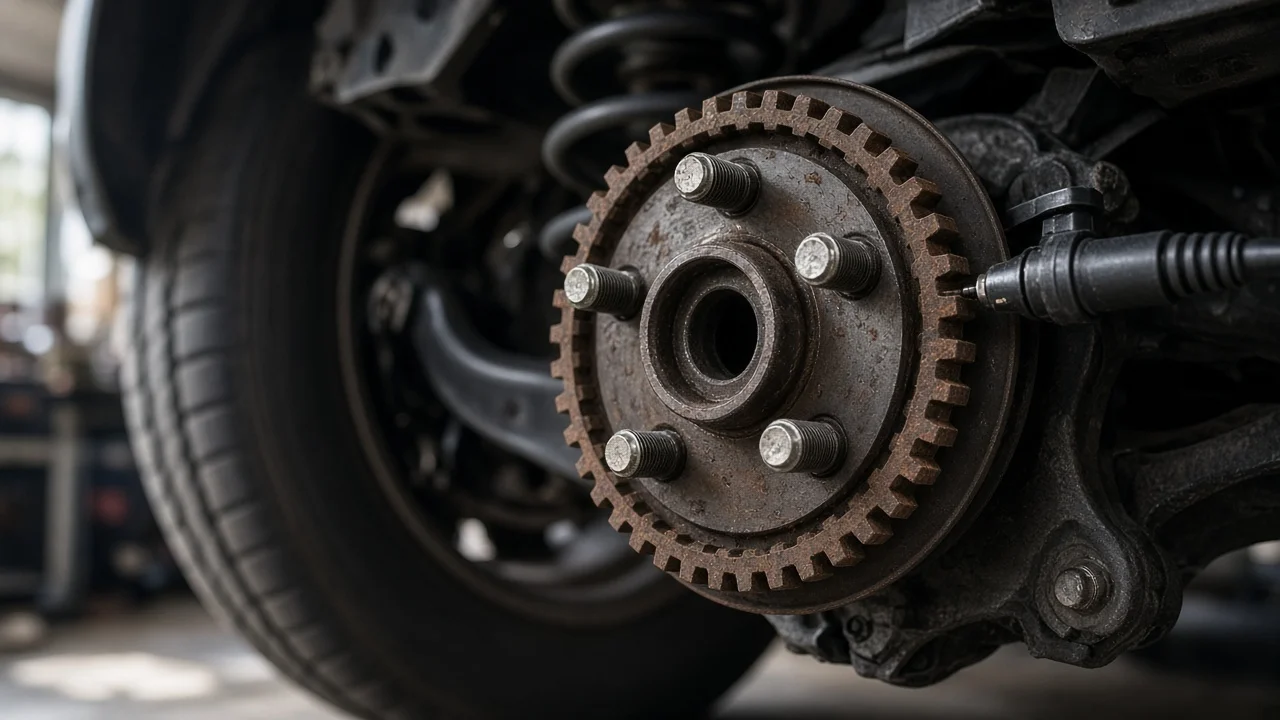
A failing rear ABS tone ring is a common reason a Ford Focus shows an ABS or traction warning light. Replacing the ring can be simple, but only when the part matches your car's model year, rear brake type and hub design. This guide explains how the ring works, how to identify the rear ring on your Focus, including the 2010 model, and when to hand the job to a brake shop.
Which ABS tone ring fits your Focus
No single ABS tone ring fits every Ford Focus. The correct part depends on the generation and market of the car, whether the rear axle uses drum brakes or disc brakes, and how the ring is mounted. On many drum-brake Focus models, the rear ring is a toothed steel band pressed onto the hub of the brake drum. On disc-brake versions it is usually carried on the hub or wheel bearing assembly. Some designs use a magnetic encoder built into the bearing seal, which leaves no separate ring to buy. Treat any listing that names only the Focus as a starting point, and confirm fitment against the VIN and the part already on the car.
For a 2010 Focus, begin with two questions: does the car have rear drums or rear discs, and was it built with ABS? Equipment varied by trim and options in that period, and a car without ABS has no rear wheel speed sensor reading a ring. Once both answers are clear, match the replacement's tooth count, inner diameter and mounting location to the original before ordering.
How the tone ring and wheel speed sensor work
The tone ring turns with the wheel. A wheel speed sensor, mounted on the knuckle or brake backing plate, sits a small fixed distance from the teeth. As each tooth and gap passes the sensor tip, it produces a pulse, and the pulse frequency rises with wheel speed. The ABS module compares the speeds of all four wheels. When one wheel slows much faster than the others during braking, the module briefly holds or releases hydraulic pressure to that wheel's caliper or wheel cylinder so the tire keeps rolling and the car stays steerable. On cars with traction or stability control, those systems rely on the same wheel speed signals.
Rear rings live in road spray, salt and brake dust. On pressed-on rings, rust can form between the ring and its seat, swell, and eventually crack the ring. A cracked ring may shift, wobble or open a gap that the sensor reads as a sudden speed change. Missing teeth, packed debris or rust scale that alters the distance to the sensor cause similar problems. Typical symptoms are an ABS warning light, often together with the traction control light, and ABS cycling at low speed with a pulsing pedal as the car comes to a stop, even on dry pavement.
What changes the correct part
Several details decide vehicle fitment. Generation and market matter first: for several model years the North American Focus used a different platform from the European car, so similar years do not always share rear brake parts. Rear brake type comes next, because drum and disc setups use different hubs and therefore different rings. Mounting style also changes what you buy. A ring pressed onto a drum or hub can sometimes be replaced alone, but when it is integrated into the drum or the hub bearing, the practical replacement is that whole assembly. Finally, a toothed ring for a passive sensor and a magnetic encoder for an active sensor are not interchangeable, even if the sensors look similar.
Tooth count and diameter are the measurements that matter most. A ring with the wrong number of teeth makes that wheel appear to turn faster or slower than the others, and the ABS module will usually set a fault even though the new part looks perfect. The ring also has to sit at the correct position on the hub so its teeth line up squarely with the sensor tip.
Identifying the rear ring on your Focus
Start by looking behind the rear wheels: a drum shows a round housing, while a disc setup shows a rotor and caliper. Follow the sensor wire from the body to the rear knuckle to confirm the car has ABS. With the wheel off and the drum or rotor removed as the design requires, clean the area and inspect the ring with a flashlight. Look for cracks, a ring that has moved or tilted, rust lifting it from its seat, and chipped or missing teeth. Mark one tooth with paint and count around the ring, then measure the inner diameter with calipers. Note whether the ring is a separate pressed part or built into the drum or bearing. Those observations, plus the VIN, give a parts counter what it needs to match the right component.
Replacing the ring and checking the brake
If the ring is a separate part, clean the seating surface to bare, smooth metal so rust does not crack the new ring. Press it on evenly with a driver that bears on the ring body, never on the teeth, until it sits fully and squarely. If the ring is part of the drum or hub, replacing that assembly is usually simpler and avoids damaging a bearing. Before reassembly, clean metal debris from the sensor tip and check its connector and wiring. Tighten the hub nut and wheel fasteners to the specification in the vehicle's service information, replacing any nut listed as single-use. Clear stored codes with a scan tool that reads ABS, then road test and confirm in live data that all four wheel speeds agree.
With the brake apart, check the rest of the rear brake against its wear limits: shoe or brake pad friction material, the drum or brake rotor surface, and any sign of fluid leaking from the wheel cylinder or caliper. Replacing a tone ring does not require opening the hydraulic system, so a brake fluid leak found during the job is a separate repair that needs attention before the car goes back on the road.
Limitations and when to see a professional
An ABS light does not prove a tone ring fault. A damaged sensor, chafed wiring, a corroded connector, a module fault or low system voltage can produce the same warning, so reading ABS codes and live wheel speed data before buying parts saves money and guesswork. Parts catalogs also disagree about Focus fitment, and a listing that claims to fit is not proof that it will.
With only the ABS light on, normal braking usually remains, but the wheels can lock in a hard stop or on slippery roads, so drive cautiously and arrange repair soon. If the red brake warning light is also on, the pedal feels soft or low, or the car pulls when braking, stop driving it and have the brakes inspected. A brake shop is also the better choice if the job needs a press, a hub bearing replacement or diagnosis beyond the ring itself.