Ford Focus 1.8 TDCi Glow Plug Control Module Location
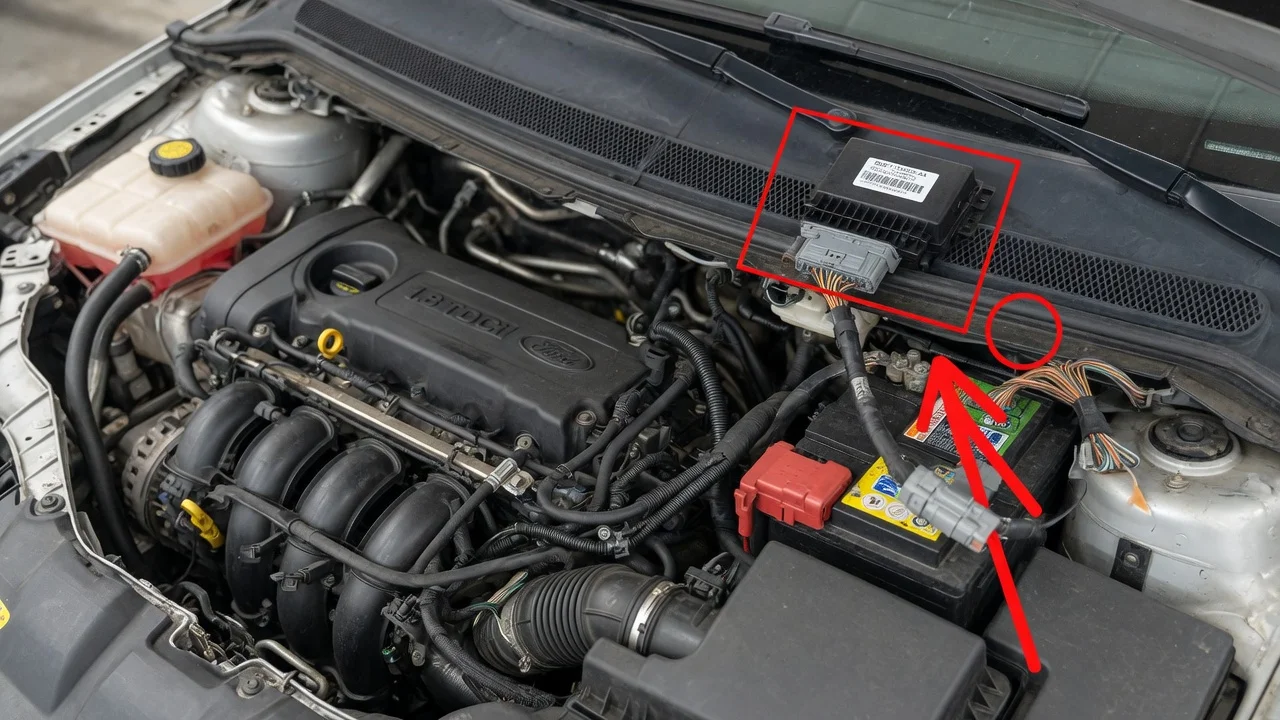
If your Focus with the 1.8 TDCi diesel cranks for a long time on cold mornings, the glow plug system is a likely suspect, and finding its control module is a sensible first step. The module is in the engine bay, close to the glow plugs it powers. Its exact mounting point depends on model generation, build date and market. This guide explains how to identify it reliably instead of guessing from one photo or forum post.
Where the Glow Plug Module Usually Sits
On the Focus 1.8 TDCi, the glow plug control module, often called the glow plug relay on older diesels, is mounted under the hood rather than in the interior fuse panel. It is usually close to the cylinder head so the high-current leads to the four glow plugs stay short. It may be partly hidden behind intake ducting, hoses or the engine cover, so you may need to remove some parts before you can see it clearly. The most reliable way to recognize it is by its wiring. It has a heavy power feed from the battery circuit, a smaller connector carrying the command signal from the engine control module, and a harness or individual leads running to each glow plug. Any unit with that combination of connections is the module you are looking for.
The 1.8 TDCi was sold in Europe and other markets, not in the United States. Many US-focused repair manuals therefore do not cover it. Use Ford service information matched to your VIN, or a wiring diagram for your exact model year, to confirm the location before buying parts or removing components.
How the Glow Plug Control Module Works
A diesel engine has no spark plugs. It ignites fuel with the heat created by compressing air. When the engine is cold, that heat may not be enough, so glow plugs warm each combustion chamber. The engine control module decides how long heating is needed, mainly from engine temperature, and sends a command to the glow plug module. The module then switches the heavy current the plugs draw. Heating normally happens before cranking, during cranking, and for a period after the engine starts. That last stage, called afterglow, reduces smoke, noise and rough running while the engine warms up. The module can also report faults back to the engine computer. That can turn on the glow plug or engine warning light and store generic codes such as P0380, P0670 or the cylinder-specific P0671 to P0674.
Glow plugs only supply heat. The engine still needs correct fuel pressure from the high-pressure pump to the common rail and properly working injectors. A weak glow system and a fuel delivery problem can look alike: long cranking, white smoke and uneven idle until the engine is warm. That is why checking both systems together saves time and money.
What Changes the Answer
Generation matters most. The first-generation Focus and the second-generation car introduced in the mid-2000s have different engine bay layouts, wiring and injection components. As a result, the module's position, bracket and connector shape can differ even though both are badged 1.8 TDCi. Earlier Focus diesels sold as the 1.8 TDDi used a different injection setup entirely, so their guidance does not transfer directly. Engine configuration, emissions-related updates, left- or right-hand-drive layout and previous repairs with non-original parts can also change where the module sits and how it looks. Treat any single location description as a starting point, not a certainty.
Operating conditions change what a fault looks like. A failing module causes the most noticeable trouble in cold weather. In a mild climate it may only show up as a warning light or a stored code. If the engine is hard to start when fully warm, the glow system is a less likely cause. Look instead at fuel supply problems such as a restricted fuel filter, air entering the fuel lines, low rail pressure or excessive injector leak-back.
What the Owner Can Do
Start with safety. Work with the engine off, cooled down and the key removed. Disconnect the battery negative terminal before unplugging the module or any glow plug leads, because these circuits carry high current. Glow plugs and nearby metal stay very hot after use. Do not open or loosen high-pressure fuel lines, the rail or injector unions. A common rail system works at very high pressure, and pressurized diesel can cause serious injury. Fuel-side opening should be left to a technician who follows the manufacturer's procedure.
Next, read stored codes with a scan tool that supports your Focus, and write them down before clearing anything. Inspect the module connector for corrosion, bent pins or moisture, check the main power terminal for looseness, and trace the harness for chafing or heat damage. With a multimeter you can check each glow plug for continuity or resistance against the specification in your service information. With a helper, you can also confirm that voltage reaches the plugs during a glow cycle. Never wire the plugs directly to the battery or bypass the module. That removes the timing control and can overheat the plugs.
If the glow circuit checks out, turn to the fuel side. Confirm the fuel filter is within its service interval and drain water from it where the design allows. Do a visual leak check with the engine off, looking for wet spots or diesel odor around the fuel pump, rail, injectors and return lines. A capable scan tool can show actual versus desired rail pressure and injector correction values, the diesel equivalent of fuel trim. Fuel additives may help keep the system clean, but they are not a proven repair for a failed module, worn injectors or a weak pump.
Limitations and Next Step
This article cannot confirm the exact mounting point on your car, because generation, market and past repairs all affect it. VIN-specific service information is the final word. Get professional help if glow plug codes return after you replace parts, if a glow plug will not come out easily (a snapped plug in the cylinder head is an expensive repair), if rail pressure or injector readings look abnormal, or if you find any fuel leak. Bring your stored codes, the temperatures at which the problem appears and a description of the starting behavior. That information lets a diesel technician separate a glow system fault from a fuel delivery problem quickly.