Ford F350 Parking Brake Cable: Fitment and Selection
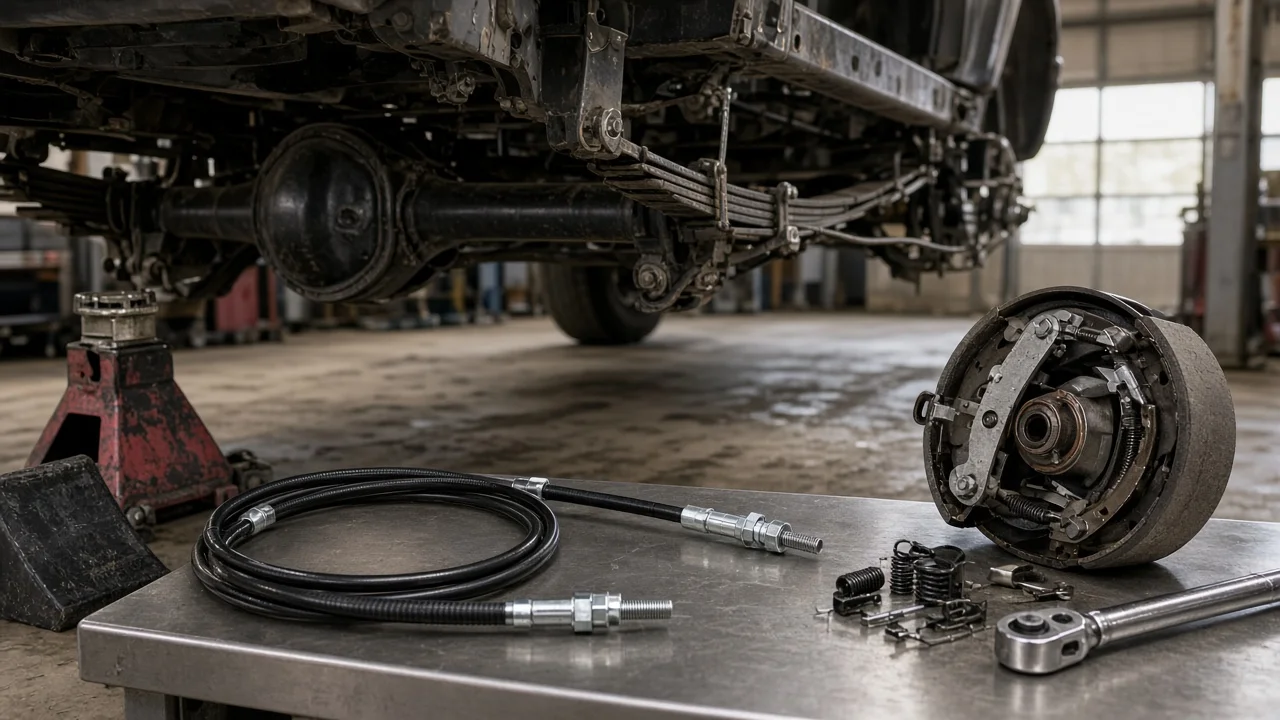
A parking brake cable on a Ford F-350 looks like a simple part, but the wrong length, end fitting or bracket can leave the rear brakes dragging or unable to hold a loaded truck. This guide explains how to narrow down the correct cable for your truck, which details separate one replacement from another, and what a new cable cannot fix, so you buy the right part once and install it with confidence.
Define the job the product must do
Start with the symptom, because it tells you which cable segment you actually need. A pedal that travels much further than it used to, a truck that creeps with the brake set, or a warning light that stays on can point to a stretched or broken cable. A brake that will not release fully, a rear wheel that runs hotter than the other, or a burning smell after driving often means a cable has seized inside its conduit. On most F-350 pickups the system is split into a front cable from the pedal to an equalizer, sometimes an intermediate cable, and separate left and right rear cables running to each wheel. Trace the system and find the frayed strand, cracked conduit, torn boot or seized section before ordering anything.
Then consider how the truck is used. A work truck that tows heavy trailers, plows snow or parks on grades with a fifth-wheel hitched puts more demand on the parking brake than a lightly used pickup. Trucks driven on salted roads usually have corroded brackets and conduit ends, so one failed segment often means the others are close behind. Decide early whether you are replacing a single segment to get the truck back in service quickly or renewing the whole cable set, because that choice affects part selection, cost and how long the truck is off the road.
Check compatibility
Vehicle fitment for F-350 parking brake cables depends on more than the model year. Cab style, wheelbase and bed length change the length and routing of the front and intermediate cables. Single rear wheel and dual rear wheel trucks can use different rear cables, and two-wheel drive versus four-wheel drive, as well as pickup versus chassis cab, may change routing again. The most reliable approach is to look up parts by VIN in a manufacturer parts catalog or through a dealer parts counter, note the original part number, and confirm that any replacement cross-references to it for your exact configuration.
Next, compare the physical interfaces. Check the end fitting that hooks to the pedal assembly, the connection at the equalizer, the conduit end retainers that snap or clip into frame brackets, and the fitting that attaches to the parking brake lever at the wheel. Count the brackets on the old cable and note where they sit, since a bracket in the wrong spot can force the cable against the exhaust or a moving suspension part. If you can remove the old cable first, lay it beside the new one and compare overall length, conduit length and both ends. Left and right rear cables are frequently different parts, so do not assume one will fit both sides.
Super Duty pickups typically use a drum-in-hat parking brake, where small shoes work against a drum surface inside the hat of the rear brake rotors. If your truck uses a different arrangement, follow the configuration shown in its service information, because cables from one design do not interchange with another.
Features that affect the choice
Construction matters more than branding. A good cable has a stranded steel inner cable sized to match the original, a conduit with an internal liner that lets the cable slide smoothly, and a corrosion-resistant outer coating. Rubber or plastic boots at the conduit ends keep water and road salt out, which is what usually causes seizing. Pre-installed brackets and retainers in the correct positions save time and reduce the chance of misrouting.
Original equipment cables match routing and fittings exactly, which helps on trucks with tight or unusual routing. A quality aftermarket cable can work well when it cross-references directly to the original part number and includes the same hardware. Treat labels such as heavy duty, premium or severe service with caution, because they say nothing about fit or durability on their own. Useful evidence includes a published original part number cross-reference, listed dimensions, clear photos of both ends, fitment notes that match your cab, wheelbase and rear wheel setup, and written warranty terms.
Some sellers offer cables individually while others bundle front, intermediate and rear cables as a kit. A kit can make sense on a high-mileage or rusty truck, but only if every piece matches your configuration. Buying single segments is reasonable when the rest of the system is clean, moves freely and holds properly.
Limitations and ownership costs
A new cable cannot fix problems at the wheel. Parking brake shoes worn past the wear limits in the service information, friction material contaminated by gear oil from a leaking axle seal or brake fluid from a leaking caliper, a scored or rusted drum surface inside the rotor hat, a seized adjuster, broken return springs or a bent actuating lever will all prevent proper holding regardless of cable condition. On drum-in-hat designs, inspecting the shoes means removing the caliper and rotor, so it is sensible to check the parking brake hardware whenever the rear brake pads and brake rotors are serviced.
Installation includes adjustment, not just swapping parts. The shoes are normally adjusted at the wheel first, then cable tension is set as described in the service procedure. Many Ford pedal assemblies use a spring-loaded self-adjusting mechanism that is locked during cable work and released afterward. Too much tension causes dragging, heat and glazed shoes, while too little leaves the brake unable to hold. After installation, confirm that the brake applies firmly, releases fully and that both rear wheels turn freely with the pedal released.
Ownership costs go beyond the cable itself. Corroded clips and retainers often break during removal, frame brackets may need cleaning, and rusty fasteners add labor time. Using the parking brake regularly helps keep the cable from seizing. If the truck will not hold, the brake will not release, or a brake fluid leak or warning light appears, stop relying on the vehicle, chock the wheels and have the braking system inspected by a qualified technician before driving it again.
Build a practical shortlist
Before buying, run each candidate through the same short checklist. Confirm the original part number using your VIN and make sure the replacement cross-references to it. Identify exactly which segment you need: front, intermediate, left rear or right rear. Match overall length, conduit length and both end fittings to your old cable or the catalog drawing. Check that the brackets, retainers and boots are included and positioned correctly. Read the fitment notes for cab style, wheelbase, drive type and single or dual rear wheels. Finally, compare warranty terms and whether the seller accepts returns on parts that do not fit.
Plan the whole job before ordering. If shoes, springs or adjusters are worn or contaminated, buy them together with the cable so the truck is not disassembled twice. Have the service information on hand for the adjustment procedure, and set aside time for seized fasteners on older trucks. A cable that matches your configuration, installed with correct tension on healthy wheel hardware, gives the F-350 a parking brake you can rely on.