Ford F250 Parking Brake Cable Diagram Guide
Searching for an F250 parking brake cable diagram usually means something is wrong. The pedal may sink too far, the truck may roll on a slope, or a cable may be hanging loose under the frame. This guide explains how the cable layout on a Ford F-250 is organized, what differs between trucks, and what an owner can check safely before deciding on a repair.
The short answer
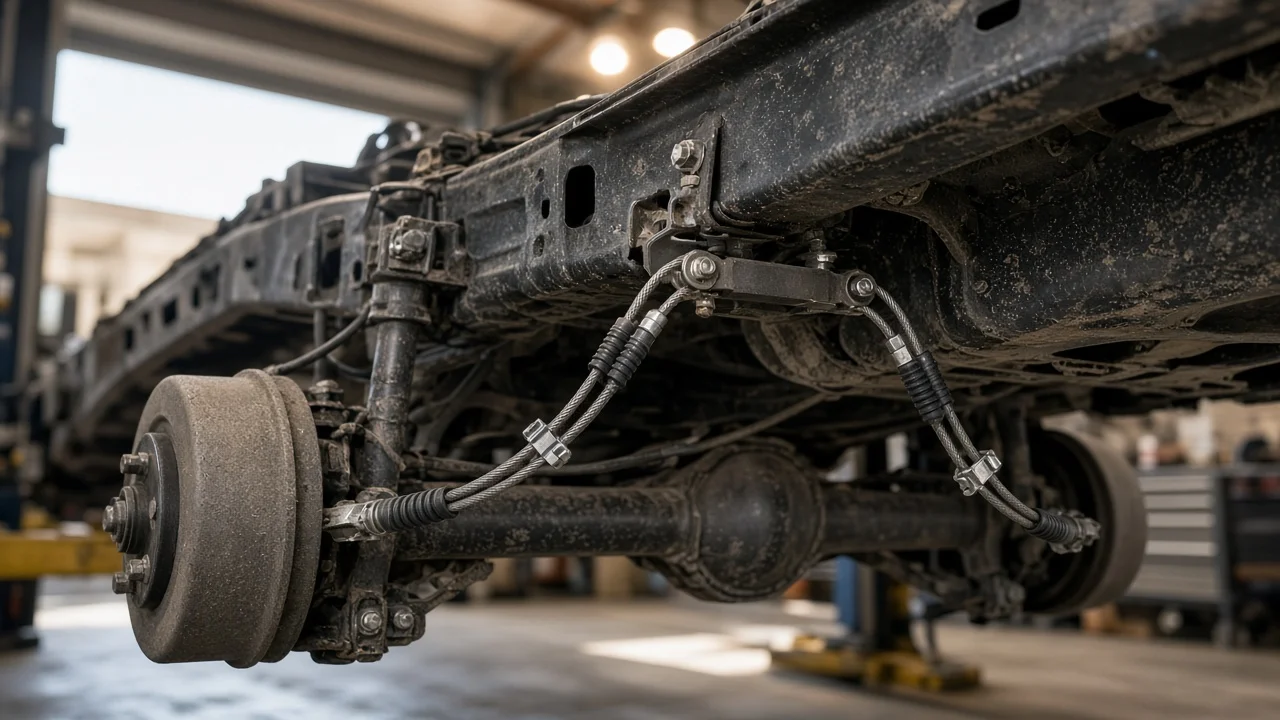
On most F-250 trucks, the parking brake is a mechanical, cable-operated system with three main sections. A front cable runs from the pedal assembly under the driver's side of the dash back toward the middle of the frame. There it meets an equalizer, a bracket or yoke that splits the pull evenly. From the equalizer, cables run to the left and right rear brakes. Pulling the pedal tightens the whole chain and applies the rear brakes mechanically, without relying on hydraulic pressure or brake fluid.
The exact routing, bracket locations, cable lengths and part numbers depend on the model year, cab style, bed length, wheelbase and drivetrain. A generic diagram shows the logic of the system, but it cannot confirm vehicle fitment for replacement cables. For that you need the service information for your specific truck, usually identified by its VIN.
How the parking brake cable system works
When you press the parking brake pedal, a ratchet holds it in place and pulls on the front cable. That cable travels through the floor or firewall area and along the frame rail, held by clips and guides. At the equalizer, the single pull is divided between the two rear cables so that both rear wheels receive similar force. Many Ford trucks also include an adjuster or tension limiter, either at the pedal assembly or near the equalizer, which takes up slack as the cables stretch and the shoes wear. On some models this device must be set or locked in a specific way during cable replacement, which is one reason the factory procedure matters.
At the rear axle, each cable ends at the brake assembly. On trucks with rear drum brakes, the cable hooks to a lever on the brake shoes inside the drum, and pulling it spreads the shoes against the drum. On trucks with rear disc brakes, Ford commonly uses a drum-in-hat design: a small set of parking brake shoes sits inside the hat section of the rear rotor, separate from the brake pads and caliper used for normal stopping. The cable operates those shoes, not the hydraulic caliper.
What changes the diagram from truck to truck
The biggest difference is the rear brake type. Older F-250 trucks with rear drums route the cable into the backing plate of each drum, while Super Duty trucks with rear discs route it to the drum-in-hat parking brake behind the rotor. Generation matters as well: pedal assembly design, equalizer location and the way the rear cables cross the axle have changed over the years, so a diagram for one generation can mislead you on another.
Body configuration also changes the layout. Regular, extended and crew cabs, short and long beds, and different wheelbases often need different front or intermediate cable lengths. Two-wheel-drive and four-wheel-drive trucks may route cables differently around the transfer case and driveshaft. Some trucks, particularly certain chassis cab or upfitted versions, may use a different parking brake arrangement altogether. If your truck has been lifted, converted or fitted with aftermarket axles, factory routing may no longer apply.
Checking the cables on your own truck
With the truck on level ground, wheels chocked and the engine off, you can trace the system by eye. Start at the pedal, then follow the front cable under the cab to the equalizer, and from there to each rear wheel. Never work under a truck supported only by a jack; use properly rated stands. Look for cables that are frayed, kinked, rusted inside their housings, disconnected from a clip, or rubbing against the exhaust or driveshaft. Check that the equalizer is centered and that neither rear cable is visibly slack compared with the other.
Common symptoms help narrow down the cause. A pedal that travels much farther than it used to often points to cable stretch, a failed adjuster or worn parking brake shoes. A brake that will not release fully, or one rear wheel that drags or runs hot, can indicate a seized cable or a sticking lever at the wheel. A truck that rolls with the brake applied may have worn or contaminated friction material on the parking brake shoes, a broken return spring or a disconnected cable end.
Some problems found at the cable actually start at the wheel. On drum-in-hat systems, the parking brake shoes are usually inspected and adjusted with the rear rotor removed, so the job often overlaps with brake rotor or pad service. Compare shoe lining thickness and rotor or drum condition against the wear limits in the service information rather than guessing, and replace parts in matched pairs per axle where the manufacturer specifies it.
Limitations and when to get professional help
This guide describes the general structure of the F-250 parking brake system, not the exact routing, torque values, adjustment steps or part numbers for your truck. Those details vary enough that the factory service procedure for your model year and configuration should be your reference for any repair. Replacement cables should be matched by VIN or confirmed fitment, not by appearance alone.
If the parking brake cannot hold the truck, will not release, or causes a rear wheel to drag, avoid relying on it and have the truck inspected promptly, especially if you tow or park on grades. Seized cables, damaged drum-in-hat hardware or a failed adjuster can affect the service brakes as well, and a technician can check the whole rear brake assembly in one visit. When in doubt about a braking fault, stop using the truck and arrange professional service.