Ford F-250 Automatic Locking Hubs: Fitment, Function and Fixes
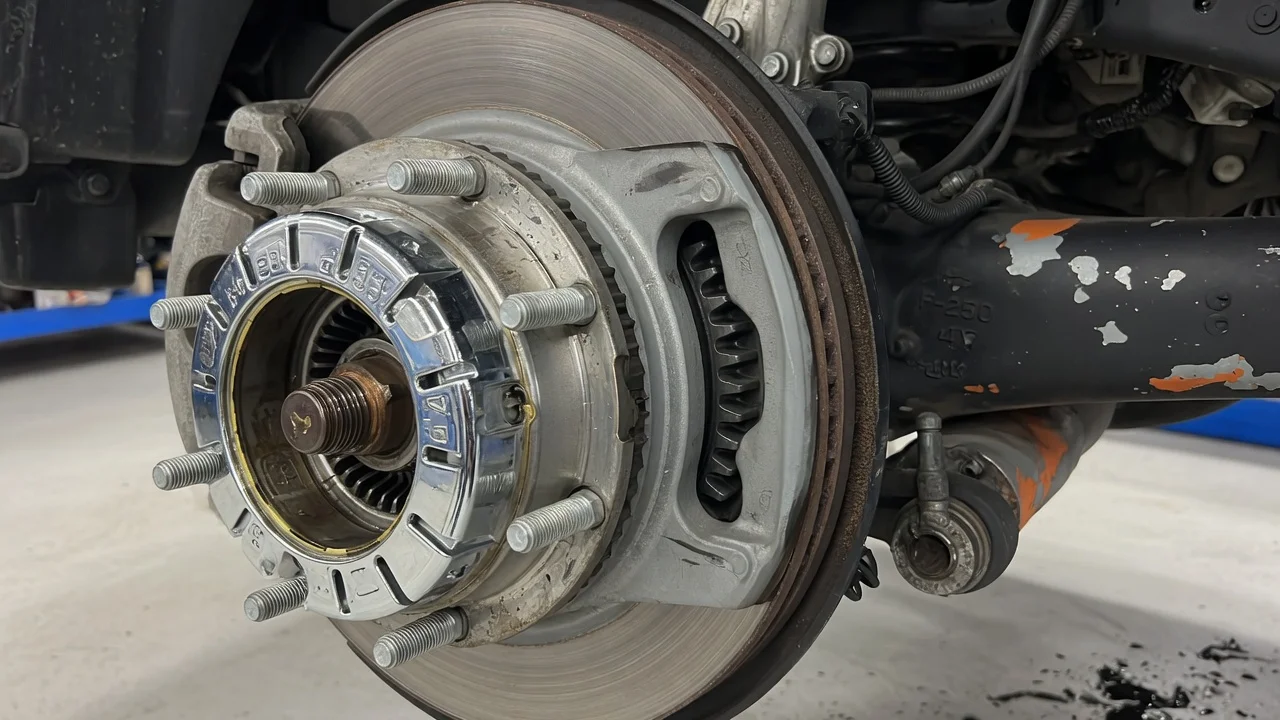
Automatic locking hubs on a Ford F-250 connect the front wheels to the front axle shafts when four-wheel drive is selected, so you don't have to step outside and turn the dials. Whether your truck has them, and which replacement fits, depends on the model year, the front axle and how the transfer case is shifted. This guide covers fitment and function for F-250 4x4 owners, especially the 2000 and 2002 Super Duty years that raise the most questions.
Which F-250 Trucks Use Automatic Locking Hubs
On the 1999 to 2004 Super Duty F-250 4x4, the factory auto locking hubs are part of the electronic shift-on-the-fly system. These trucks have a dash-mounted 4x4 switch and front hub dials marked AUTO and LOCK. The hubs are vacuum-actuated rather than purely mechanical. Super Duty trucks with a floor-mounted transfer case lever were typically built with manual hubs marked FREE and LOCK. So a 2000 or 2002 F-250 with a dash switch most likely came with vacuum auto hubs, and one with a shift lever most likely came with manual hubs.
No single part number fits every F-250. Within the same Super Duty years, the front axle could differ depending on how the truck was built. Hub assemblies for different axles are not necessarily interchangeable, and later generations changed the hub design again. Confirm your exact vehicle configuration before ordering. Useful sources are the axle tag, the axle code on the door-jamb certification label, and a VIN lookup at a dealer or parts counter.
How Ford's Automatic Hubs Engage
When you press the 4x4 switch on an electronic-shift Super Duty, the transfer case motor shifts the case and the control system operates a vacuum solenoid. Vacuum is routed through lines to each front hub, passing through sealed passages at the spindle. That vacuum moves the hub's internal locking mechanism, which couples the wheel hub to the splined axle shaft. In two-wheel drive with the dial in AUTO, the front wheels turn freely on their bearings instead of back-driving the axle shafts. Turning the dial to LOCK engages the hub mechanically, with or without vacuum.
Automatic engagement depends on a sealed vacuum circuit. A leak anywhere in it can leave the hubs unlocked in AUTO even though the transfer case shifted normally. Common leak points are the spindle seals and O-rings, cracked lines, the solenoid and the vacuum source itself. The usual signs are a 4x4 indicator that comes on while the front wheels don't pull, or clicking and grinding from a front hub under load. The indicator reflects the transfer case state, so it doesn't confirm the hubs are engaged.
What Changes the Fitment Answer
Transfer case shift type, front axle and model year generation set the factory answer. Service history can override it. Many Super Duty owners have converted vacuum auto hubs to manual hubs, and some trucks have had axles, spindles or hubs swapped. The parts on your truck may therefore not match the original build. Look at what is actually installed before trusting a catalog lookup by year alone.
Some earlier F-250 4x4 trucks, built before the Super Duty, offered mechanical automatic hubs. These engage from drive torque rather than vacuum and typically release when the truck is driven a short distance in reverse after shifting back to two-wheel drive. They work differently from Super Duty vacuum hubs and do not share parts with them, so treat them as a separate fitment question.
Operating conditions also matter. Frequent water crossings, mud, road salt, plowing and heavy towing put more stress on hub seals and locking parts. They also raise the chance that a worn vacuum circuit will fail just when four-wheel drive is needed.
Checking Your Hubs Before Buying Parts
Start by identifying what you have. Note whether the dials read AUTO and LOCK or FREE and LOCK, and whether the transfer case is shifted by a dash switch or a floor lever. Then record the axle information from the door label or axle tag. With the front of the truck lifted and safely supported and the transfer case in two-wheel drive, set one hub to LOCK and rotate the tire by hand. The axle shaft joint behind the hub should turn with the wheel. Repeat with the dial in AUTO. The shaft should stay still unless the hub is being commanded to engage.
If a hub locks manually but not in AUTO, test the vacuum side before replacing the hub. A hand vacuum pump on the hub supply line will show whether the circuit holds vacuum. Compare the result with the specification in Ford service information, and check the solenoid and supply separately. A circuit that won't hold vacuum points to seals, O-rings or lines rather than the hub body. If the hub won't lock even in LOCK, the problem is likely inside the hub or the axle shaft splines.
When ordering, give the seller your VIN and confirm the shift type and axle. Check whether the replacement hub includes new spindle seals and O-rings. Follow manufacturer specifications for spindle nut torque and bearing adjustment. If you convert to manual hubs, follow the kit instructions for plugging or capping the vacuum supply. Until the repair is done, running the dials in LOCK when you need four-wheel drive is a reasonable temporary workaround. Include hub and seal inspection whenever the front wheel bearings are serviced on your maintenance schedule.
Limitations and When to Get Help
Production changes, regional build differences and earlier modifications mean the general patterns above may not match every truck. There is no universal service interval for these hubs. Inspection timing depends on the factory maintenance schedule for your configuration and on how the truck is used. If identification is unclear, a dealer VIN lookup and a physical inspection of the installed parts give a more reliable answer than year-based catalogs.
Get professional help if the front wheels don't drive in either dial position, if there is noise or play at a hub, or if you aren't comfortable with spindle nut and wheel bearing work. Incorrect bearing adjustment affects wheel retention and safety. A technician with the correct service information can confirm whether the fault is in the hubs, the vacuum system, the axle shafts or the transfer case before you buy parts.